Fly-fishing in the Smoky Mountains is sure to be a memorable trip for anyone that enjoys casting a line. Fly-fishing these pristine streams are sure to reward those that take the time to venture into the park.
This post may contain affiliate links, meaning if you purchase something through one of these links, we may earn a small commission at no extra cost to you! Read the full disclosure policy here

The Great Smoky Mountains are one of the last wild trout habitats in the eastern United States. There are over 2,000 miles of streams within the National Park, holding brook, rainbow, and brown trout. Other species of fish frequent these streams, however, the prize is the trout on a fly. Fly-fishing for these beauties requires marginal skill, and a little stealth since they spook real easily. Hiring a local will help you locate the fish, eliminate unproductive waters, and refine your skills.
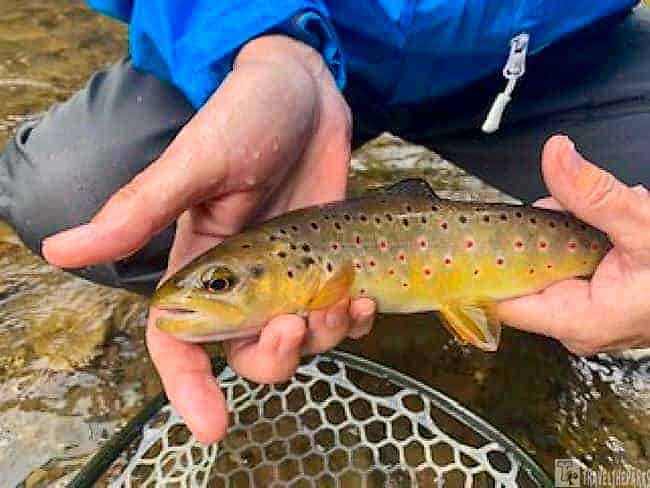
Table of Contents
Fly-fishing with a Smokies Guide Service
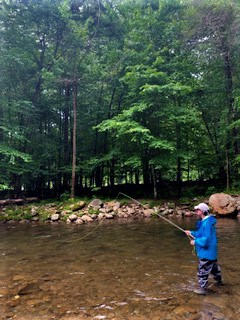
For our fishing adventure, we contact Fly-fishing the Smokies, scheduling a 5-hour wading trip. I made reservations over the phone a few months before our trip. Everything was as described on the website. They attempt to contact you and verify details 24-hours prior to your trip. They offer different guided fishing trips on their website, including both wade and float trips. Eugene Schuler and his guides, shop and tackle are all first notch!
What is the Best Gear?
We met our guide, Kyle, at the fly shop in Bryson City early in the morning. While we brought our own wade boots and waders, these are included if you book a guided trip. The waters in Great Great Smoky Mountains National Park are cold in June and can provide excellent fishing all the year round. Having a good pair of chest waders and wading boots with wool socks will keep your feet comfortable for the entire day. Our gear included a Redington Crosswater 9-foot 5-wt fly rod with a floating line with a 5X tippet. It is advisable to bring a rain jacket, a hat, and sunscreen.

After being outfitted, we headed into the National Park. The Bryson City area is renowned for the fishing in the Tuckasegee River. Today, the river is running too high and dark with runoff to allow us to wade safely. The day was overcast, but it did not dim our spirits. You can easily access many of the rivers and streams in the area from the road. Some require a hike, but they can access others like the Oconaluftee via pullouts along the scenic highway.
Fly Fishing GSMNP: Getting on the Oconaluftee River
The Oconaluftee River is a freestone stream of its origins as a mountain spring tumbles down the Newfound Gap following Hwy 441. Unlike rivers in Shenandoah National Park, these rivers run cold all year round. The river widens as it passes through Cherokee, North Carolina, to the confluence with Raven Fork. Eventually, the river merges with the Tuckasegee. The river has many access points and parking pullouts along Hwy 441. Here the forest canopy is thick, overhanging the riverbanks, sometimes affecting your casting. The shade is welcome, providing shade from the heat of the day and keeps the waters cool. Today, it protects us from the constant downpours.
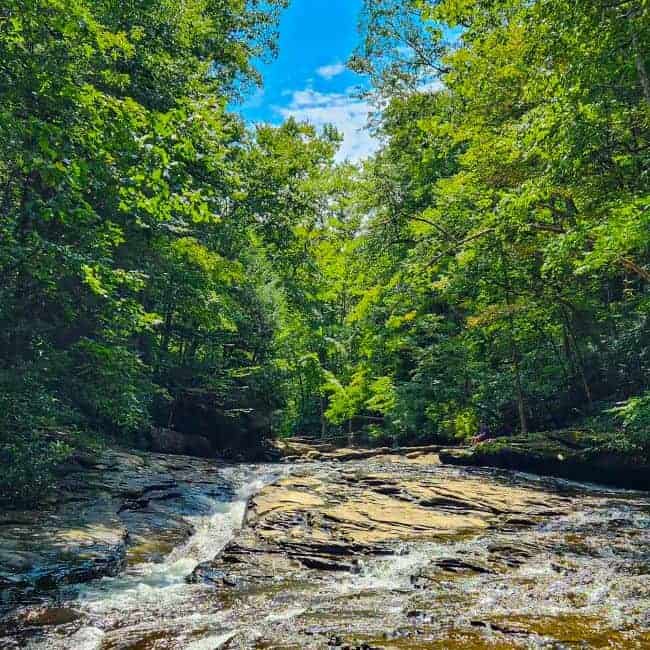
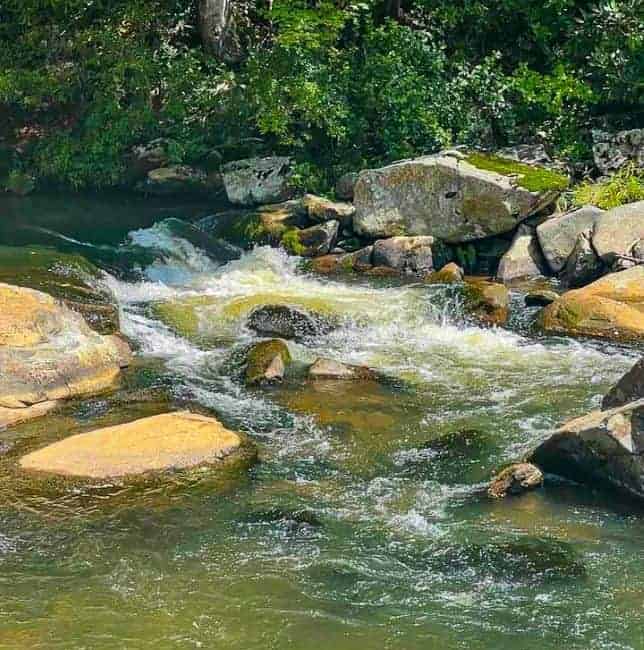
Our guide pulled off the highway at MM 24.61, at the Cliff Branch section of the Oconaluftee River. We’re used to fly fishing wider, open rivers, so the narrow confines of this stream took some adjustment. A few times we snagged trees instead of fish! Thankfully, our guide, Kyle, was patient and offered helpful tips. He explained that the river boasts an excellent aquatic insect population in spring, which makes it prime fishing territory. The river has a sandy bottom punctuated by larger boulders, creating pools and riffles where fish lie in wait. Be prepared—some rocks are slippery, and low-hanging branches require scrambling in certain areas.

Trout require a stealthy approach
When fishing in these clear waters, it’s important to approach from downstream. Fish face into the current, so keeping your line tight with minimal slack is crucial to avoid spooking them. Today, the overcast skies help us, so shadows aren’t a concern. A good pair of polarized sunglasses is invaluable—they make spotting fish much easier. Remember, the first cast is often the most important: the more the fish sees your fly, the less likely it is to bite.

Guided Fly-fishing: the Best Flies
The best flies to use in June are:
- Blue-wing Olives (BWO) Mayflies-nymph 14-16
- Blue-wing Olives (BWO) Mayflies-emerger 14-16
- Little Black Caddis (size 18 – pupa or adult)
- Little Yellow Stonefly (Yellow Sally- size 14)
- Additionally – Blue Quill, Hendrickson, March Brown, andLight Cahill mayflies.
- Floatant and Desiccant
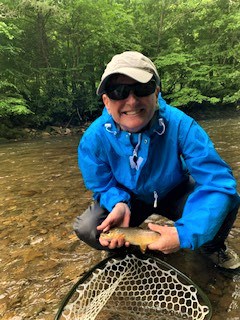
Presentations today are mostly with dry flies-dead drift. We had a lot of bites, but only brought in a few smaller brown trout. We fished the entire 5 hr. Time seemed to slip away quickly. Even when it poured rained, we continued to fish.
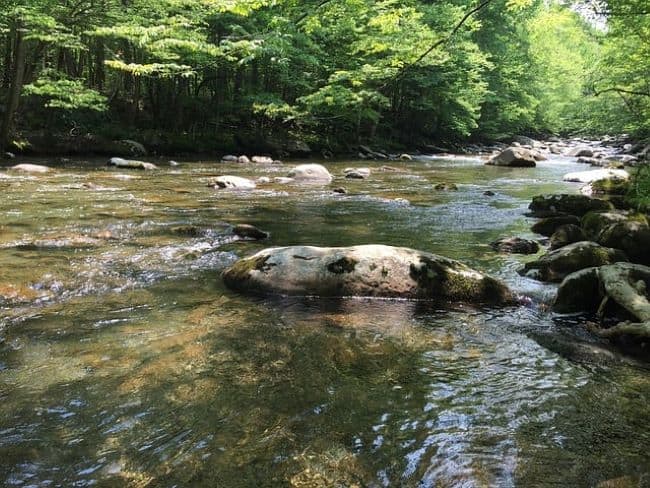
Best Fly Fishing Smoky Mountains
We did not take a break, so took our lunch to go. They provide lunch as part of the package. The sandwiches were delicious! Our guide, Kyle, was very patient, helping us refine our skills. He taught us a technique to set the fish more effectively and teaching us how to read the river. I have to say we were extremely happy with the service provided by Fly-fishing the Smokies. They communicated well, provided everything we needed, and showed us a great time on the river.

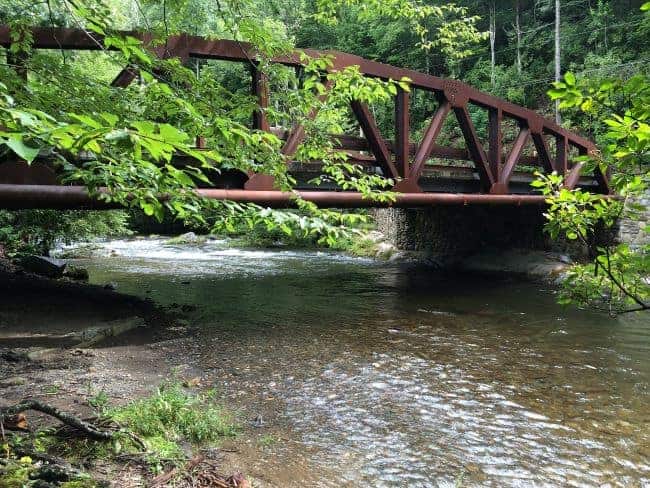
Applying what we learned, we spent the week fishing along the river. Most days, we started at the campground bridge in the Tow String area and worked our way downstream. We had some success catching smaller trout, though the larger fish ignored our line. At one point, I discovered a gigantic crayfish, nearly the size of my hand, tucked into a crevice of a boulder—proof that bigger fish were definitely hiding in the river.
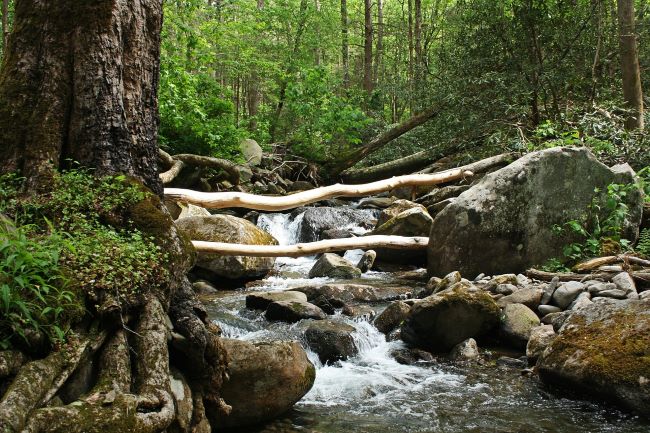
Fly Fishing Having an Outstanding Day
We had a blast in Great Smoky Mountain National Park, walking the trails and fishing the rivers. This was the perfect way to disconnect, have a good time, get a little exercise, and learn something along the way. Anytime you can catch a fish is a good time!
Information on licenses, fishing regulations can be viewed at the Bryson City Webpage. The Great Smoky Mountain National Park does not require an entrance fee. You should always check fishing regulations before you cast a line-know before you go.
Planning Resources
- Map of the Great Smoky Mountains National Park–A great resource to plan your trip and calculate the distances you need to travel.
- Great Smoky Mountains National Park Official Site–Plan your visit, get updates on road conditions and general information.
- Free Smoky Mountains National Park Planner–free trip planning guide, a digital version is available.
- Dining Options in Great Smoky Mountains–Looking for places to get a good meal. Visit the website to see what options are available. There are many picnic areas throughout the park.
- Lodging in the Smoky Mountains- We stayed at the Riverside Cabin through Vacasa. However, there are many options for staying outside the park.
- Camping in the Smoky Mountains–the park has many campsites that can be reserved in-advance. There are also campgrounds in the surrounding towns that can be reserved.
- LeConte Lodge® is the only lodge accommodation inside the National Park. It is accessible only by hiking.
- Riverside Cottage: We spent a week in this beautiful cabin that is dog-friendly. You can find other accommodations outside the park from various vendors.
Final Thoughts: Our Outstanding Day Fly Fishing in the Smoky Mountains
The Smoky Mountains are ideal for fly-fishing aficionados. Whether you’re hunting trophy wild trout in the park’s streams or catching feisty rainbows in a stocked river, the landscape and fishing are unparalleled. Don’t worry if you’re new to fly fishing; there are plenty of guided trips and lessons available to get you started. If you are an experienced angler, the Smokies offer a genuine test of your skills, with challenging currents and selective trout. If you’re planning a Smoky Mountain fly fishing trip, we hope you have tight lines!
So, how about you? Do you like to fish? Have you fished in this area? Let us know in the comments below. Thanks!!