Table of Contents
Updated May 2023
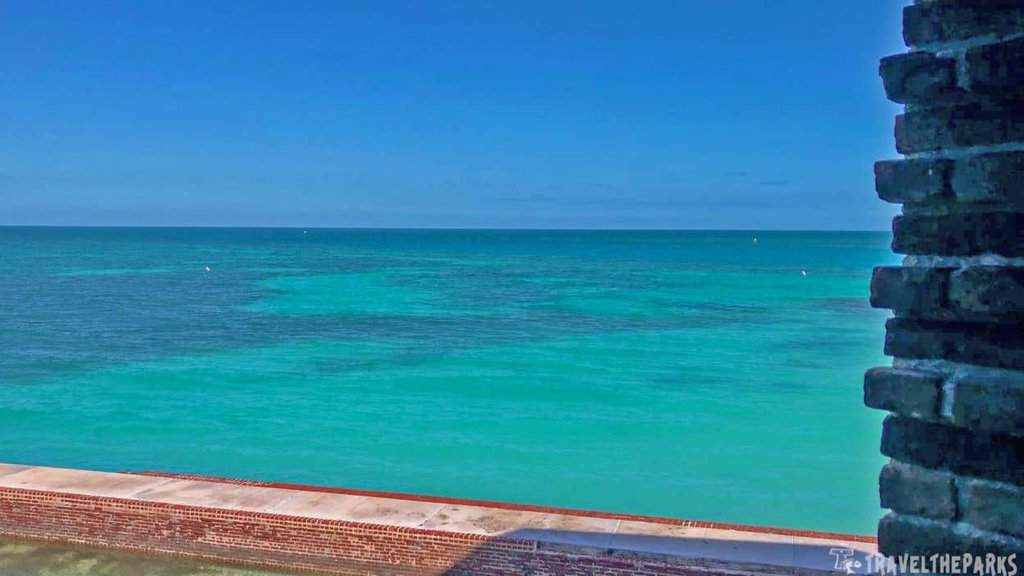
The crystal-clear turquoise waters of the Dry Tortugas are mesmerizing, a true tropical paradise. Spending a day at Dry Tortugas National Park has been on our bucket list since we set our goal to visit all the National Parks. Today we checked this one off our list.
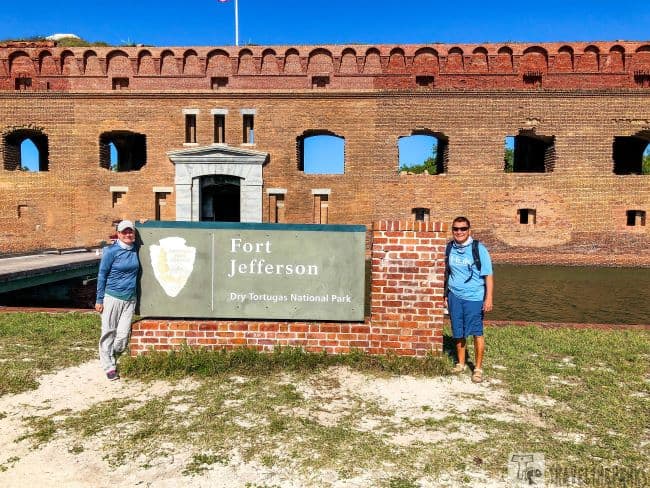
Now, the Dry Tortugas Islands and Fort Jefferson stand as a testament to the region’s rich history and offer visitors a chance to explore the remnants of the fort, snorkel among vibrant coral reefs, and appreciate the pristine natural beauty of this remote and protected national park.
This post may contain affiliate links, meaning if you purchase something through one of these links, we may earn a small commission at no extra cost to you! Read the full disclosure policy here.
From Ancient Indigenous Roots to Modern Preservation: The History of the Dry Tortugas Island
The islands were first discovered by the Spanish explorer Juan Ponce de León in 1513. When he first discovered these iconic islands, there were 13 islands. Today, only 7 atoll islands remain. He named them “Las Tortugas” (The Turtles) due to the large number of sea turtles found in the area. The prefix “Dry” was added later to highlight the lack of fresh water sources on the islands.
The Spaniards quickly realized how strategic significance of these islands. Garden Key’s deep water anchorage on its north shore was crucial, offering a haven from storms and hurricanes. This natural harbor offered a safe refuge for ships seeking protection from the turbulent waters and harsh weather conditions of the Gulf of Mexico. The Dry Tortugas Islands gained importance as a navigational landmark because of their position along major shipping routes in the Gulf of Mexico and the Florida Straits.
Additionally, the explorers understood that between the Gulf of Mexico and the Atlantic Ocean, the Gulf Stream current gave mariners the speed they needed to return to Spain. This trading route did not go unnoticed. It became quite important when, during the Civil War, the Union began building Fort Jefferson in 1846 to protect the lucrative shipping channel.
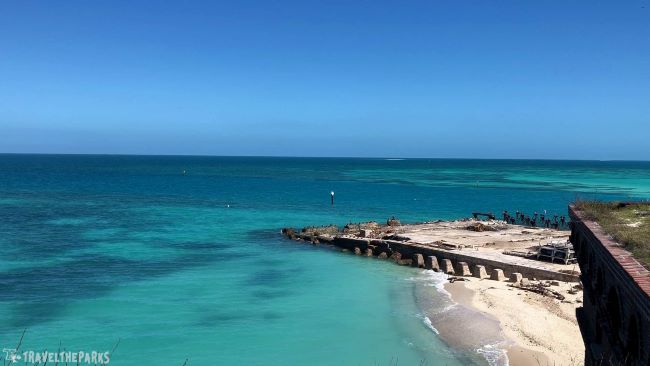
Civil War Era: Fort Jefferson Rises in the Dry Tortugas
In the 19th century, the United States recognized the strategic significance of the Dry Tortugas Islands and began construction of Fort Jefferson in 1846. The fort was designed to protect the Gulf Coast and serve as a naval station, providing a base for patrols and defense during the Civil War.
Although never fully completed, Fort Jefferson remains the largest brick masonry structure in the Americas. It is the third largest fort in the US. Fort Monroe National Monument in Virginia is by far the largest. Raised with 16 million bricks over a coral concrete core, covering 16 acres of land. The fort also featured a 70-foot wide moat. They brought all the materials for construction from Key West to the island. The builders decided that slaves and, later, prisoners would provide the labor. Mind-boggling to think that they had to work in such terrible conditions. It must have been a miserable existence.
Preserving Paradise: The Evolution of Dry Tortugas into a National Park
They incorporated the Dry Tortugas Light into Fort Jefferson. It has changed little over the years. They decommissioned the lighthouse in 2015. On January 4, 1935, President Franklin D. Roosevelt designated the area as the Fort Jefferson National Monument. They listed it on the National Register of Historic Places on November 10, 1970. The Dry Tortugas, including Fort Jefferson on became a National Park on October 26, 1992.
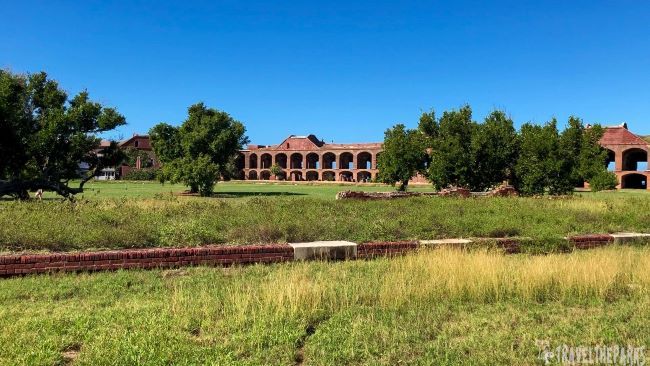
Journey to Paradise: Getting to Dry Tortugas National Park
Dry Tortugas is the most remote national park. The park lies 70 miles west of Key West, only reachable by ferry, private boat, or seaplane.
The most popular and convenient way to reach Dry Tortugas is by taking the Yankee Freedom III ferry. The ferry departs from Key West and provides round-trip transportation to the national park. This journey takes approximately 2 hours and 15 minutes each way. The ferry operates daily, except on Christmas Day. It’s advisable to make reservations as the ferry can fill up quickly, especially during peak seasons.
Another option to reach Dry Tortugas is by seaplane. Several tour operators in Key West offer scenic flights to the national park, providing a unique and breathtaking perspective. These flights typically include aerial views of the islands, the coral reefs, and the crystal-clear waters surrounding Dry Tortugas.
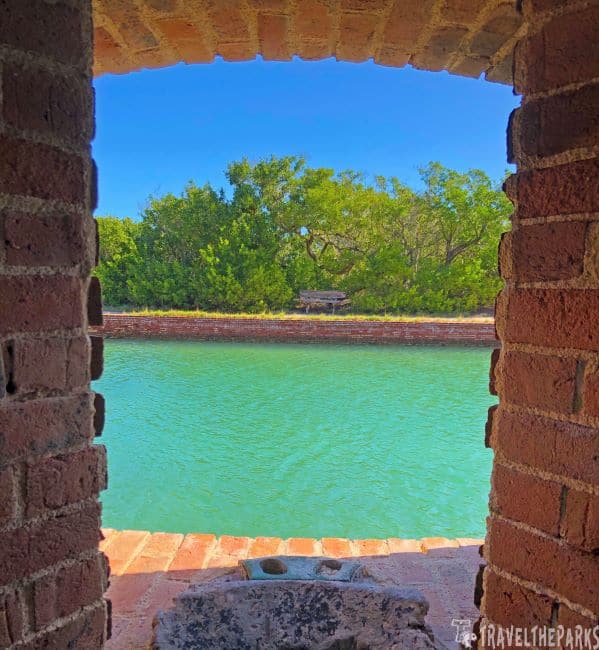
Why the Ferry Is the Perfect Choice for Exploring Dry Tortugas National Park from Key West?
Since a teacher’s salary doesn’t quite cover a private boat or seaplane, we opted to take the ferry. The Yankee Freedom III, a 110-foot high-speed catamaran, departs daily from Key West (except on Christmas Day). While some may consider the ferry fare a bit pricey, we found it to be money well spent.
Currently, the Yankee Freedom Ferry is the only boat concessionaire authorized by the National Park Service to transport visitors to Dry Tortugas.
Plan to arrive at the Key West port with sufficient time before the scheduled departure of the ferry. Allow extra time for parking, ticket check-in, and any necessary preparations. It’s recommended to arrive at least 30 minutes to an hour prior to the ferry departure time to ensure a smooth boarding process. Our day began early, waking at 4:30 AM to drive from Marathon to the Key West Ferry Terminal. We would have liked to stay in Key West. Unfortunately, during Christmas, the prices of lodging are just too expensive in Key West, so we elected to stay in Marathon and make the hour-long drive.

Convenient Parking Solutions for the Yankee Freedom Ferry at Key West Port
We recommend using the city parking garage at 300 Grinnell Street, close to the ferry, though it costs $32/day. We ended up taking the first garage we saw, but if you continue to the terminal, there’s a smaller garage directly across from the ferry that charges only $15/day. Next time, we’d definitely choose this one to save a few dollars.
What’s included:
- Continental breakfast of fresh fruit, freshly baked bagels, hot and cold cereal, boiled eggs, cheese, yogurt, juice, and coffee.
- Complimentary snorkel gear
- Our ticket included the entrance fee to the park and Fort Jefferson (if you have an annual pass, you can get a $15 refund)
- Lunch of a variety of breads, cold cuts & toppings, chicken salad, potato salad, potato chips, cookies, fresh fruit and soft drinks.
- Guided narrated tour of Fort Jefferson – 45 minutes
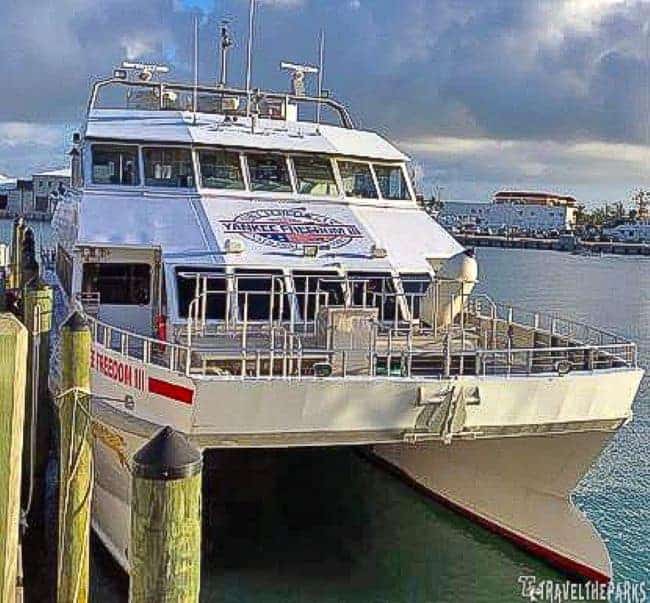
The Gateway to Paradise: The Port of Key West and the Yankee Freedom III Ferry to Dry Tortugas
Registration begins at 7 AM, and getting in line early determines your boarding order. We were lucky to get in line immediately, drawing boarding passes 23 and 24. Check-in was smooth and well-organized.
The ferry has a capacity of 250 passengers, but only 175 are allowed per day. Boarding begins at 7:30 AM in groups of 25. We chose seats beside the galley in the lower cabin, toward the back of the boat, which reduces motion.
During the safety orientation, our tour guide, Hollywood, explained that the seas had been rougher than usual over the past few days. He recommended purchasing Dramamine tablets ($1) as a preventive measure against seasickness — advice we took to heart. Neither of us felt woozy during the trip. Even if you’re not prone to motion sickness, taking something like Dramamine before boarding is a smart precaution.
The journey to Dry Tortugas National Park takes about 2.5-hours each way. The ferry departs at 8 AM and returns at 5:30 PM, making for a full and enduring day. Once on the island, you’ll have approximately 4 hours to explore.
Keep in mind, there is no cell service or Wi-Fi once you leave the dock, so it’s a great opportunity to disconnect and enjoy the island.
Bon voyage: Embarking on an unforgettable journey from Key West to Dry Tortugas
They serve a continental breakfast immediately upon departure from the dock. The crew on board is attentive to all the needs of the passengers. They work as a cohesive team. Their enthusiasm shines through.
The ride out to the park and back can be an adventure. We were lucky to have a wonderful couple from Ohio join our table for the ride out to the park. Through our chatting, we soon discovered that we shared a love for the national parks and fishing. Other passengers settle in by playing cards, reading books, or admiring the views on the open front deck. The ferry passes the Marquesas Islands and Boca Grande before reaching the channel. Riding across the channel at 30 mph in rough seas.
There are four marine toilets located behind the galley. Following the rules provided during the orientation helps ensure they remain functional throughout the trip.
Lunch is served upon arrival on the island, typically from 11:00 AM to 1:00 PM. You may eat as much as you like until the crew promptly clears the meal away.

Essentials for a Successful Visit at Dry Tortugas National Park
- Operating Hours: The park is open year-round, 24 hours a day. Ferry visitors typically enjoy about 4 hours on the island, depending on the weather and transport schedules. Overnight camping is permitted on Garden Key with a reservation.
- Entrance Fees: A $15 park entrance fee is included in your ferry or seaplane ticket. For campers, additional camping and transportation fees apply. The America the Beautiful Pass is accepted, but still confirm if it affects transport ticket pricing.
- Pet Policy: Pets are not allowed on the ferry, seaplane, or within Dry Tortugas National Park, including Garden Key and Fort Jefferson.
- Best time to visit: Dry season (November to April) offers calmer seas, better visibility for snorkeling, and lower mosquito activity. Wet season (May to October) is hotter, more humid, and can include afternoon storms, but still a viable time to visit with fewer crowds.
- What to Bring: Towels and bathing suit, camera, sunscreen (preferably reef safe). A change of dry clothes for your comfort on the return. Bag to store wet clothes Snorkel Gear (this is provided free by the ferry) Sunglasses, hat dry bag or backpack. Refillable water bottle (water refills available on the ferry). Bring cash for the bar, tips, and raffles
Visiting Dry Tortugas National Park, a place of breathtaking beauty
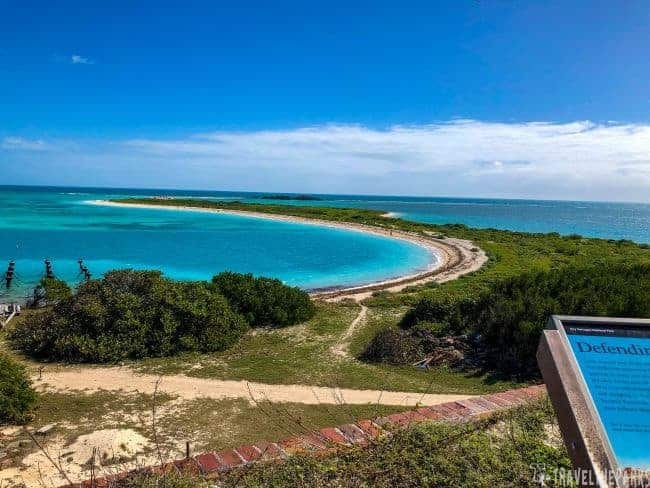
Garden Key is the most popular of the six tiny islands that make up Dry Tortugas National Park, dominated by Fort Jefferson, where ferries, seaplanes, and boats can dock.
Bird Key is a large nesting colony, open only at certain times of the year. Loggerhead Key is the largest island and home to the Dry Tortugas Lighthouse. Bush Key is off-limits from April through September to protect nesting birds like noddies and terns.
Hospital Key is a minor island, known for the small hospital that operated during the Yellow Fever epidemic, though it can disappear during severe weather because of its low elevation. Long Key lies next to Bush Key, and the remaining islands are Middle Key and East Key.
Island Adventures: Six Must-Do Activities in Dry Tortugas National Park
Dry Tortugas National Park is a true gem and a paradise for nature lovers. Whether you’re interested in history, snorkeling, birdwatching, or simply immersing yourself in the beauty of the surroundings, a day spent in this breathtaking park will be an unforgettable experience.
1. Begin with a walking tour of historic Fort Jefferson
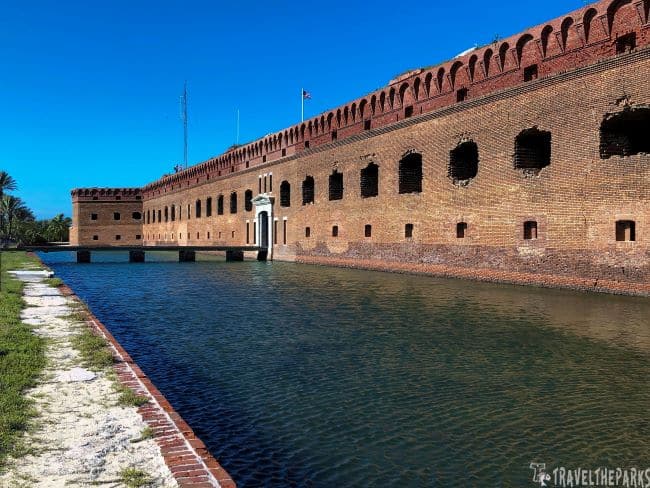
The focal point of Dry Tortugas National Park is Fort Jefferson, a massive 19th-century coastal fortress. You can explore the fort on a self-guided tour or join a guided tour to learn in depth about its history, construction, and role during the Civil War.
The fort offers incredible photo opportunities, so be sure to capture the panoramic views from the ramparts. We signed up for the 20-minute introductory tour and the 45-minute walking tour. Our tour guide, Hollywood, was a whirlwind of energy, and his passion for the fort shone through in every story he shared.
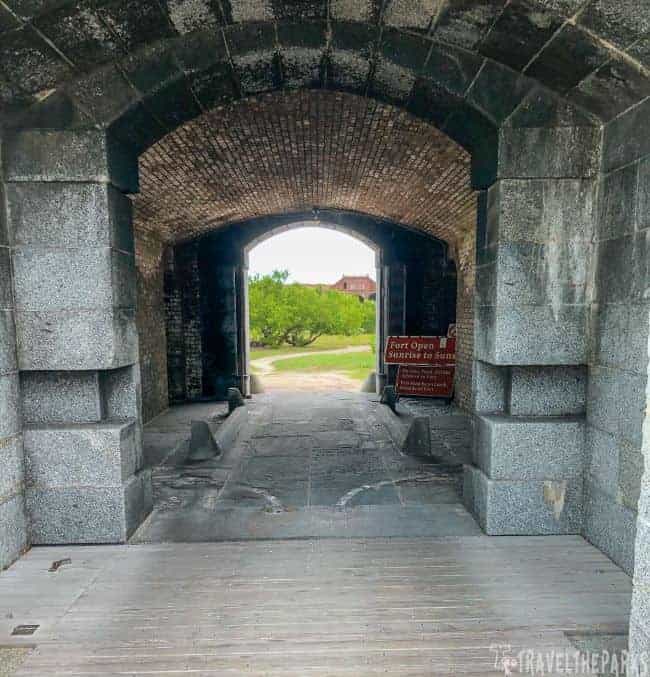
Stepping into History: Venture Through the Sallyport to Discover Fort Jefferson
We met at Sallyport, the only entrance to the fort. Enter the fort through the main entrance, passing through the sallyport—a fortified gateway. We took a moment to appreciate the strategic design of the entrance, built to control access and protect the fort’s inhabitants. Constructed of granite, it has withstood the test of time. The sallyport was further protected by a wooden drawbridge. If invaders somehow made it past the drawbridge into the sallyport, they would become trapped by the solid steel door at the opposite end of the sallyport. Small windows, referred to as loopholes, notched into the walls of the sallyport allowed soldiers to fire directly into the sallyport, killing the invaders.
During our guided tour, we learned that drinking water is rainwater collected and stored in cisterns. As the tour progresses, I imagine the total isolation that the soldiers, workers and prisoners must have felt, especially in the summer months.
Step onto the parade ground, a central open space within the fort’s walls. This area served as a gathering point for military drills, ceremonies, and daily activities. Admire the scale and grandeur of the fort’s architecture as you walk across the parade ground. The parade grounds cover eight acres and include the soldiers’ and officers’ quarters, powder magazine house, curtain wall magazine, the hot shot furnace, and the bakery.

The Guiding Light: Exploring the Fort Jefferson Lighthouse in Dry Tortugas National Park
The construction of the 70-foot Fort Jefferson Lighthouse began in 1824. It was completed and activated in 1825. The masonry lighthouse was built to aid navigation for ships approaching the treacherous waters surrounding the Dry Tortugas Islands. Its primary purpose was to provide a guiding light to vessels, warning them of the dangerous reefs and aiding in safe navigation.
A keeper who maintained the light and ensured its proper functioning initially operated the lighthouse. Keepers were responsible for fueling the light, cleaning the lens, and conducting routine maintenance. They lived in quarters adjacent to the lighthouse tower.
In 1876, the Fort Jefferson Lighthouse was automated, meaning that the light no longer required manual operation by keepers. Until 1906, the light ran on oil, after which it was switched to a superior incandescent oil vapor (I.O.V.) lamp. The lighthouse remained in operation until 1921, when it was decommissioned and replaced by a modern beacon on a skeletal tower nearby. Restoration efforts have been undertaken to preserve the lighthouse and its surrounding structures, allowing visitors to appreciate its historical significance.
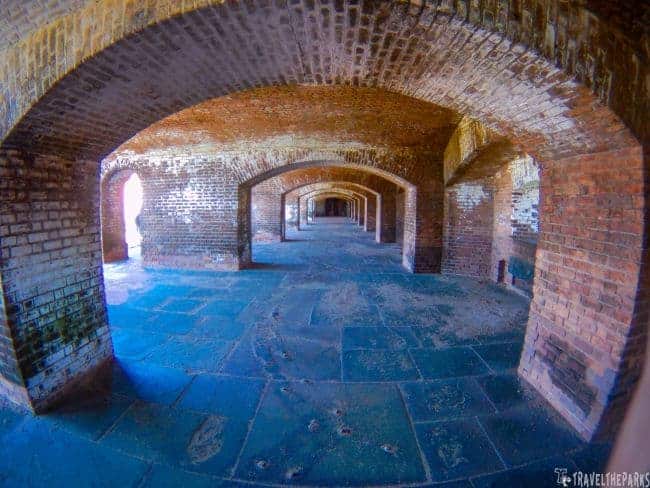
Beneath the Surface: Uncovering the Lower Floor Casements of Fort Jefferson
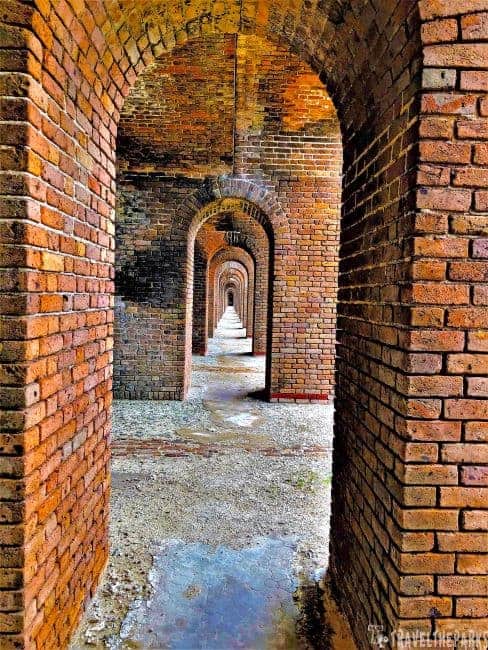
The first floor of Fort Jefferson is lined with honeycombed arches, which form the backbone of the fort and support its 45-foot exterior walls. These gunrooms were originally designed to hold a massive number of armaments, including cannons, though many were never installed.
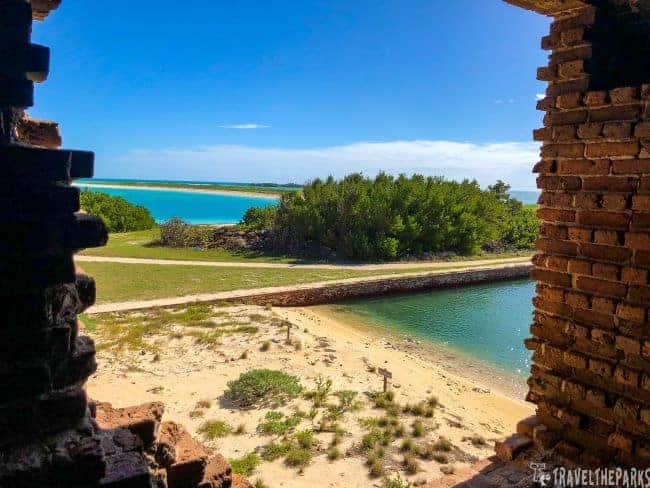
The fort’s Totten shutters were crafted to protect soldiers operating the cannons from incoming gunfire. These wrought-iron hinged shutters were ingeniously designed to swing open at the exact moment a cannon fired and then close in a split second. Today, however, these shutters are contributing to the deterioration of the brick walls.
Guardians of the Fortress: Unveiling the Upper Bastions of Fort Jefferson
We climbed the spiral stairs inside one of the corner bastions (there are six total) for an overlook onto the parade grounds from the second floor. They construct the staircases of vast slabs of granite. The bastions held 24-pounder howitzers, enabling soldiers to fire down towards the 70-foot moat and beaches.
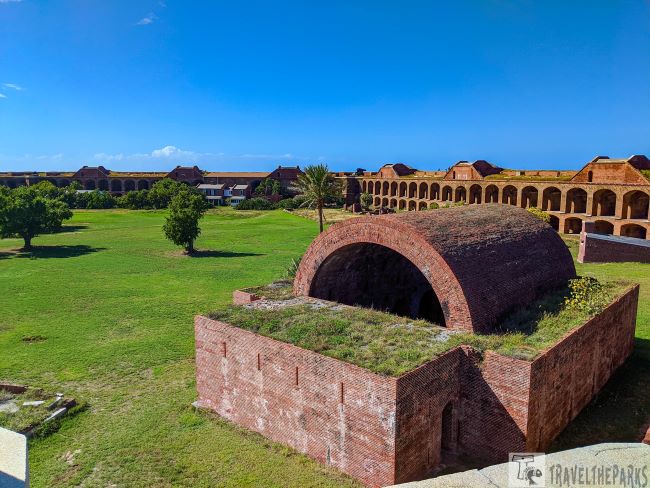
The Secrets Within: Exploring the Curtain Wall Magazine of Fort Jefferson
A large curtain magazine was designed with a capacity of 860 barrels of gunpowder. There were four curtain magazines within the fort, “curtain” meaning that the magazines were located inside the walls. You can find this powder magazine on the parade ground on the first level. Originally, five similar structures were to be built, but they were never completed. Because of the fear and vulnerability of an attack, the current 71 ft x 52 ft structure was never completed.

The Hot Shot Furnace: Heating Up History at Fort Jefferson
They built the fiery furnace to make solid iron cannonballs. They considered these very effective in the defense against wooden ships. The cannonballs were superheated in the furnace; the soldiers then fed them down iron rails where gun crews would load into the cannon barrel. These super-heated cannonballs, when launched, skipped across the surface of the water, impacting the wooden ship near the waterline, maximizing damage to the hull.
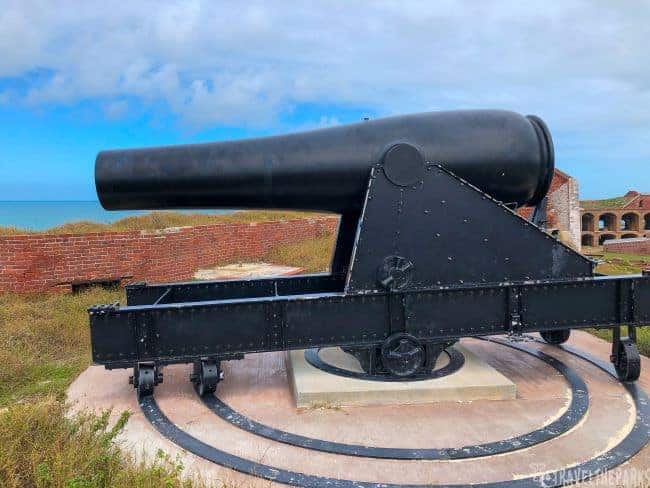
Unleashing the Thunder: The Raw Power of the Rodman Cannon at Fort Jefferson
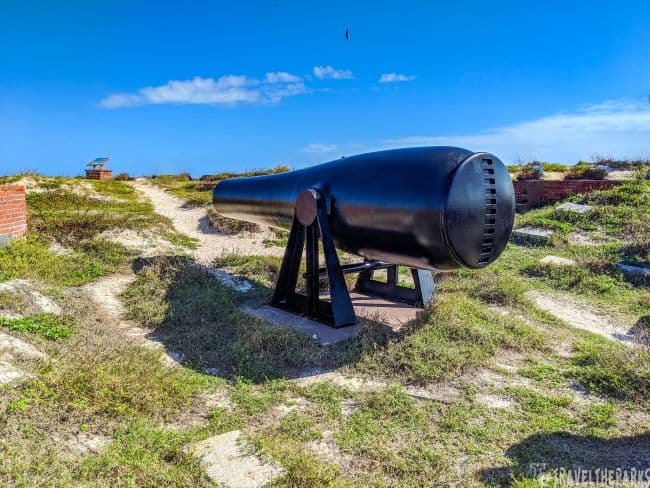
On the third level of the fort, you will find one of the six 15-inch Rodman smoothbore cannons designed to fire 450-pound projectiles a distance of 3-miles. A replica cage was fitted with this Rodman cannon in 2010.
The Incarceration of Dr. Samuel Mudd: Exploring the Story of a Famous Prisoner at Fort Jefferson
One of the most fascinating aspects of Fort Jefferson is its role during the Civil War as a prison for Confederate captives. The most famous prisoner was Dr. Samuel Mudd, who was accused of conspiring with John Wilkes Booth in the assassination of President Abraham Lincoln. Dr. Mudd was found guilty and sentenced to life at Dry Tortugas.
When the prison doctor died during a yellow fever epidemic, Dr. Mudd volunteered his medical skills, saving countless lives. In February 1869, President Andrew Johnson pardoned him, and he was released in March, returning to Maryland.
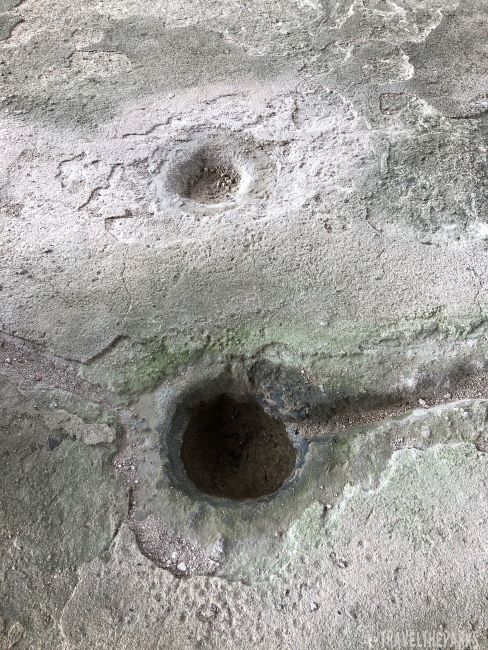
Visitors can see Dr. Mudd’s cell on the third level, where he gouged the floor to create divots for collecting rainwater. The dungeon on the first floor was used to isolate prisoners, offering a stark glimpse into life behind the fort’s walls.

Fort Jefferson stands as a testament to its builders. It has withstood many storms and hurricanes. After the talk, we wandered the fort and island beaches on our own, doing a little snorkeling and a little exploring. The sandy beach is littered with seashells and coral pieces.
REMEMBER: Never remove artifacts from National Park.
2. Discovering the beauty of Dry Tortugas National Park, snorkeling the pristine beaches
Dry Tortugas National Park is renowned for its crystal-clear waters and vibrant coral reefs. Take the opportunity to snorkel and explore the diverse marine life that calls this area home. The park offers snorkeling gear rentals, or you can bring your own. Before entering the water, all snorkelers must sign a waiver.
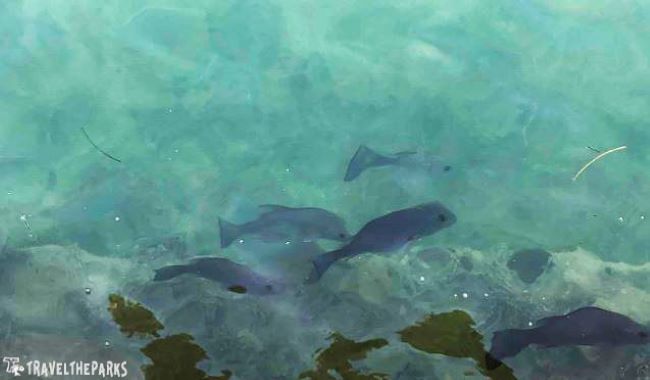
Snorkel around the moat walls of Fort Jefferson, where you’ll encounter colorful fish, stunning coral formations, and possibly even sea turtles. The variety of fish here is unlike anything we’ve seen in Key Biscayne or Key Largo, making it a truly unforgettable underwater experience.
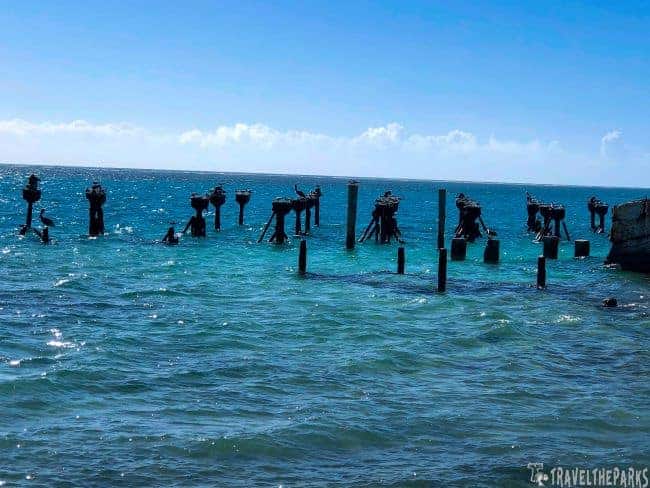
For snorkeling, the North and South Beaches are ideal. While the cool pilings can be interesting, be aware that both locations often have strong currents. Close to shore, you’ll find mostly seagrass beds, but venturing further out rewards you with a vibrant coral reef.
A word of caution: This area is best for seasoned snorkelers because of the challenging currents. You should also be comfortable sharing the water with large marine life, including barracuda and nurse sharks. (We even spotted a nurse shark in the moat, though snorkeling is prohibited there).
3. Hook, Line, and Serenity: Fishing in the Calm Waters of Dry Tortugas National Park
While the park restricts fishing to a few areas, the emerald Gulf waters are famous for it. A crew member tipped us off that the ferry dock is a hotspot. We saw this in action when an angler named Kevin, whom we met on the ride over, took the advice. He got a powerful bite that bent his rod dramatically, but his chance at a big catch was lost when his line broke.
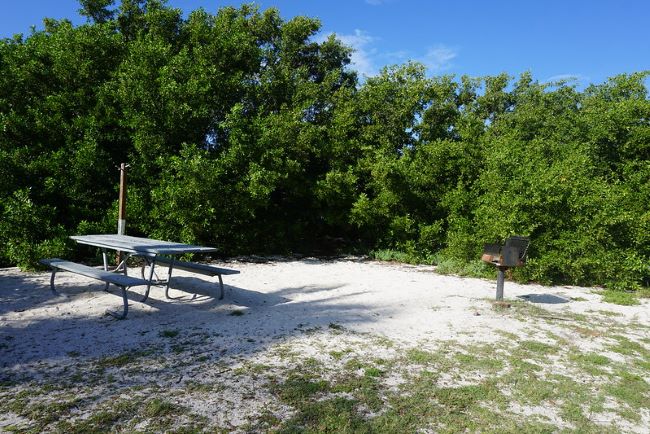
4. Overnight Camping in Paradise: Unforgettable Nights in Dry Tortugas National Park
If you’re planning an overnight stay, camping is available on Garden Key, where Fort Jefferson is located. The park provides basic campsites, offering a rare opportunity to experience the park after the day-trippers have departed. Enjoy a peaceful evening under the stars and wake up to the sound of waves crashing against the shore.
All campers must provide all of their basic needs, including food, water, shelter, medication, and other essentials. Campsites have picnic tables and grills. Each site accommodates 3 to 6 campers. There is no electricity, and a compost toilet and changing rooms are available. The ferry can provide campers with transportation. They require reservations. Camping fees are $15/day.
REMEMBER: What you pack in, you must pack out. Be sure to follow the Leave No Trace principles and respect the park’s fragile ecosystem by not disturbing wildlife or damaging coral reefs.
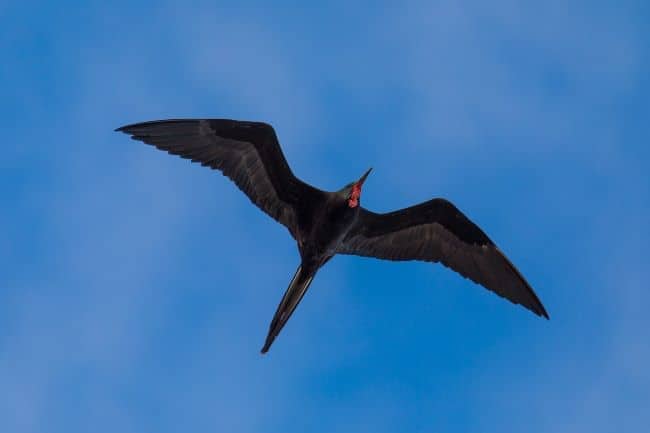
5. Feathered Wonders: Impressive Birdwatching on Garden and Bird Key in Dry Tortugas National Park
Dry Tortugas National Park is an important stopover for migratory birds and a nesting site for various species. Birdwatchers can spot an array of seabirds, such as the magnificent frigatebird, brown booby, and sooty tern. Bring your binoculars and explore the birding hotspots within the park, including the Bush Key and Long Key areas.
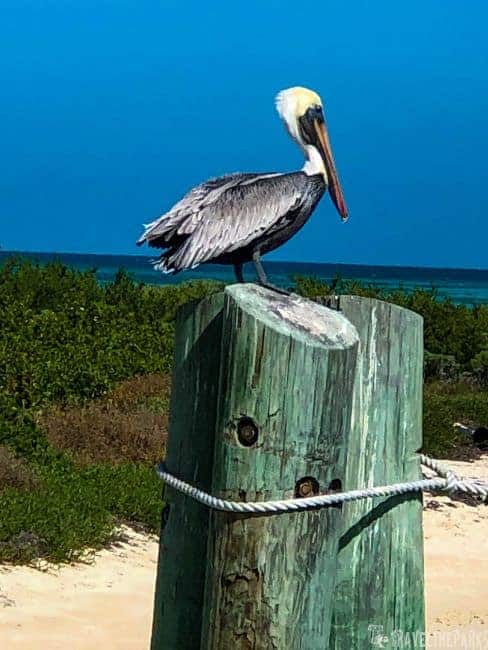
Avid birdwatchers can see different species depending on the season. Today we spotted many magnificent frigatebirds, brown pelicans, and Rudy turnstones. Although Bush Island is off-limits most of the year, including when we were there, you can walk out far enough to see many of the birds that inhabit the island.

6. Exploring the Past, Discovering Treasures: The Insightful Visitor Center & Gift Shop at Dry Tortugas National Park
There is a small visitor center and gift shop inside the fort, beside the sallyport. We started our tour at the visitor center, gathering information about the fort’s history, picking up a map, and getting oriented with the layout of the site. The knowledgeable park staff can provide insights and answer any questions you may have. If you are looking for your passport cancellation stamp, you can get one here. They also sell shirts, posters, national park pendants, and other gifts. The informative displays showcase the history and wildlife found in the park.
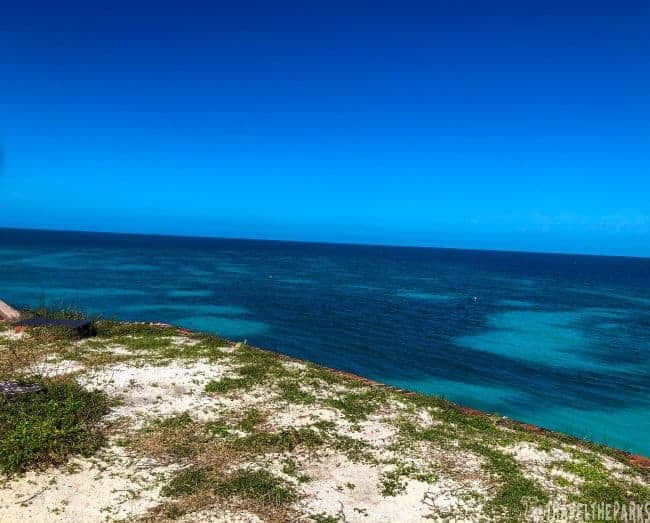
Farewell: Reflecting on Memorable Moments and the Return Trip Home
The Yankee Freedom III crew was exceptionally courteous and professional. We encountered large swells crossing the channel. The boat’s sway increased, causing a few to succumb to motion sickness. The crew seemed well-versed in looking for symptoms in passengers, feeling the effects of the motion. They ran around the vessel to make sure they took care of all guests with “souvenir” bags, ginger ale, and ice packs if needed. Kudos to Captain Meg for piloting the ferry through the channel, taking the time to keep passengers informed. Most passengers slept through the rough ride. Others stood at the bar when it opened for alcoholic beverages. I preferred the warm tea.
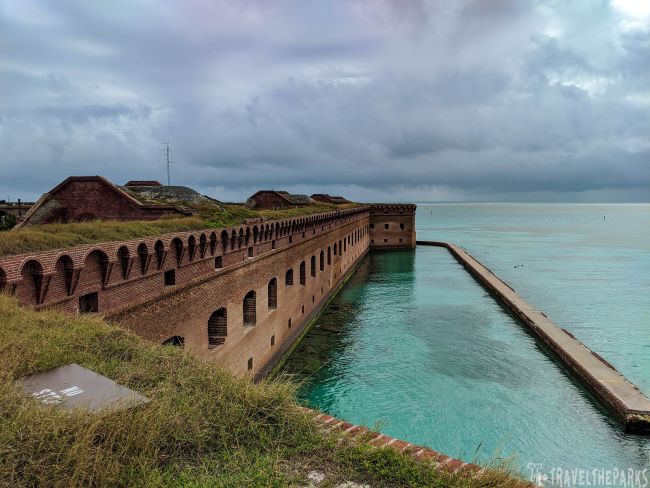
On your return trip, fill out the comment card. The crew will draw from these, awarding a free trip, which can be used at a later time, to one lucky winner. They also sell raffle tickets for a lucky passenger to choose from an array of souvenirs they sell for only a dollar.

Final Thoughts on Spending a Breathtaking Day in Beautiful Dry Tortugas National Park
Whether it’s a day trip or an overnight stay, a visit to Dry Tortugas National Park is an adventure that showcases the beauty of nature and the power of history. It’s a place where breathtaking sights, immersive experiences, and a sense of wonder converge, leaving visitors with memories that will be cherished for a lifetime.
Dry Tortugas National Park is a true gem and a destination that leaves a lasting impression on visitors. From the breathtaking views of crystal-clear waters to the awe-inspiring historical fortress of Fort Jefferson, the park offers a unique and immersive experience. This is definitely a trip of a lifetime for many visitors. I know that, given the opportunity, I would return.
Have you been to the Dry Tortugas? What did you enjoy most? Please share your comments below?