Table of Contents
Updated August 2026
We spent a powerful day in the Lower Geyser Basin chock full of adventure. If you’re planning a trip to Yellowstone, our Ultimate Yellowstone National Park Travel Guide is a great place to start. It covers the essentials for planning your visit, from getting around the park to deciding which areas deserve a spot on your itinerary. Once you’re ready to explore Yellowstone’s geothermal wonders, the Lower Geyser Basin should definitely be on your list.
Yellowstone National Park is a place of natural wonders, where geothermal features paint a picture of Earth’s fiery and untamed forces. In the heart of the park, the Lower Geyser Basin offers a day of exploration filled with bubbling mud pots, colorful pools, steaming fumaroles, and powerful geysers. Exploring the Lower Geyser Basin gives you a fascinating look at the forces still shaping Yellowstone today.
The Lower Geyser Basin sits along the Grand Loop Road between Madison and Old Faithful. Covering nearly 12 square miles, the basin is much more spread out than some of Yellowstone’s other geothermal areas. Its thermal features are scattered among several groups, including the Fountain Group, Firehole Lake Group, White Dome Group, Grand Fountain-White Creek Group, and Imperial Group.
With mud pots, geysers, pools, springs, and fumaroles around nearly every turn, the Lower Geyser Basin is an ideal place to spend a full day. Our Lower Geyser Basin Yellowstone Guide will show you the stops we enjoyed and help you plan your own adventure through this remarkable corner of Yellowstone.
This post may contain affiliate links, meaning if you purchase something through one of these links, we may earn a small commission at no extra cost to you! Read the full disclosure policy here.
Fountain Paint Pots: Nature’s Colorful Canvas in Yellowstone
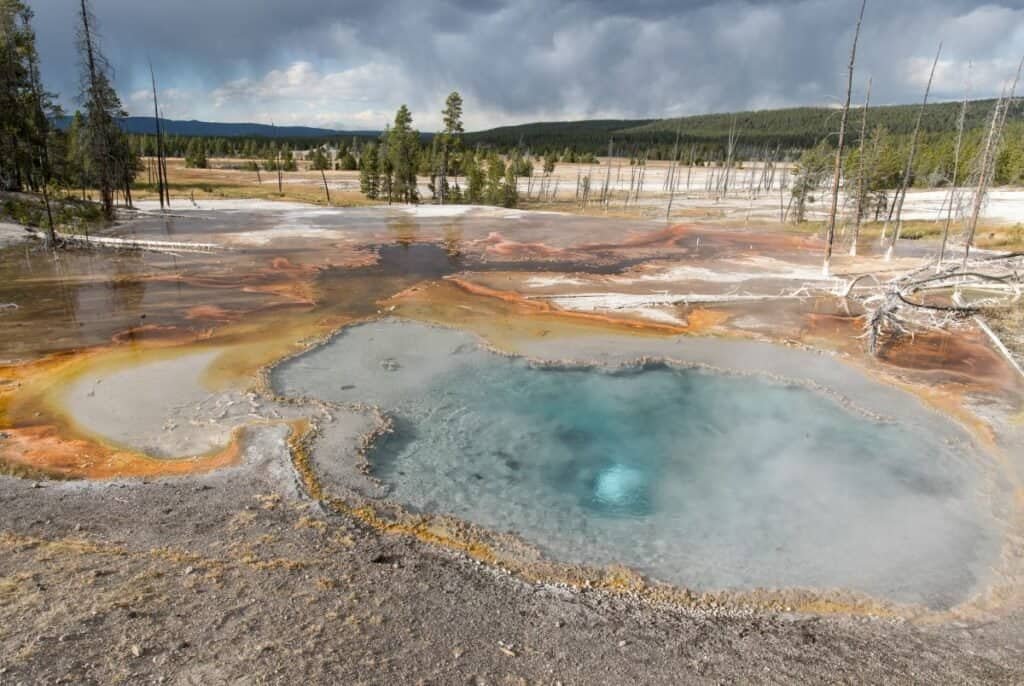
One of our first stops on a day in the Lower Geyser Basin was Fountain Paint Pot, and it immediately reminded us why Yellowstone is such a remarkable place. As we walked along the boardwalk, we could hear the mud pots bubbling and popping while steam drifted across the landscape. The smell of sulfur filled the air, adding another sensory reminder that we were standing above an active geothermal system.
The Fountain Paint Pot gets its name from the reds, yellows, and browns found throughout the bubbling mud. A roughly half-mile boardwalk takes us around the geothermal area, allowing us to safely get close to the features while protecting this fragile environment. We enjoyed the expansive views across the surrounding meadow, where bison are often visible.
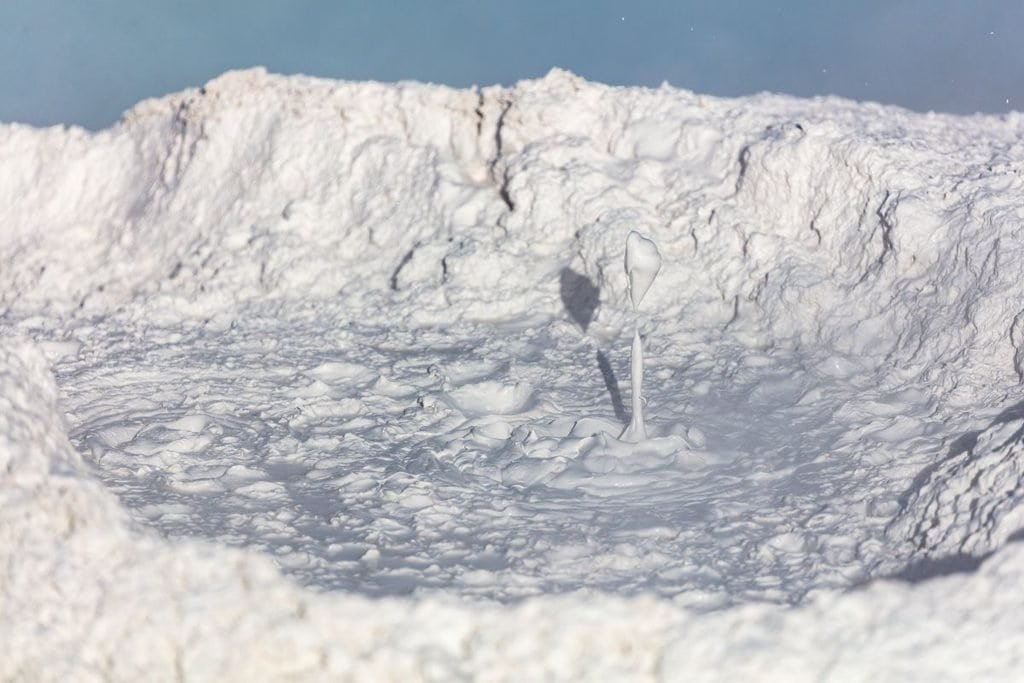
Interpretive signs along the boardwalk helped us understand the different geothermal features we were seeing. The area includes fumaroles, mud pots, springs, and active geysers, each displaying a slightly different expression of Yellowstone’s geothermal energy. The Fountain Paint Pot itself is especially fascinating as the thick, steaming mud continuously burps and bubbles.
Geothermal Features We Saw at Fountain Paint Pot
As we walked the boardwalk, several features caught our attention:
- Clepsydra Geyser is one of the area’s most active geysers, frequently sending water into the air.
- Red Spouter, also known as Leather Pool, is a colorful thermal feature that appeared following the 1959 Hebgen Lake earthquake.
- Celestine Pool is a striking blue pool surrounded by mineral deposits. Sadly, it was also the scene of a tragic accident in 1981 that claimed the lives of a young man and his dog.
- Silex Spring is a beautiful blue pool surrounded by bright white silica deposits.
Plan to Arrive Early
We found parking much easier when we arrived early in the morning. By the time we were heading back toward the area in the early afternoon, however, we could see a much different situation. Cars were backed up along the road as visitors waited for parking spaces to open.
Our tip: If Fountain Paint Pot is part of your Lower Geyser Basin One-Day Itinerary, make it an early stop. The cooler morning temperatures are also pleasant for walking, and getting there early gives us more time to explore before the crowds arrive.

Discover the Beauty of Fountain Flats and Fairy Falls in Yellowstone
We also took time to explore the area around Fountain Flats, where we found access to the Fairy Falls Trail and the Grand Prismatic Spring Overlook. This is a beautiful area of Yellowstone, but parking can be limited, especially during the busiest part of the day. We recommend arriving early if you want to avoid the biggest crowds.
The trail to the Grand Prismatic Spring Overlook and Fairy Falls begins from the same general trailhead area. We found the overlook to be well worth the short hike. From above, we could see the brilliant colors of Grand Prismatic Spring spread across the landscape.
If you have the time and energy, you can continue along the trail toward Fairy Falls. The hike to Fairy Falls is roughly 5 miles round trip, depending on the route and starting point, and the trail is generally considered moderate. The waterfall is an impressive reward for the effort, dropping about 200 feet through the forest.
We recommend bringing sturdy walking shoes, plenty of water, a hat, and layers. Yellowstone weather can change quickly, and even a warm summer morning can become cool or rainy. We also carried bear spray and stayed alert for wildlife. This is bear country, so it is important to follow current Yellowstone National Park guidance and practice good bear awareness.
For us, adding the Grand Prismatic Overlook and Fairy Falls to a day in the Lower Geyser Basin made the day even more memorable. It gave us a chance to step away from the boardwalks and experience another side of Yellowstone’s incredible landscape.
Hiking to Fairy Falls: A Quiet Escape from the Crowds
Pro Tip: Bears are active throughout Yellowstone, including the area around the Fairy Falls Trail. We recommend staying alert, making noise while hiking, traveling with others when possible, and carrying bear spray where permitted and knowing how to use it. Always check current Yellowstone National Park wildlife safety information before heading out.
Fairy Falls is spectacular. The waterfall drops through the forest into a small pool below, creating a beautiful and peaceful destination after the hike. We found the falls to be well worth the effort, especially because the trail takes us away from some of the more heavily visited areas of Yellowstone.
The best part of this hike for us was the feeling of getting away from the crowds. While the Grand Prismatic Spring Overlook can be busy, continuing toward Fairy Falls gives us a much quieter experience.
We recommend allowing plenty of time for the hike and carrying water, especially on warm summer days. Rather than rushing back to the car, we enjoyed taking our time, listening to the water, and appreciating the forest surrounding the falls.
Important: The Fairy Falls Trail and the Imperial and Spray Geysers are separate experiences. If you want to see Imperial and Spray Geysers, plan that as a separate stop rather than treating them as a spur from the Fairy Falls Trail.
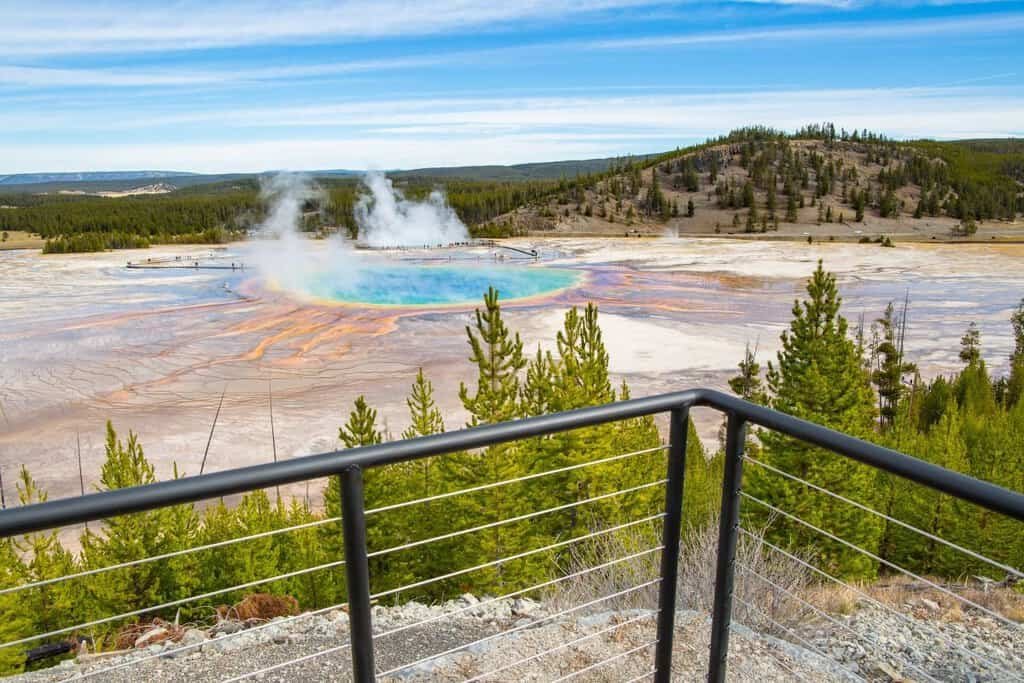
Must-See Geysers in Yellowstone’s Lower Basin: Exploring Firehole Lake Drive
After exploring Fountain Paint Pot and the surrounding geothermal features, we continued our day in the Lower Geyser Basin with a drive along Firehole Lake Drive. This scenic one-way road gave us another opportunity to see Yellowstone’s geothermal activity without having to hike long distances between features.
Firehole Lake Drive is a short, approximately 3-mile one-way road that branches from the Grand Loop Road between the Midway Geyser Basin and Madison. Along the drive, we found several pullouts and boardwalks where we could stop and explore the thermal features.
We particularly enjoyed this part of the Lower Geyser Basin because we could take our time. The road is not open to oversized vehicles, which can make it feel less congested than some of Yellowstone’s other popular geothermal areas. It also gave us a nice change of pace after walking the boardwalk at Fountain Paint Pot.
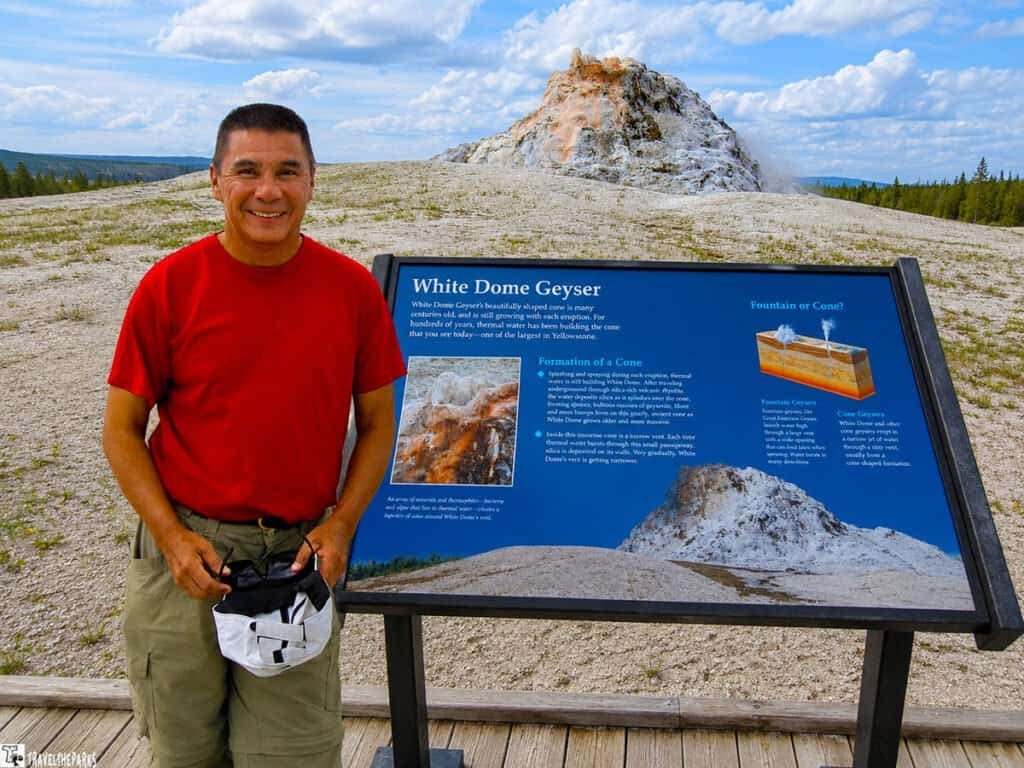
White Dome Geyser
White Dome Geyser immediately caught our attention with its large, white geyser cone. The cone rises prominently from the surrounding landscape and is one of the most recognizable features along Firehole Lake Drive.
When White Dome erupts, water shoots from the narrow opening in the cone. Its eruptions can occur relatively frequently, although the interval varies, so we didn’t try to plan our entire visit around catching one.
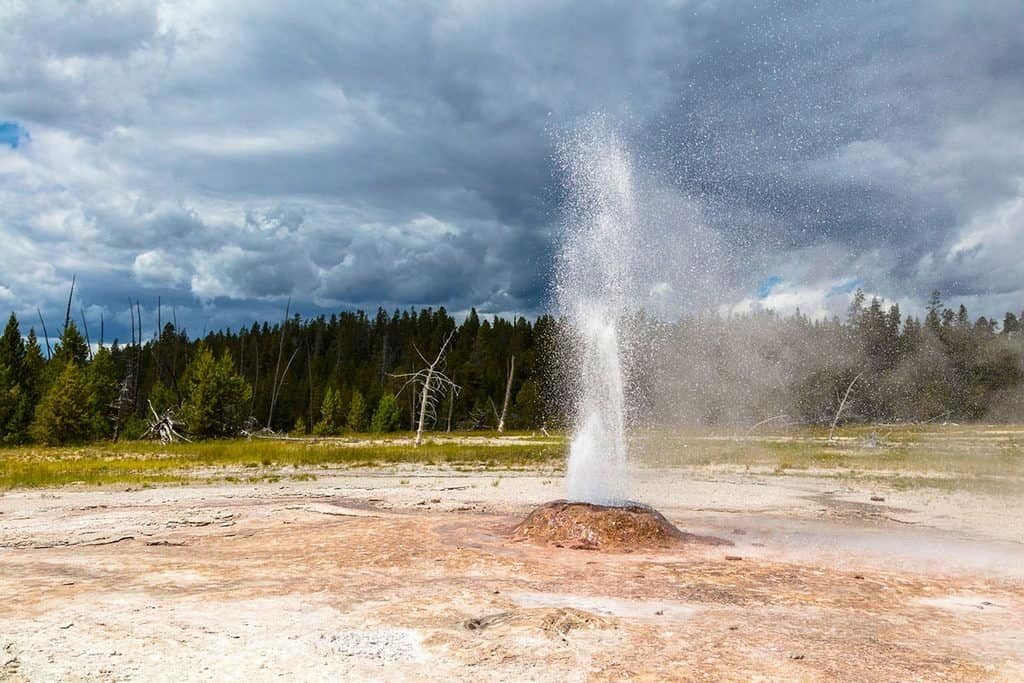
Pink Cone Geyser
Pink Cone Geyser is another fascinating feature along the drive. Its cone has a distinctive pinkish-white appearance created by mineral deposits built up over years of geothermal activity.
Unlike White Dome, Pink Cone erupts much less frequently. We enjoyed seeing the cone itself even though we weren’t there for an eruption.
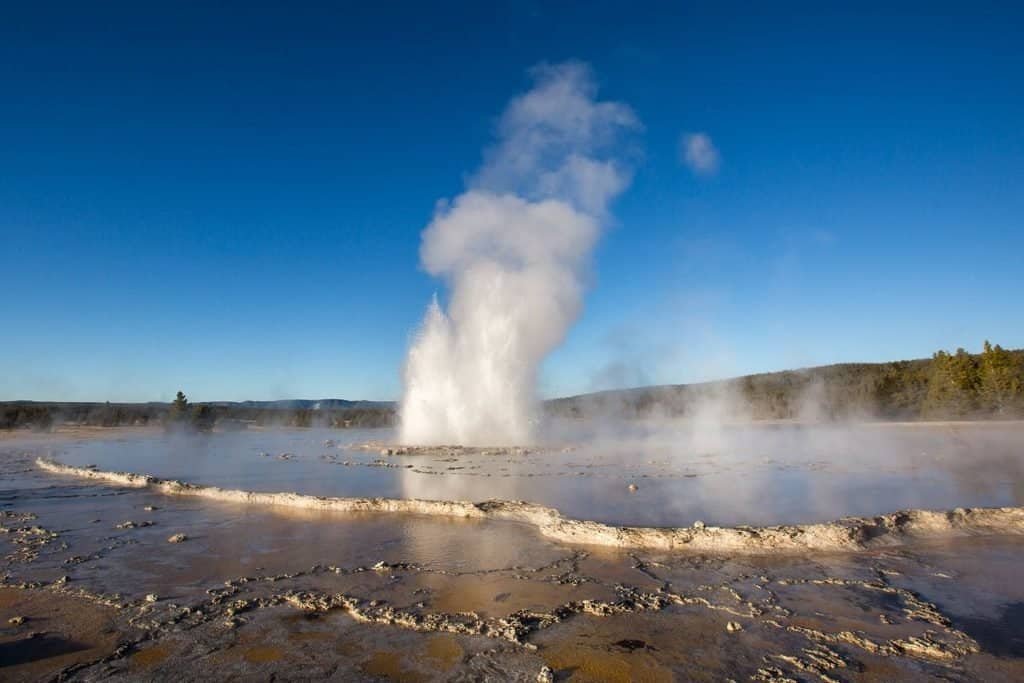
Great Fountain Geyser
Great Fountain Geyser is the major attraction along Firehole Lake Drive, and we would definitely recommend checking its predicted eruption time if seeing it erupt is important to you.
When Great Fountain erupts, it can send water high into the air in an impressive display. Eruptions can last for an extended period, and the surrounding pools and terraces make the entire scene especially beautiful.
We found it fascinating to watch the geothermal activity surrounding the geyser even when it wasn’t erupting. Yellowstone’s thermal landscape is constantly moving, steaming, bubbling, and changing.
Current eruption predictions can change, so we recommend checking with Yellowstone National Park for the most up-to-date information rather than relying on an old schedule.
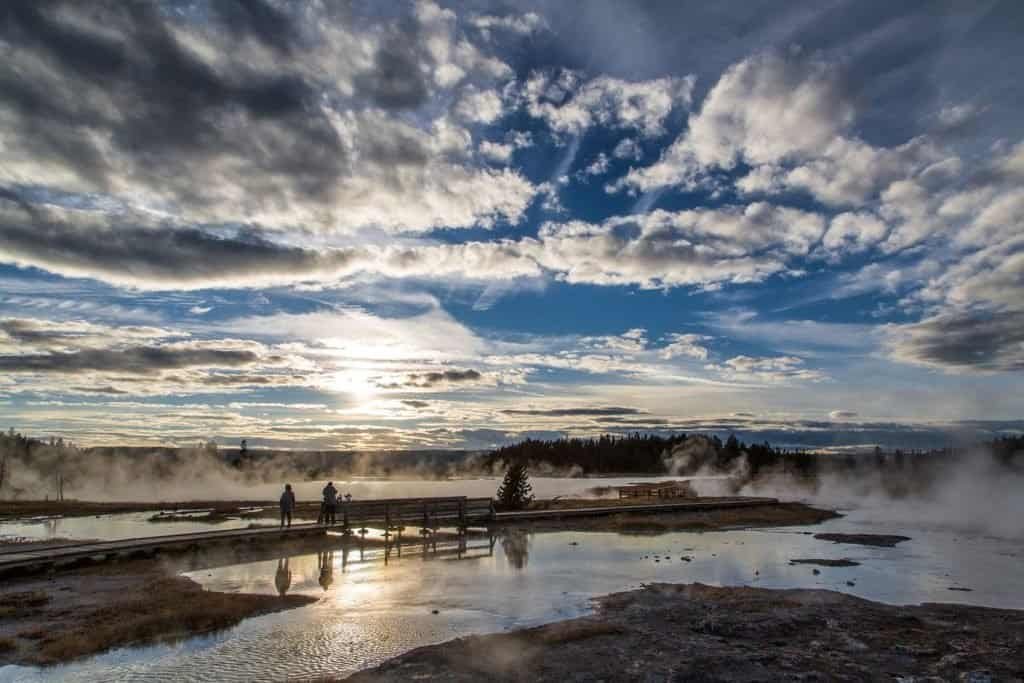
Firehole Lake
Firehole Lake is another worthwhile stop along the drive. Boardwalks allow us to explore the area around the lake and view several additional geothermal features.
We enjoyed seeing the contrast between the calm-looking lake and the steaming, active thermal features surrounding it. It is another great example of how much geothermal activity is packed into this relatively small area.
If you’re looking for the must-see geysers in Yellowstone’s Lower Basin, Firehole Lake Drive deserves a place on your itinerary. We found that the combination of scenic driving, short walks, geysers, hot springs, and colorful geothermal features made this one of our favorite parts of Exploring the Lower Geyser Basin.
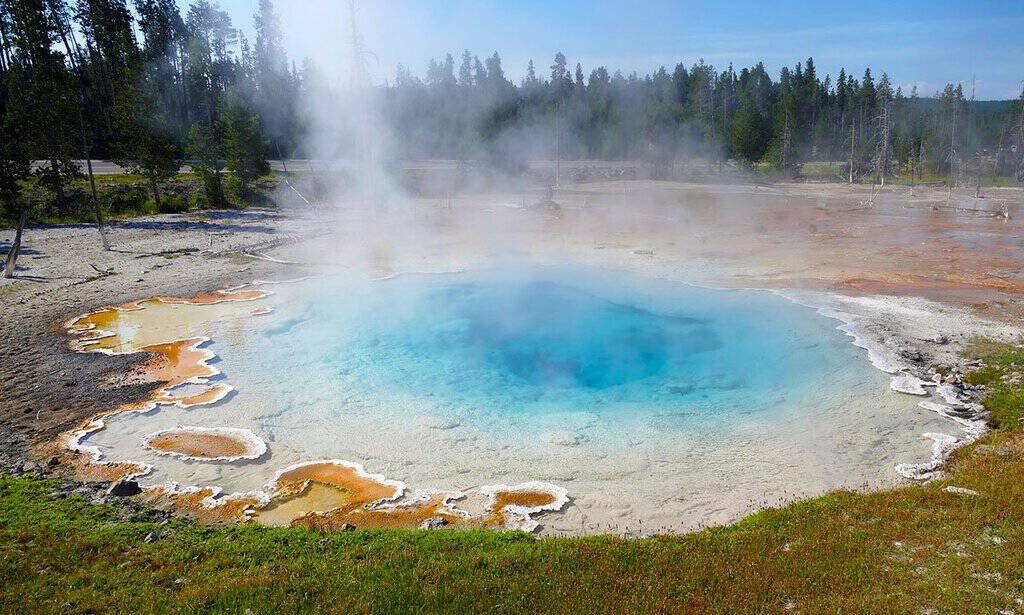
Discover Firehole Canyon on Your Lower Geyser Basin One-Day Itinerary
After exploring the geothermal features along Firehole Lake Drive, we continued our Lower Geyser Basin One-Day Itinerary with a detour onto Firehole Canyon Drive. For us, this one-way road was a welcome change of pace and a chance to escape some of the crowds while enjoying the scenery along the Firehole River.
Firehole Canyon Drive follows the Firehole River south through a narrow canyon before reconnecting with the Grand Loop Road. We took our time and stopped at several of the pullouts to enjoy the river, forest, and dramatic canyon walls.
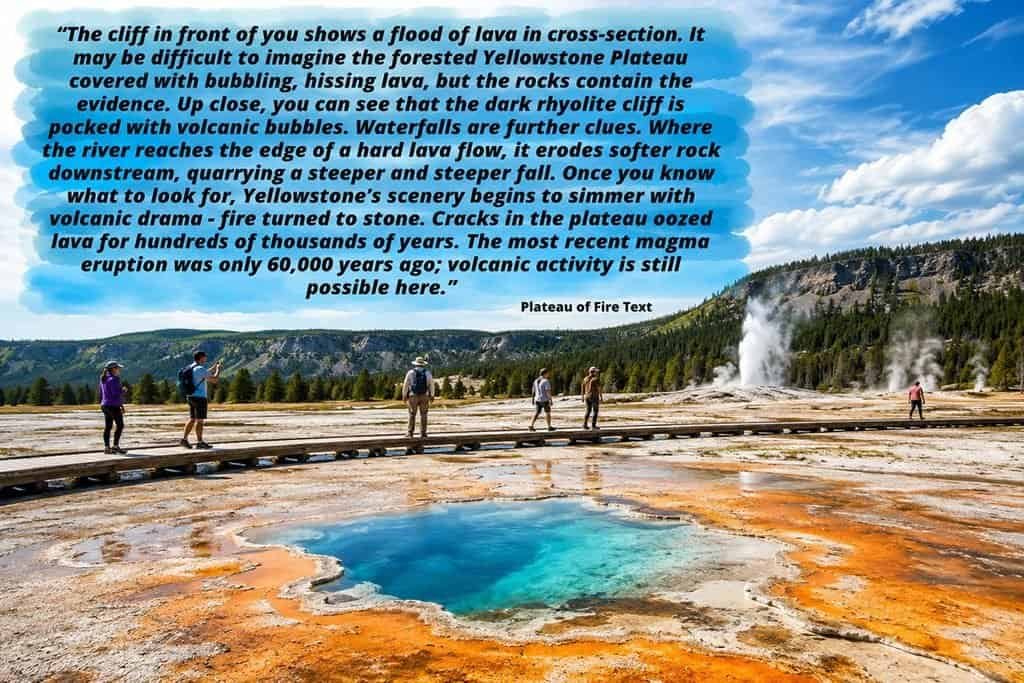
One of the things we found most interesting was the volcanic story written into the rocks. An interpretive sign near Firehole Falls explains how ancient lava flows shaped the canyon. The dark rhyolite cliffs are evidence of Yellowstone’s powerful volcanic past, while the Firehole River continues to carve its way through the landscape.
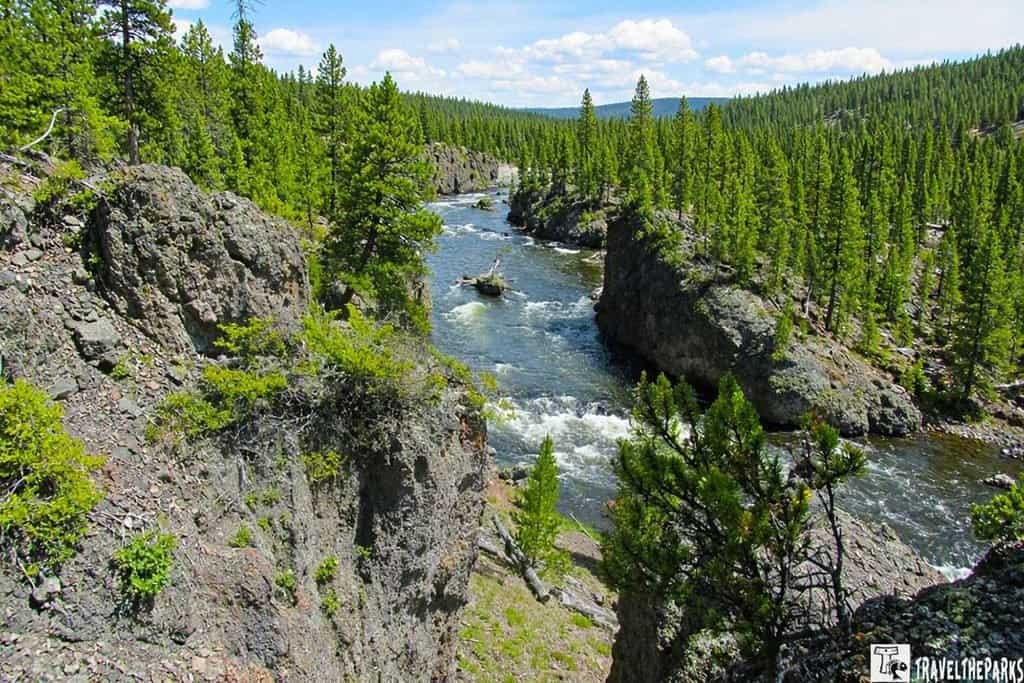
Firehole Falls
Firehole Falls was the highlight of our drive. The Firehole River rushes through the canyon and drops approximately 40 feet over the volcanic rock, creating a beautiful waterfall surrounded by forest.
We enjoyed stopping here and listening to the rushing water. On a sunny day, the mist around the falls can create beautiful photo opportunities, and the contrast between the dark volcanic rock, green forest, and rushing river makes this a particularly scenic stop.
The falls also give us another opportunity to see how water and volcanic activity have worked together to shape Yellowstone’s landscape.
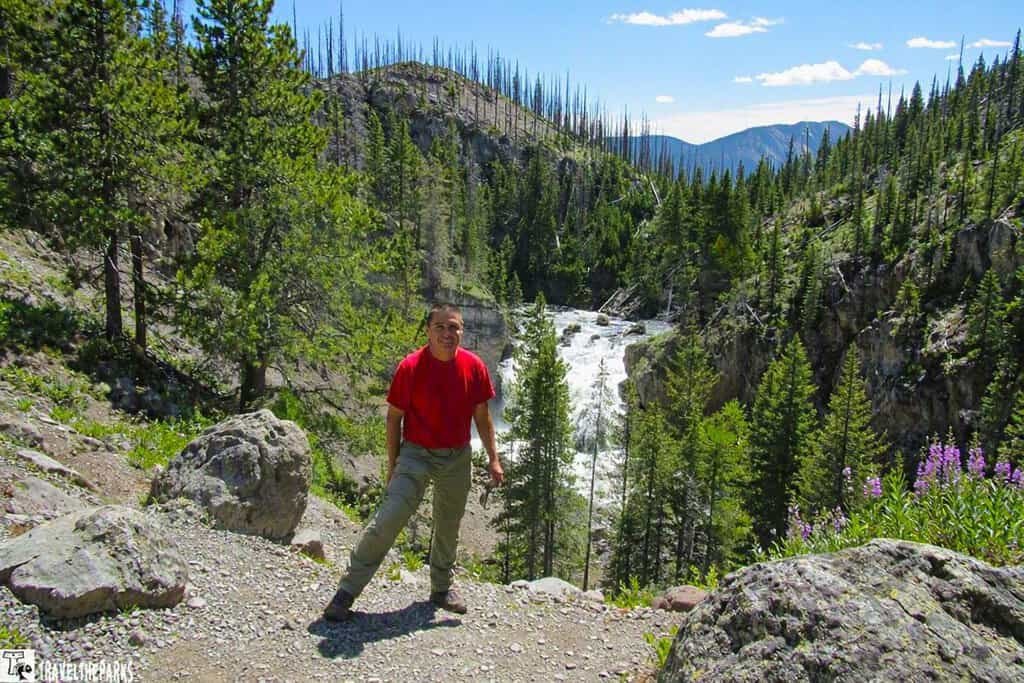
Firehole Swimming Area
Farther along the drive, we came to the popular Firehole Swimming Area. This is one of the more unusual recreational areas in Yellowstone because the Firehole River can be warmed by geothermal activity upstream.
When we visited, we found the water surprisingly chilly. The river may look inviting on a warm summer day, but don’t expect a hot-spring experience. Water temperatures and conditions can vary, and swimming is only permitted when the area is officially open.
If you’re interested in swimming here, check the current Yellowstone National Park conditions before your visit. The swimming area can close because of water temperatures, high water, or other safety concerns.
For us, even the walk down to the river was worthwhile. The surrounding scenery was beautiful, and it was a nice change from the boardwalks and geothermal features we had been exploring earlier in the day.
Allow Extra Time for Yellowstone Traffic
We have learned not to make our Yellowstone plans too rigid. A short drive can suddenly turn into a much longer adventure when a herd of bison decides to use the roadway.
Rather than getting frustrated, we enjoy the unexpected wildlife encounters and remind ourselves that this is part of experiencing Yellowstone. The park belongs to the wildlife, and we’re simply visitors passing through.
Pro Tip: Build extra time into your Lower Geyser Basin One-Day Itinerary. Yellowstone’s roads can become surprisingly slow when traffic encounters bison or other wildlife..
Wildlife Watching Near Yellowstone’s Lower Geyser Basin: Experiencing Iconic Bison Jams
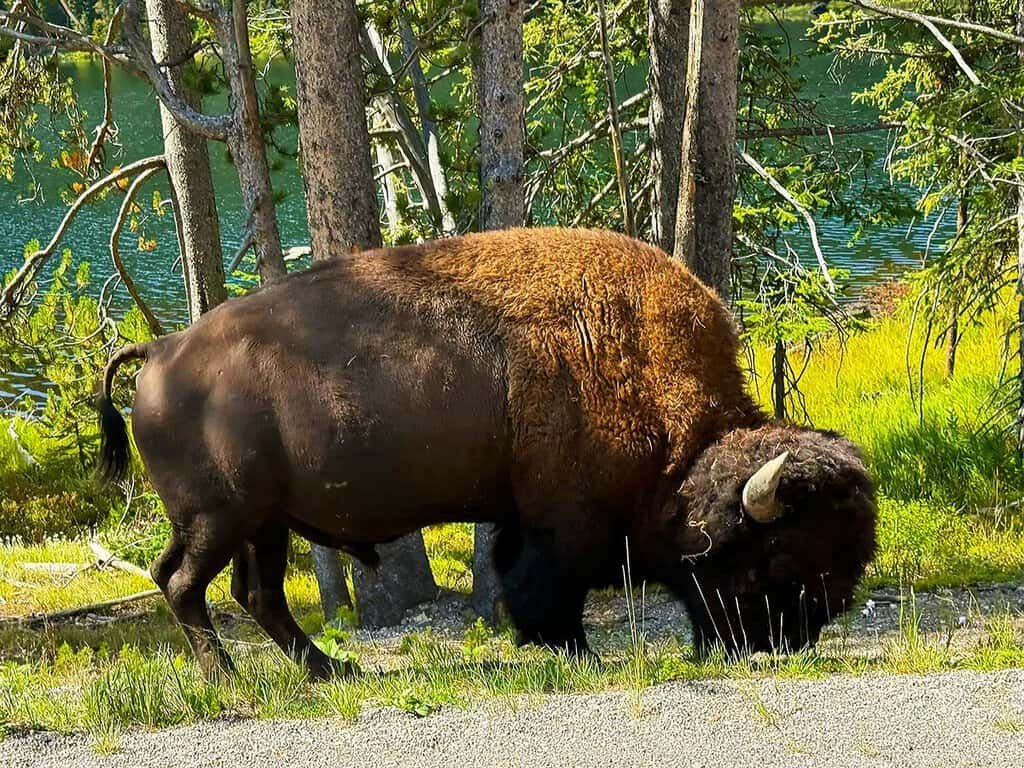
One of the unexpected highlights of a day in the Lower Geyser Basin is the wildlife. Yellowstone is famous for its bison, and you never know when a quiet drive will turn into what visitors affectionately call a “bison jam.”
Bison don’t care about traffic. When they decide to walk along or across the road, everyone else simply has to wait. We have learned to look at these slowdowns as part of the Yellowstone experience rather than an inconvenience. Watching a herd move through the landscape is an incredible sight, especially when you can safely observe them from inside your vehicle.
On one of our drives, we turned onto the Grand Loop Road toward Norris Geyser Basin and quickly found ourselves caught in a bison jam. A small herd had taken over the roadway in Fountain Flats, bringing traffic to a crawl.
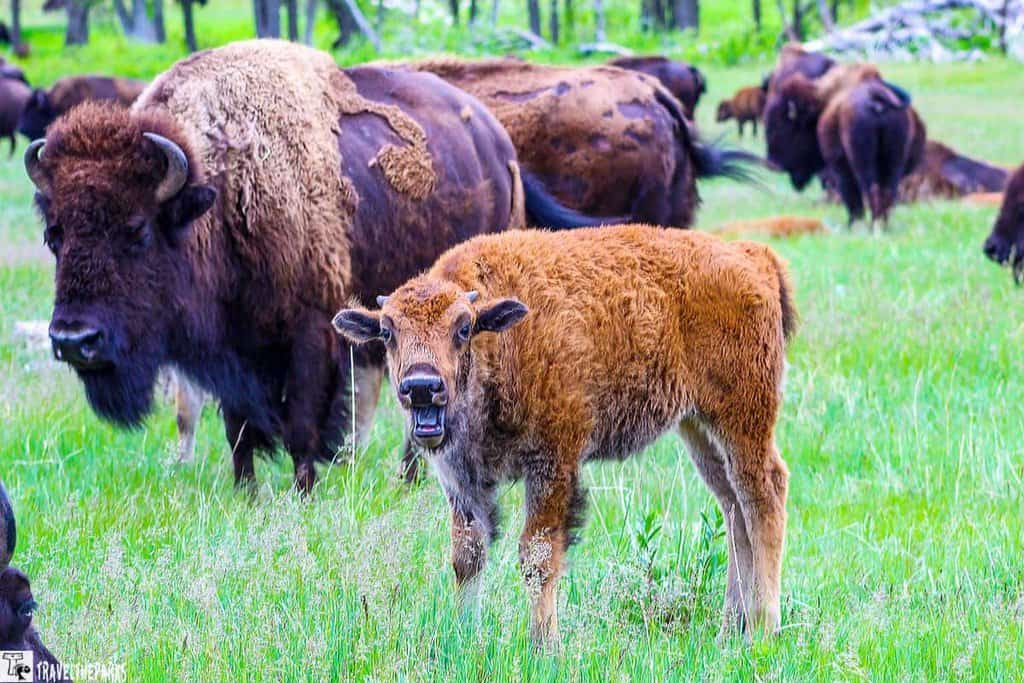
Rangers were there helping keep vehicles moving and reminding visitors to give the animals plenty of room. We watched the bison slowly make their way along the road while everyone waited patiently for the herd to clear.
It never ceases to amaze us how close some visitors will get to wildlife while trying to take a selfie. Bison may look calm and slow, but they are powerful wild animals capable of moving much faster than you might expect.
We strongly encourage everyone to follow Yellowstone’s wildlife-safety rules and maintain a safe distance. Stay in your vehicle when appropriate, never approach or attempt to touch wildlife, and use a zoom lens or binoculars rather than your feet to get a closer look.
For us, the bison jam was another reminder that Yellowstone isn’t a theme park. The wildlife is in charge, and we’re fortunate to be visitors in their home.
Pro Tip: Give yourself extra time when driving through the Lower Geyser Basin. A bison jam can turn a short drive into an unexpected wildlife experience—and that’s one Yellowstone traffic delay we don’t mind at all.
Planning Your Day in the Lower Geyser Basin
We found that a little planning made our day in the Lower Geyser Basin much easier. The area is spread out, and Yellowstone traffic can add significant time to even a short drive.
- Start Early: We recommend starting early, especially if you want to visit Fountain Paint Pot. Parking areas can fill quickly, and the popular stops become much busier as the day progresses.
- Check Road Conditions: Before heading out, check the current Yellowstone National Park road conditions. Seasonal closures, construction, weather, and other conditions can affect your route.
- Bring Water and Dress in Layers: We always carry plenty of water when exploring Yellowstone. Even during summer, mornings can be cool, while temperatures can warm considerably by afternoon. Comfortable walking shoes are also important. Between the boardwalks, short hikes, and stops along the scenic drives, you’ll spend plenty of time on your feet.
- Plan for Wildlife and Traffic: Give yourself more time than you think you’ll need. Bison and other wildlife frequently cause traffic delays, and crowded parking areas can add even more time to your itinerary. We have learned to keep our Yellowstone plans flexible. Some of our favorite moments have happened when an unexpected wildlife encounter or scenic stop changed our plans.
- Pack a Picnic: We like carrying a picnic lunch when spending a full day in this area. Having food with us means we don’t have to leave the Lower Geyser Basin in search of a meal and can spend more time exploring. Always follow Yellowstone’s food-storage and wildlife-safety regulations, and never leave food unattended.
With an early start, plenty of water, flexible timing, and a little patience, we found exploring the Lower Geyser Basin to be an easy and rewarding addition to our Yellowstone itinerary.
Final Thoughts on Our Day in the Lower Geyser Basin
Our day in the Lower Geyser Basin gave us a little bit of everything we love about Yellowstone. We walked the boardwalks around Fountain Paint Pot, watched for eruptions along Firehole Lake Drive, enjoyed the scenery along Firehole Canyon, and even found ourselves caught in a bison jam.
What we enjoyed most was the variety. The Lower Geyser Basin isn’t just about one famous geyser. The geothermal features are spread across the landscape, so every stop gave us something different to see.
We also liked that we could combine the geothermal areas with scenic drives, hiking, waterfalls, and wildlife viewing. It made for a full day without feeling like we were simply checking attractions off a list.
If you’re planning a Yellowstone trip, we think Exploring the Lower Geyser Basin is well worth adding to your itinerary. Start early, allow plenty of time, and be prepared for Yellowstone to change your plans along the way.
That flexibility is part of the fun.
What was your favorite geyser? Did you see any wildlife during your visit? Tell us about it in the comments below!