Table of Contents
Updated September 2026
From the moment our plane touched down in Anchorage, all I could think about was hunting for trophy Kenai rainbows. I wanted to get on a lake or river and start exploring Alaska with a rod in my hand.
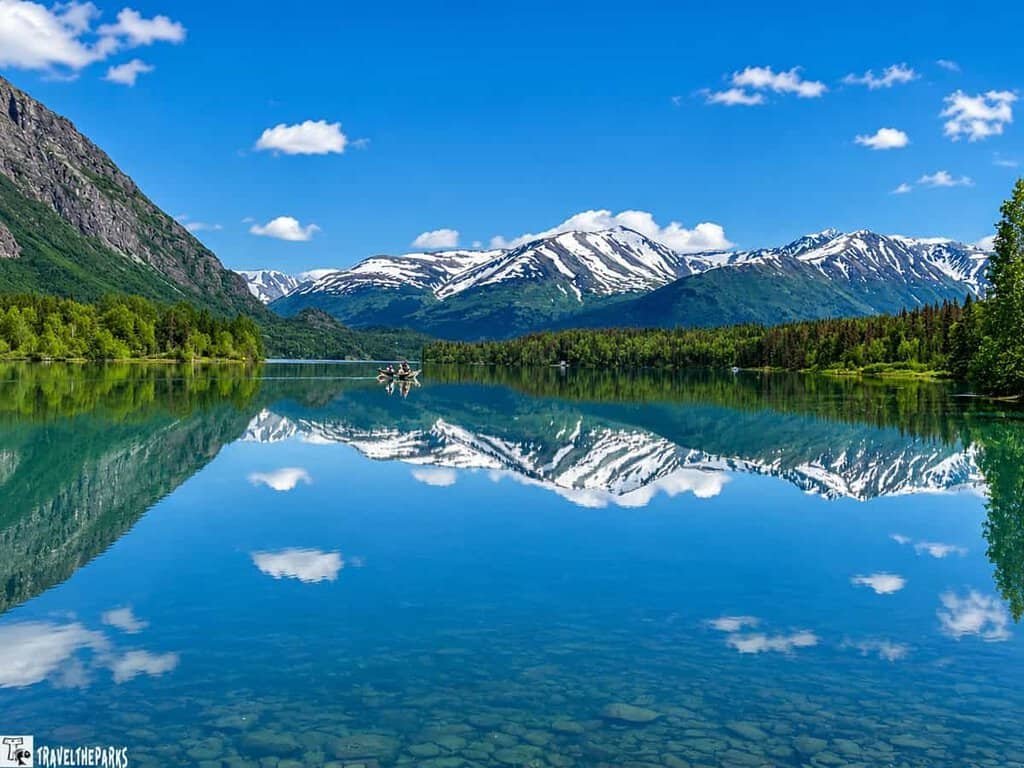
The drive down the Seward Highway toward Soldotna was almost a distraction. Snow-capped mountains surrounded us at every turn, and we kept finding reasons to pull over for another photo. But I had one thing on my mind: landing a big rainbow trout on the Kenai.
Landing a trophy rainbow had been on my mind since we booked the trip back in January. This wasn’t just another day of fishing. I had been waiting months for the chance to experience it for myself. If chasing a trophy Kenai rainbow isn’t already on your Alaska bucket list, maybe it should be.
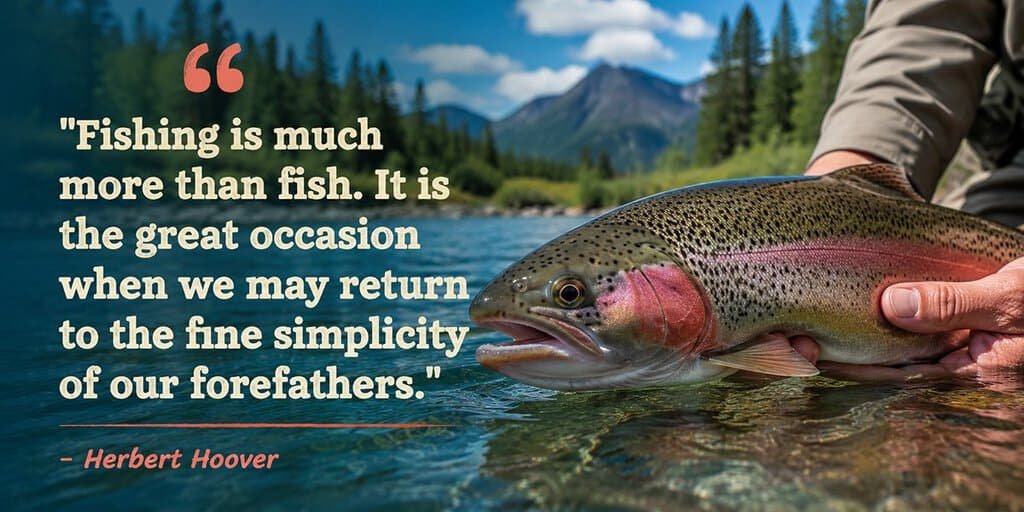
Our first trip to Alaska was back in 2012. Barry spent a full day guided fishing on the Kenai, targeting rainbow trout. I missed out that time. I was off on my own dream adventure, bear viewing with High Adventure Air at Wolverine Creek.
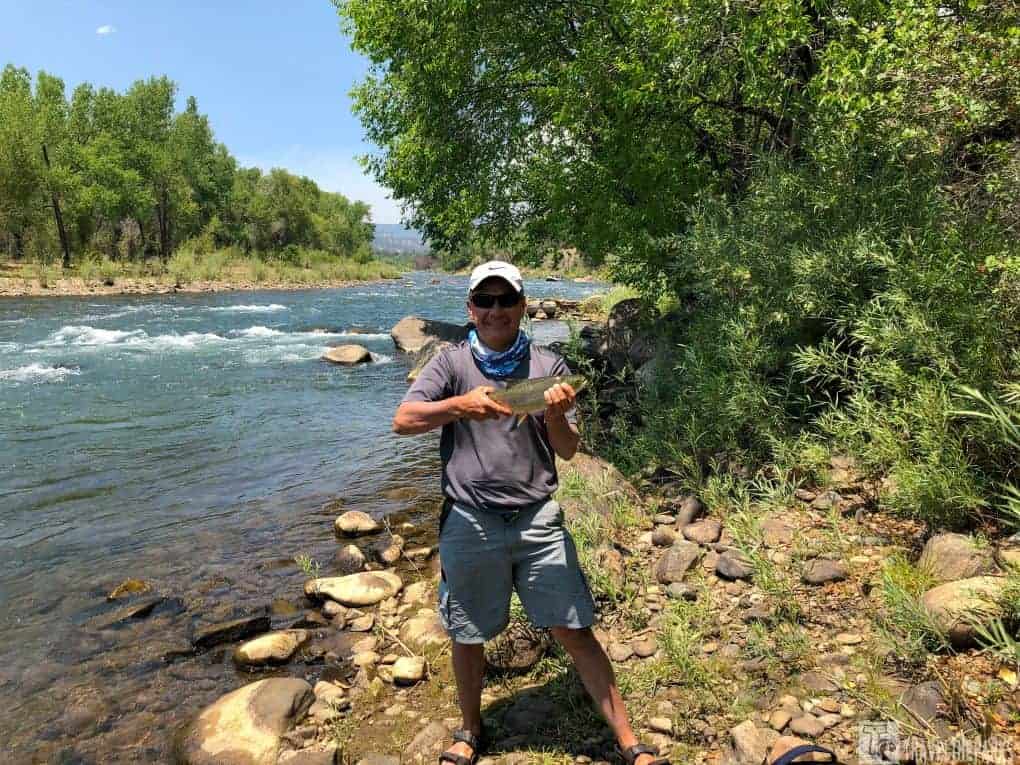
Barry came home with incredible photos of the trout he caught. But pictures only tell part of the story. They couldn’t capture what it was like to hook into one of those powerful Kenai rainbows.
This time, I wasn’t missing out.
I wanted my turn on the Kenai.
This post may contain affiliate links, meaning if you purchase something through one of these links, we may earn a small commission at no extra cost to you! Read the full disclosure policy here.
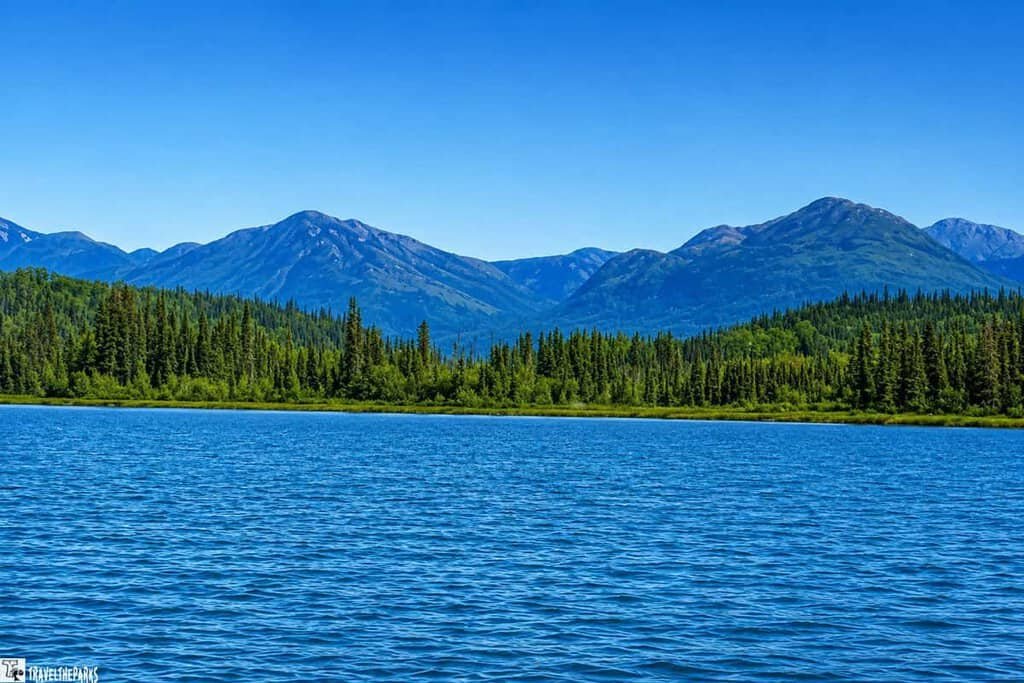
Why Alaska Fish & Lodge Is the Right Guide for Our Trophy Hunt
A good guide can put you in the right spots and teach you the techniques needed to land a trophy Kenai rainbow. This isn’t a river where guesswork gets you very far.
We booked with Alaska Fishing & Lodging, a company offering guided fishing trips on some of Alaska’s best waters, including the Kenai River, Kasilof River, and Russian River. They came highly recommended, especially after the guide from our first Kenai fishing trip retired and moved to Anchorage.
We wanted a guide who knew the river and understood what it takes to catch a trophy Kenai rainbow trout. The experienced guides at Alaska Fish & Lodge provide all the necessary gear and tailor their instruction to anglers of different skill levels.
For us, having an experienced guide meant we could focus on what we came to do—hunt for a big Kenai rainbow.
Getting Ready to Hunt for Kenai Rainbows
Owner Tyland Vanlier was professional from our very first email. The evening before our trip, our guide, Damond Blankenship, called to confirm where and when we’d meet. We settled on Bing’s Landing, a spot we already knew well from our last visit, for an 8 a.m. start.
That evening, we walked along the Soldotna riverfront and watched a heavy hatch of mayflies. Smolts were rising to sip them right off the surface. It was a pretty good preview of what might be waiting for us the next morning.
After months of thinking about hunting for trophy Kenai rainbows, the wait was almost over. Now all we had to do was get on the river.

Getting on the Kenai River
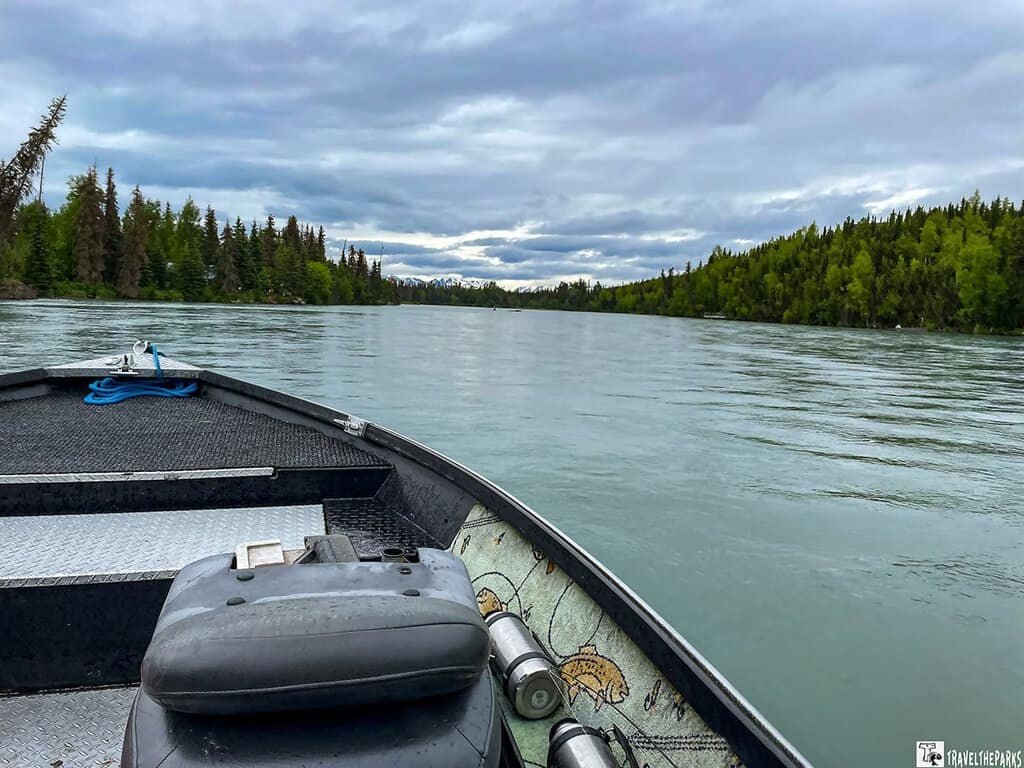
We arrived early, eager to get on the water. Damond already had the boat launched and everything staged for the day. After a quick safety briefing, we headed upstream, with Naptowne Rapids visible just below us. It wasn’t a stretch we’d want to run in early June, when the river can be running high.
The Kenai’s water level and clarity can change from day to day. That morning, the river was running relatively clear, which made us hopeful about the fishing ahead.
The ride upriver had a real chill to it. During the week we spent on the Kenai, the weather stayed mostly overcast. It was a good reminder to dress in layers whenever you’re fishing in Alaska.
I had on insulated hiking pants, a fleece-lined jacket to cut the wind, and wool socks. I was glad I’d brought all three.
What Damond Taught Us About Fishing the Kenai
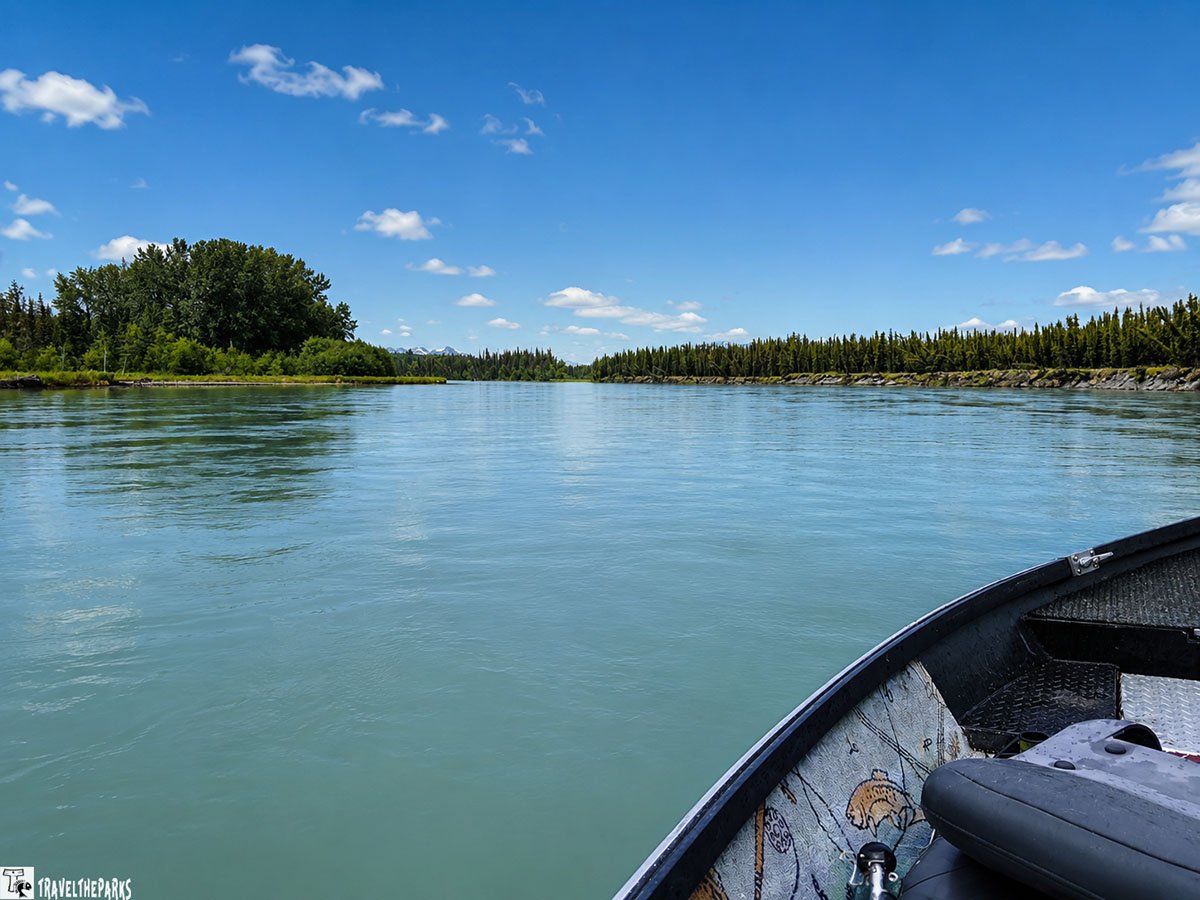
As we motored upriver, Damond gave us some background on the river and the stretch we’d be fishing. The Kenai runs 81 miles from glacial Kenai Lake to Cook Inlet, fed largely by meltwater from the Kenai Mountains. Above Cooper Landing, the river narrows through a canyon inside the Kenai National Wildlife Refuge before reaching the Russian River confluence and continuing toward Skilak Lake.
The river changes considerably as it flows downstream. The Middle Kenai widens after leaving Skilak Lake before narrowing again around Naptowne Rapids near Bing’s Landing. Damond explained how these different sections of the river affect where and how we would fish.
That was important because we weren’t simply floating down the river hoping to stumble across a big trout. We were there with a specific goal: hunting for trophy Kenai rainbows.
Our past trout-fishing experience, including fishing rivers like the Madison in Yellowstone, had usually meant matching flies to whatever insects were hatching that day. The Kenai was different.
The small dry flies that worked for us in Montana and Utah weren’t what we’d be throwing here. Instead, anglers use much larger patterns called flesh flies, along with wet flies, streamers, spinning lures, and patterns designed to imitate shrimp or salmon roe.
For me, this was part of the fun. I wasn’t just fishing a new river. I was learning a completely different approach to catching the big rainbow I had come to Alaska hoping to find.
Finding the Right Water
The Kenai is known for its large rainbow trout, but in June, much of the fishing attention was focused on returning salmon. We’d already had our fill of sockeye the day before with High Adventure Air, so our goal on this trip was different. We were after rainbow trout.
Damond explained that finding the right water isn’t always as simple as pulling over and walking down to the river. Walk-in access along parts of the Middle Kenai is limited because much of the land bordering the river is privately owned. Even where access is available, steep and eroded banks can make getting to the water difficult.
That made having a guide especially valuable. Damond knew where we could safely access the river and, just as importantly, where we had a legitimate shot at finding the fish we were after.
We weren’t there to fish just anywhere on the Kenai. We were hunting for a trophy.
.
The Tackle We Used for Trophy Kenai Rainbows
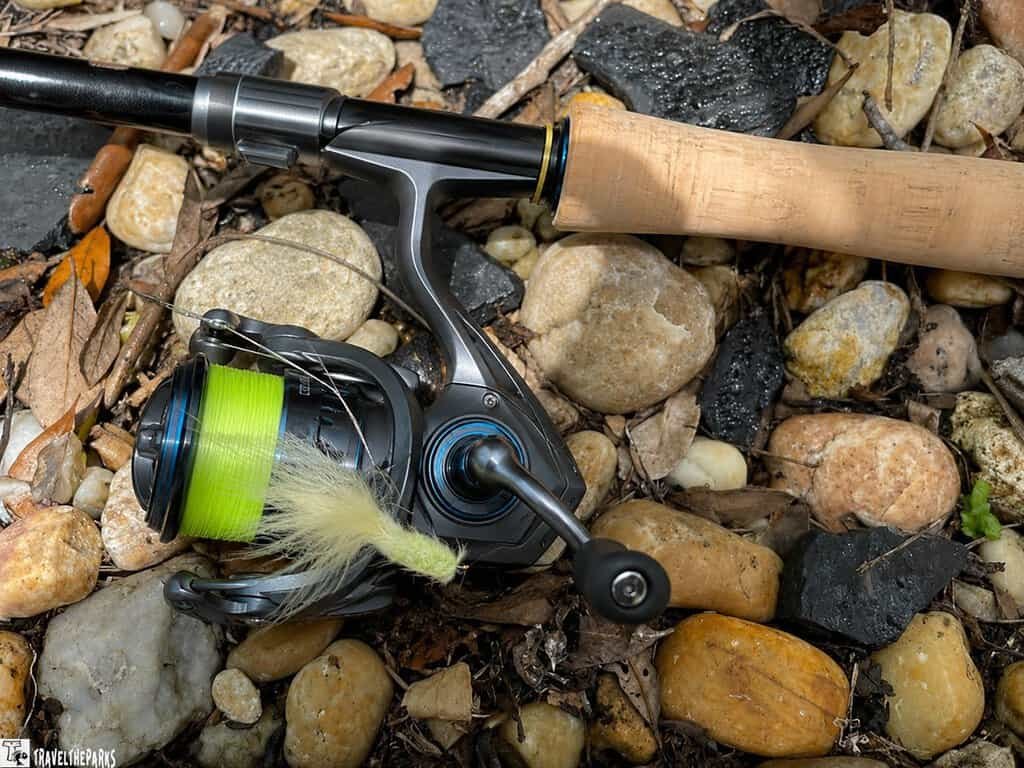
Damond tied his own flesh flies using rabbit fur. The white fur mimics bleached salmon flesh, and he tied them on a size 1/0 Daiichi 2557 Intruder hook. He emphasized how important a strong, sharp hook is when you’re targeting these fish.
These patterns are sometimes called Dali Lama or Battle Bunny flies. The rabbit fur gives them plenty of movement in the current. As Damond explained, Kenai rainbows are feeding heavily in the spring as they recover from their April–May spawn. Flesh flies imitate pieces of salmon flesh drifting through the river.
Here’s the setup we used that day:
- Rod: Berkley Air Rod, 10’6″, 4–10 lb
- Reel: Penn Fierce 2 2000 or Pflueger President 7/8
- Line: Nanofil 14lb low-Vis green
- Leader: Trilene 12lb 100% Fluorocarbon XL
- Weight: 2–3 2 or 3 BB-sized split shots , enough to keep the fly ticking along the bottom
Most Kenai rainbows are year-round residents, although anadromous steelhead also occur in the river. During salmon spawning season, eggs and pieces of decaying salmon flesh drift along the bottom. That’s why keeping the fly down in the current was so important.
For this trip, getting the presentation right was just as important as finding the fish.
Learning How to Fish the Kenai
The Kenai is best fished from a drift boat, with the boat held against the current and slowly slipping backward so the fly moves naturally through the water. Casting technique matters, too. We spent time practicing accuracy, distance, and presentation because getting a drag-free drift is critical when you’re trying to fool these fish.
A good guide earns their keep here. Damond continually adjusted our gear, fly presentation, and technique as the day progressed. He wanted us to understand not just where to cast, but how to make the fly behave like real food in the current.
His goal was to have the flesh fly dead-drift with the current, bouncing along the bottom the way a piece of decaying salmon flesh might. He’d cast the weighted fly upstream at roughly a 45-degree angle, about 10 to 15 feet into the current. As the fly drifted past the boat, we’d reel it in and repeat the process.
The technique is known locally as bottom bouncing, and getting that fly into the right part of the water column was the key.
And this is a good place to transition into the moment we’ve been building toward:
Now we just needed a rainbow to take the fly.
My First Kenai Rainbow
At first, Damond had to keep reminding us not to set the hook the way we would while bass fishing back home. The trick was a subtle tick-tick of the rod tip, barely any movement at all, while letting the fly move naturally along the gravel bottom. Fighting that instinct and reacting too quickly would keep us from hooking the fish.
It took some patience, but I finally hooked my first rainbow of the day.
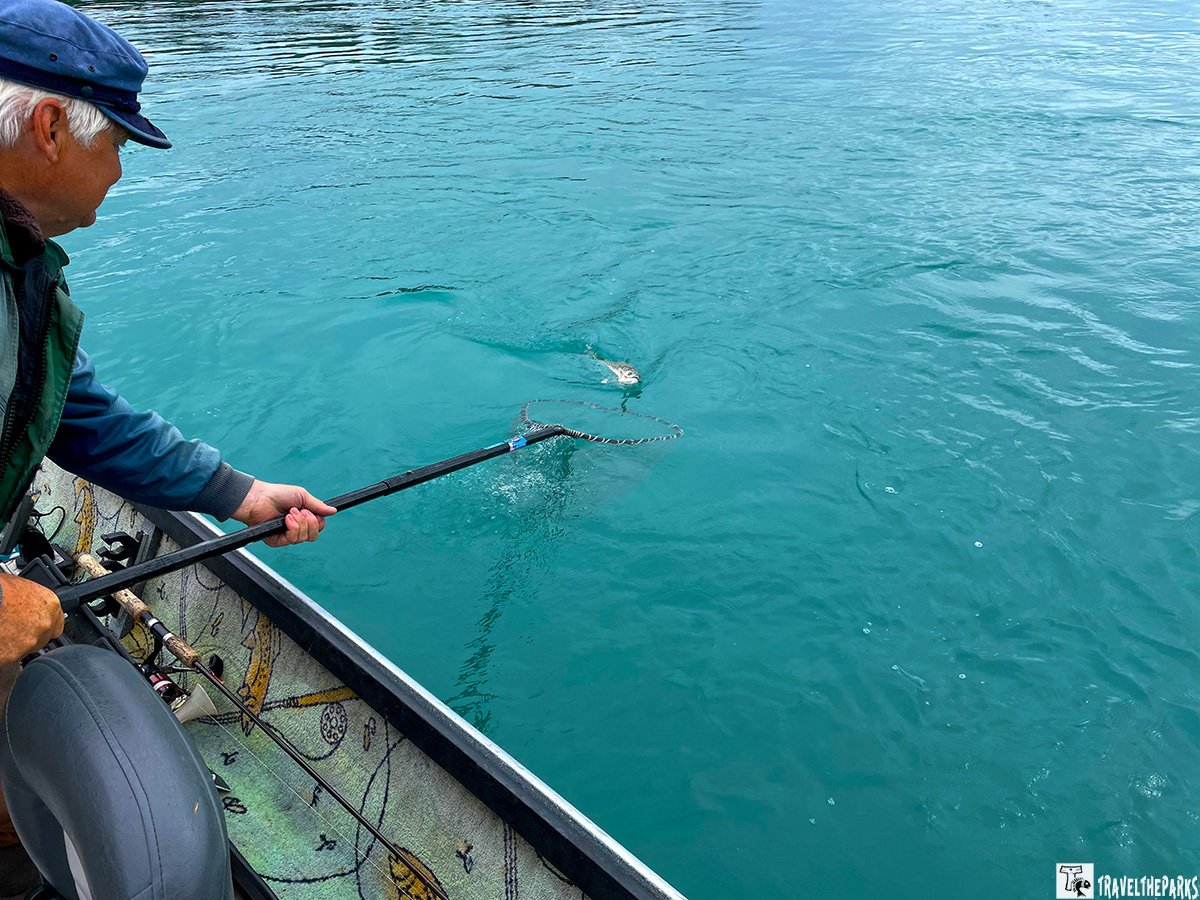
Damond talked me through the fight as I reeled it in. The light rod demanded a gentle hand, and I had to be careful not to break the fish off. With his coaching, we safely got it into the net.
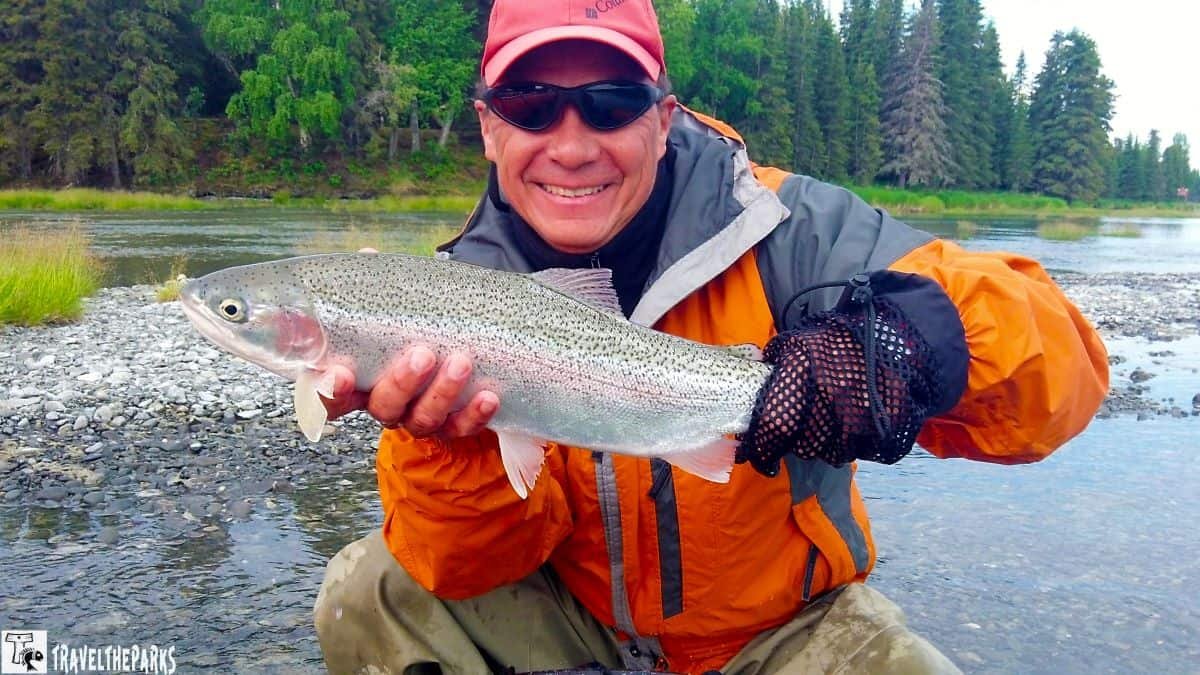
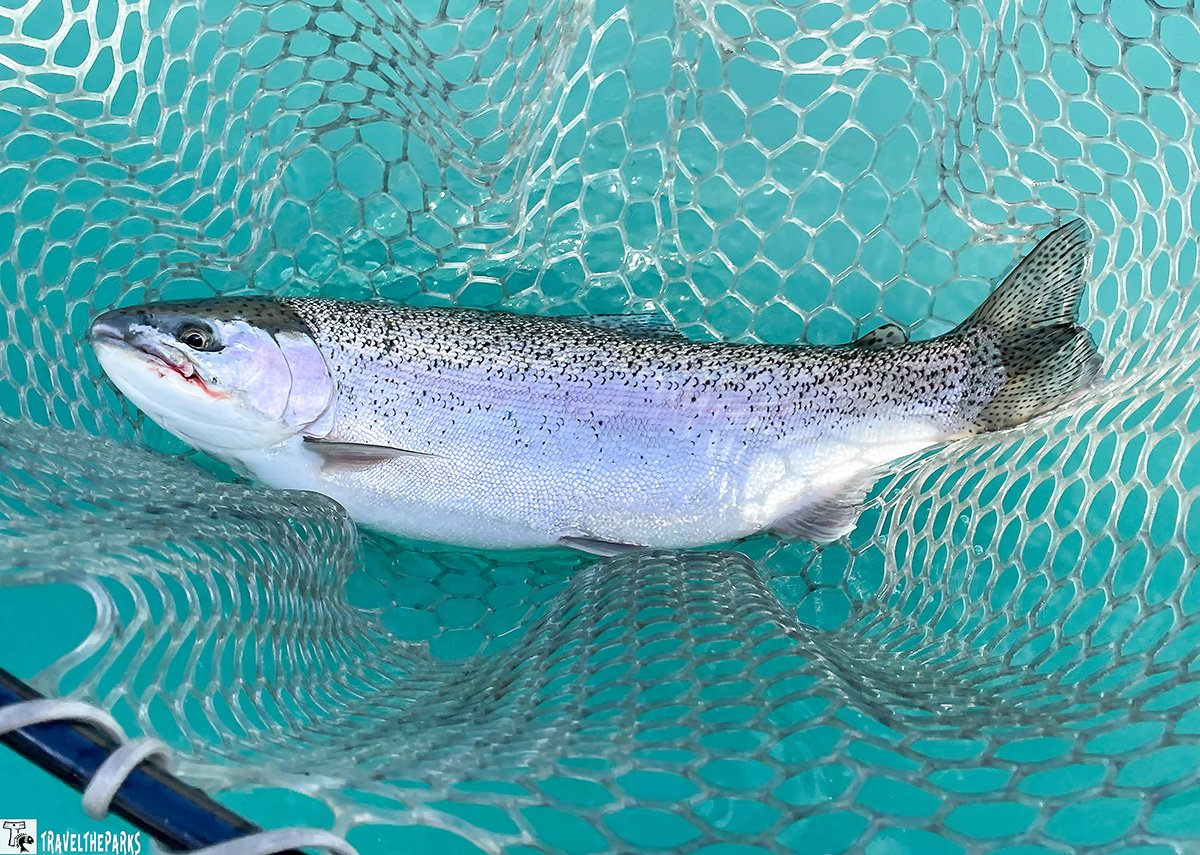
My first Kenai rainbow measured 24 inches, and I was absolutely thrilled.
The morning brought a few more hits and misses, along with a couple of Dolly Varden, a species I’d never caught before. But that first rainbow was the fish I’d been waiting for.
Drift, Cast, Repeat: Chasing Bigger Rainbows
Damond was one of the most attentive guides we’ve ever fished with. I also appreciated the hot cocoa he handed me mid-morning, just as the chill from the water was starting to work its way into my hands. A quick lunch break on shore gave us a chance to warm up and recharge for the afternoon.
By afternoon, the sun finally broke through, and we were grateful for the change. We made repeated passes over gravel bars where fish hold, waiting for a meal.
At one deep hole, my line suddenly screamed off the reel faster than I could manage. The line eventually snapped, and we suspected we’d hooked a king salmon—far more fish than our ultralight gear was built to handle.
We kept at it, catching and releasing hefty rainbows throughout the afternoon. My largest landed around 27 inches.
No complaints there.
Between the fishing and the company, this was everything I’d hoped for. I came to Alaska hunting for trophy Kenai rainbows, and by the end of the day, I’d caught some fish I won’t soon forget.
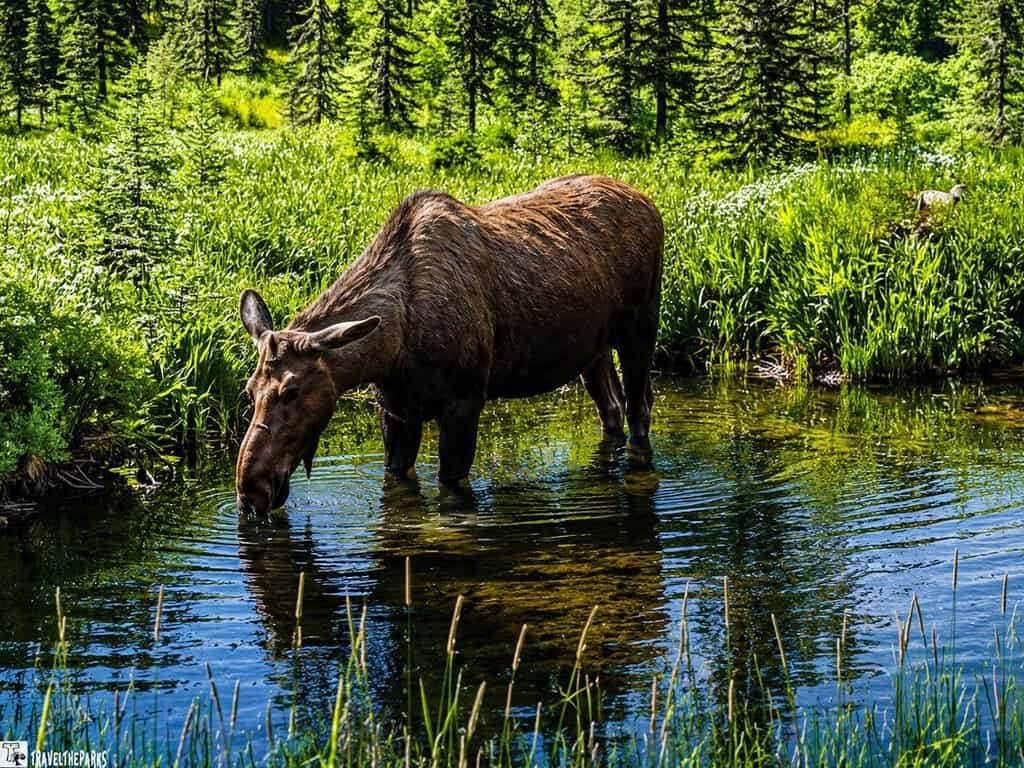
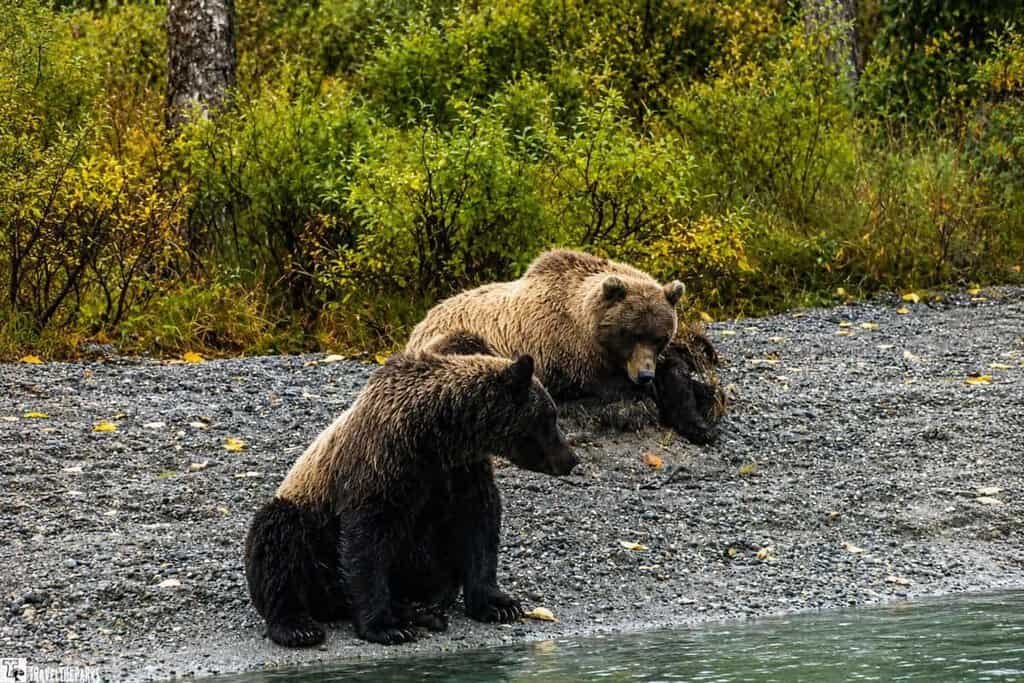
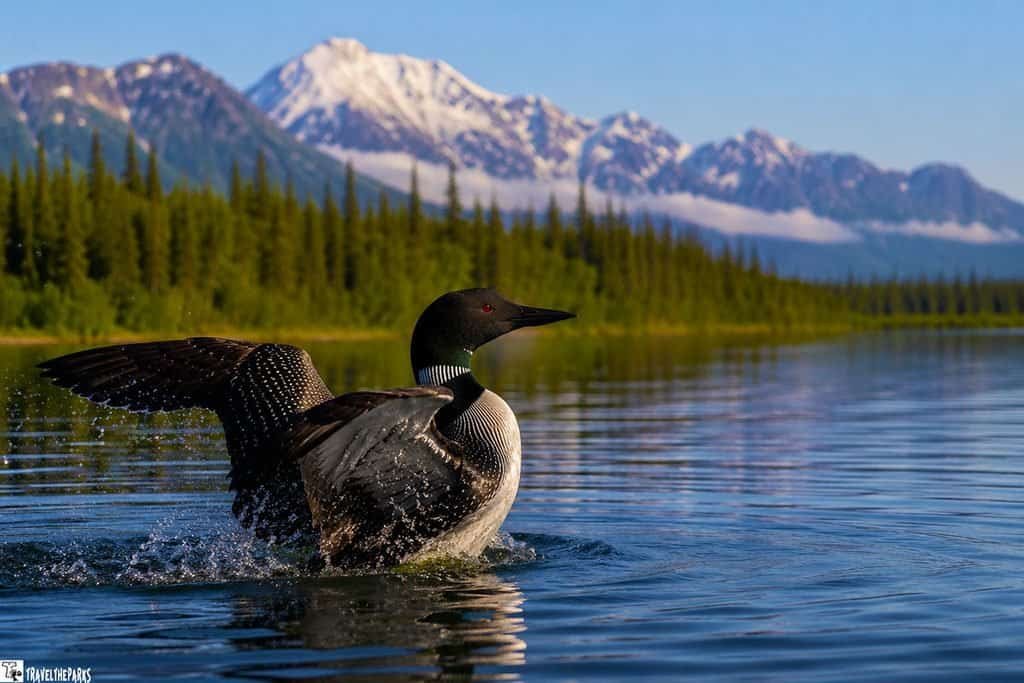
The Kenai delivered in other ways, too. Bald eagles perched along the banks, a moose worked its way along the shoreline, and another group of boaters told us we’d just missed seeing a bear. A few common loons rounded out the day. Their haunting call is something I genuinely miss now that we live in Florida.
Know Before You Go: Fishing the Kenai for Trophy Rainbows
If you’re planning your own Alaska trophy rainbow trout fishing trip, a few things are worth knowing before you go.
- Get a fishing license. You’ll need an Alaska State fishing license, available online or from a licensed vendor.
- Dress in layers. Alaska weather can change quickly. Bring rain gear, sunscreen, a hat, and gloves, and wear comfortable, grippy shoes or boots for slick riverbanks.
- Ask your guide what gear is provided. Our guide supplied the fishing gear, but every outfitter is different. If you’re fishing on your own, you’ll need an appropriate rod and reel, flies or lures, a landing net, waders, and polarized sunglasses.
- Pack bug spray. Depending on the season and location, insects can be relentless.
- Bring motion-sickness remedies if needed. If you’re prone to motion sickness, it’s worth having whatever works for you on hand.
- Bring a camera or smartphone. You’ll want something to capture the scenery and wildlife. Binoculars are useful, too.
- Pack enough food and water. A full day on the river works up an appetite, so make sure you have enough to stay fueled and hydrated.
Pro tip: Bears are active along the Kenai. Carry bear spray when going ashore, make noise, and stay alert so you don’t surprise a bear.
Final Thoughts on Hunting for Trophy Kenai Rainbows
Our trip with Alaska Fish & Lodge gave me exactly what I’d hoped for: the chance to get on the Kenai and hunt for trophy rainbow trout. From the moment we met Damond, I knew we were in good hands. His knowledge of the river, patience with our technique, and attention to detail made a difference throughout the day.
Alaska Fish & Lodge also offers lodging at their property in the heart of the Kenai Peninsula, with comfortable rooms, a dining area, and a lounge where you can relax after a day on the water.
We didn’t land the true monster I had dreamed about, but I’m not complaining. My first Kenai rainbow measured 24 inches, and my biggest of the day reached about 27 inches. For my first time fishing the Kenai, that’s a day I’ll remember for a long time.
And yes, we’re already thinking about going back for that trophy.
Have you fished the Kenai? What did you love most about your trip? Share your thoughts in the comments below.