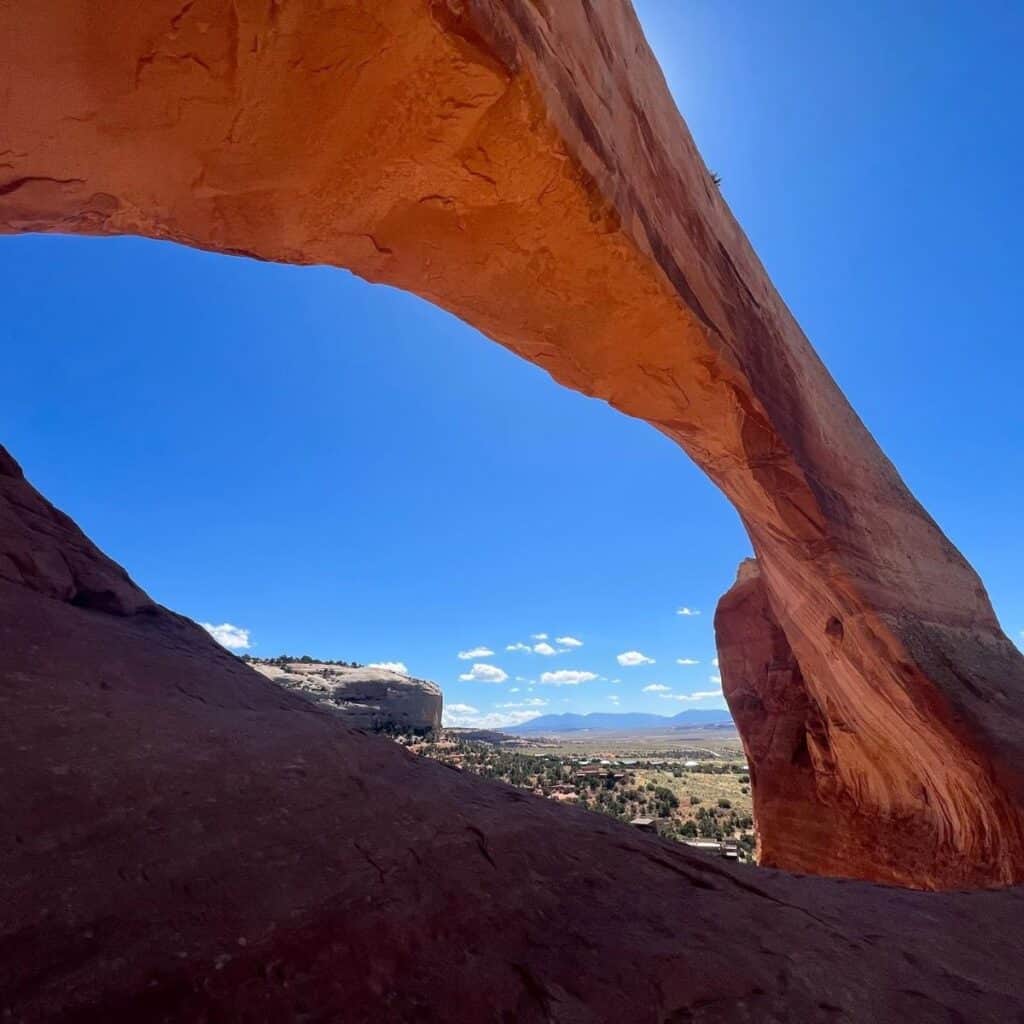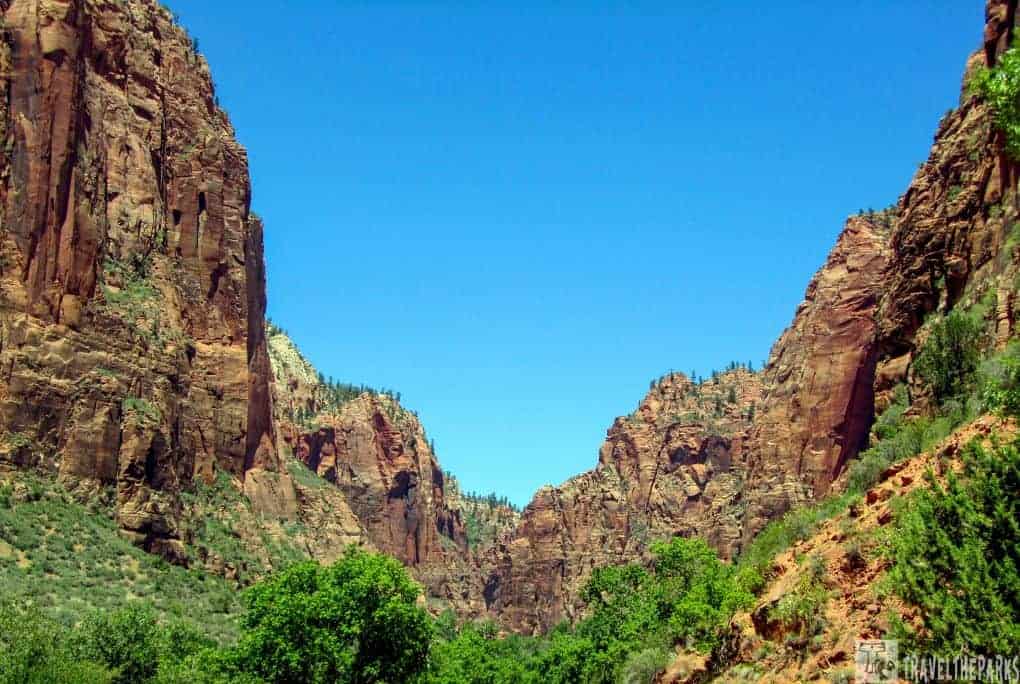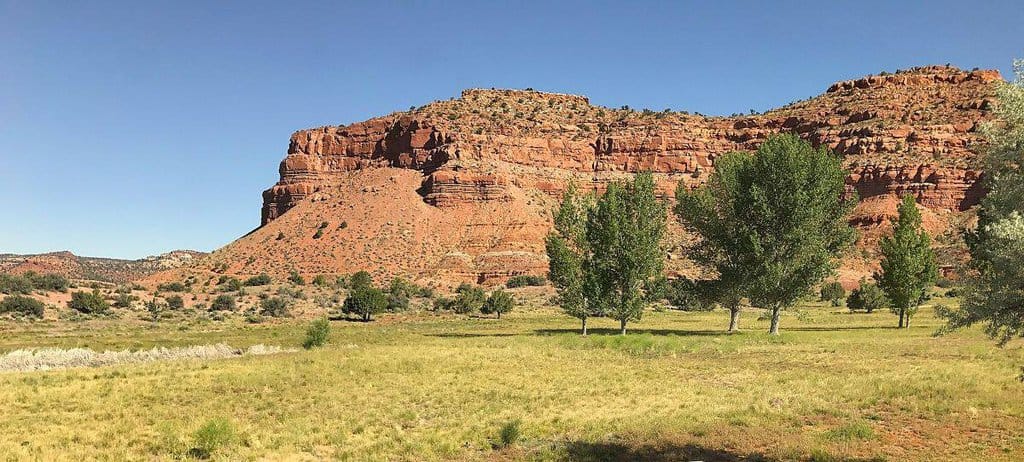
If you’re looking for the best things to do in Kanab, Utah, you might be surprised by how much this little cowboy town has to offer. When we mapped out our Grand Circle tour, Kanab wasn’t the headline—but it quickly became one of the chapters we couldn’t stop talking about. Sandwiched between Utah’s Mighty 5 and Arizona’s iconic landscapes, it could have easily been a blink-and-you-miss-it stop. Instead, we hit the brakes, stayed awhile, and discovered a town with plenty of character.
Most Grand Circle travelers plant their flag in Moab, but Kanab is every bit as convenient as a home base and often feels much more laid-back. For us, it became the perfect launchpad for exploring the North Rim of the Grand Canyon, Page and Lake Powell, and the spectacular red-rock country surrounding southern Utah. From Western movie history and quirky local attractions to scenic drives, unique hikes, and unforgettable landscapes, there are plenty of reasons to stay awhile in Kanab, Utah rather than simply passing through.
This post may contain affiliate links, meaning if you purchase something through one of these links, we may earn a small commission at no extra cost to you! Read the full disclosure policy here.
Table of Contents
Getting to the Action in Kanab
Kanab has this sneaky way of being exactly where you need it—right in the sweet spot between southern Utah’s heavy hitters and northern Arizona’s showstoppers. On our Grand Circle run through the Mighty 5, we quickly realized it wasn’t just a pit stop; it was the pivot point that held the whole trip together. From here, you’ve got easy access to some of the best things to do in Kanab, Utah, along with national parks, monuments, scenic byways, and plenty of off-the-radar gems.
Rolling In From Vegas
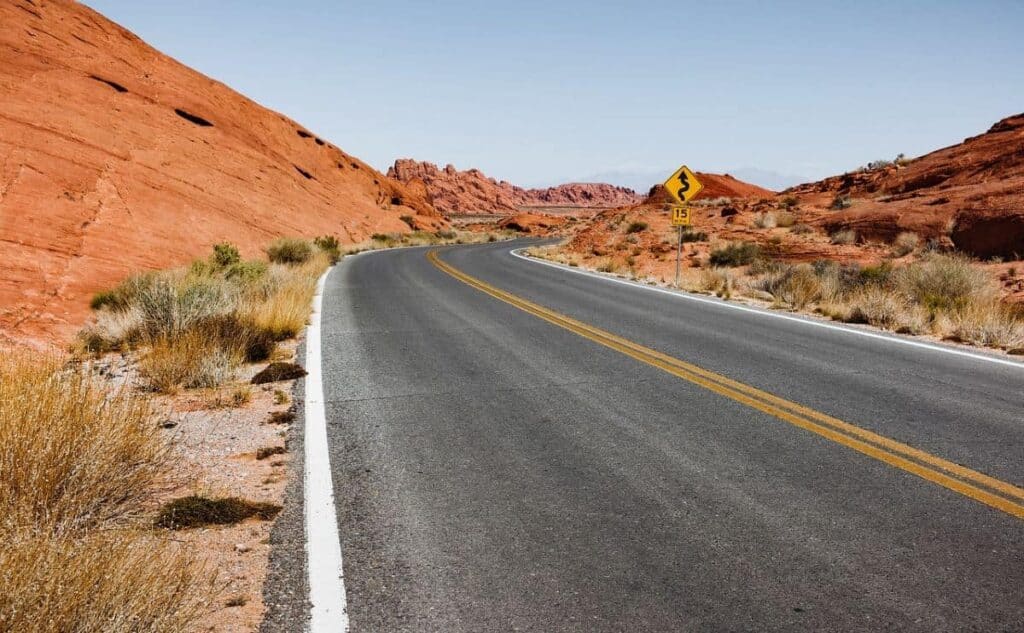
Your most likely launchpad? Harry Reid International Airport (LAS) in Las Vegas, about 200 miles from Kanab. Plan on roughly 3½ hours behind the wheel, traffic permitting.
Heads-up: time zones can play tricks here. Kanab runs on Mountain Time, while Las Vegas and California stay on Pacific Time, so Kanab is an hour ahead. Don’t let that clock catch you off guard when you’re booking dinner or planning an early-morning adventure.
The route is straightforward. Hop on I-15 North toward St. George, then take Exit 16 for Hwy 9 toward Hurricane. After about 10 miles, turn right at Hurricane’s Main Street traffic light. Go one block and turn left at the four-way stop onto Hwy 59.
Follow Hwy 59 for roughly 55 miles toward Fredonia, Arizona. At the stop sign in Fredonia, turn left onto US-89 North. About seven miles later, you’ll roll into Kanab.
Honestly, the drive is half the magic. Once you peel off the interstate, the sprawl gives way to wide-open desert, technicolor cliffs, and the kind of classic Southwest scenery that makes you want to pull over every five minutes.
Why Kanab Deserves a Spot on Your Grand Circle
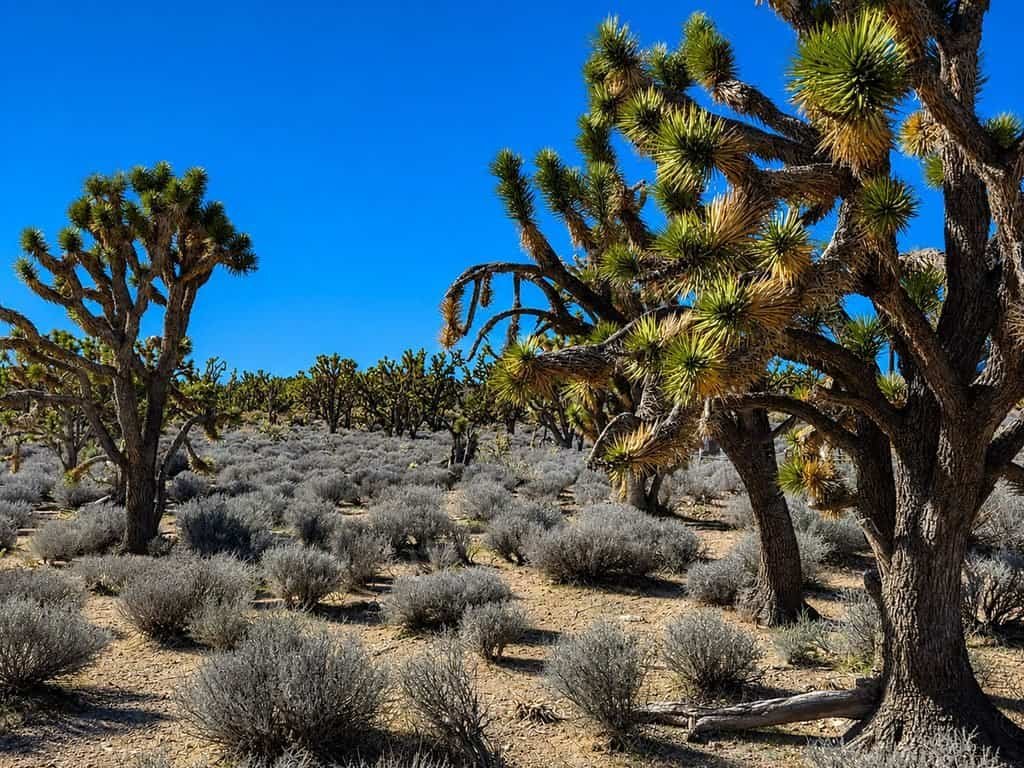
We came in expecting a convenient overnight—and yeah, it’s that. But Kanab turned out to be so much more. It’s the kind of home base that lets you actually breathe between park-hopping marathons.
Instead of chasing sunrises and checking into a different campground every night, we parked ourselves here and branched out to the surrounding attractions. And honestly, some of our favorite detours weren’t even inside a national park boundary.
That’s the Kanab surprise—and it’s a good one.
Best Things to Do in Kanab, Utah: Discover Little Hollywood
They don’t call Kanab “Little Hollywood” for nothing. This dusty cowboy town has been playing a starring role in the movies since the early days of Western filmmaking. In 1924, Tom Mix and his four-legged co-star, Tony the Wonder Horse, came to town to film Deadwood Coach. That was just the beginning.
Over the years, more than a hundred Hollywood productions have used Southern Utah’s jaw-dropping scenery as a backdrop. Western legends, movie stars, and filmmakers have all left their mark here, giving Kanab a Hollywood history that’s still part of the town’s personality today.
The Kanab Visitor Center Uncovers the Real Story
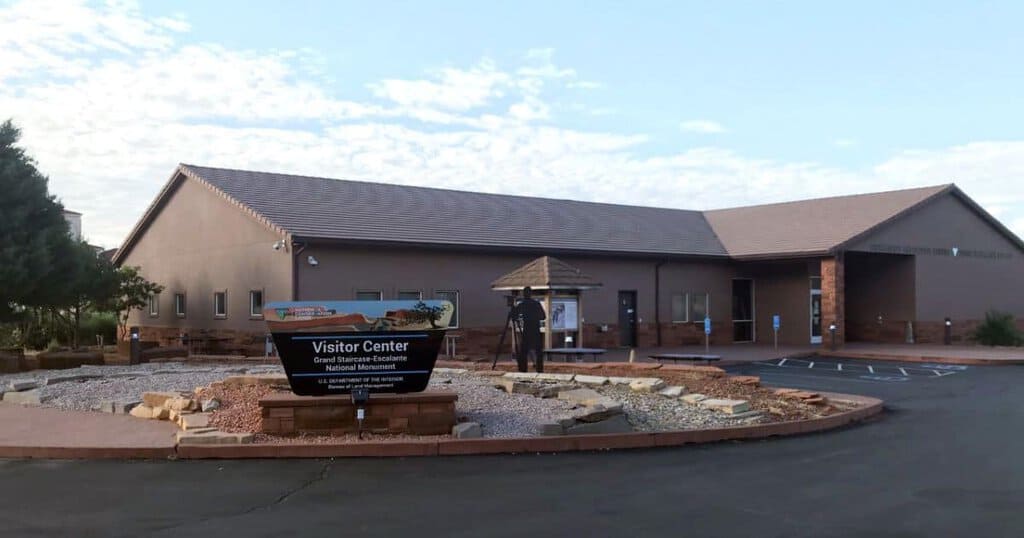
We kicked things off at the Kanab Visitors Center, right in the heart of town and within easy walking distance of many of Kanab’s attractions. It turned out to be much more than a quick stop for brochures—it was our crash course in all things Kanab.
The staff were genuinely welcoming. They didn’t just hand us a map and send us on our way. They took the time to answer our questions about geology, archaeology, local attractions, and the places we might otherwise have missed. Those conversations gave us a much better feel for the area before we headed out exploring.
Beyond the usual travel brochures, the visitor center has a few interesting displays of its own. A detailed topographical relief model helps put the surrounding landscape into perspective, while archaeology exhibits offer a glimpse into the area’s human history. There’s also a geologic cross-section mural that brings Southern Utah’s layers of rock and time to life.
One tip from us: Before heading out, ask about current road conditions, trail updates, and weather. Some of the area’s backroads can change quickly, especially after storms, and local information can be invaluable when you’re venturing beyond the pavement.
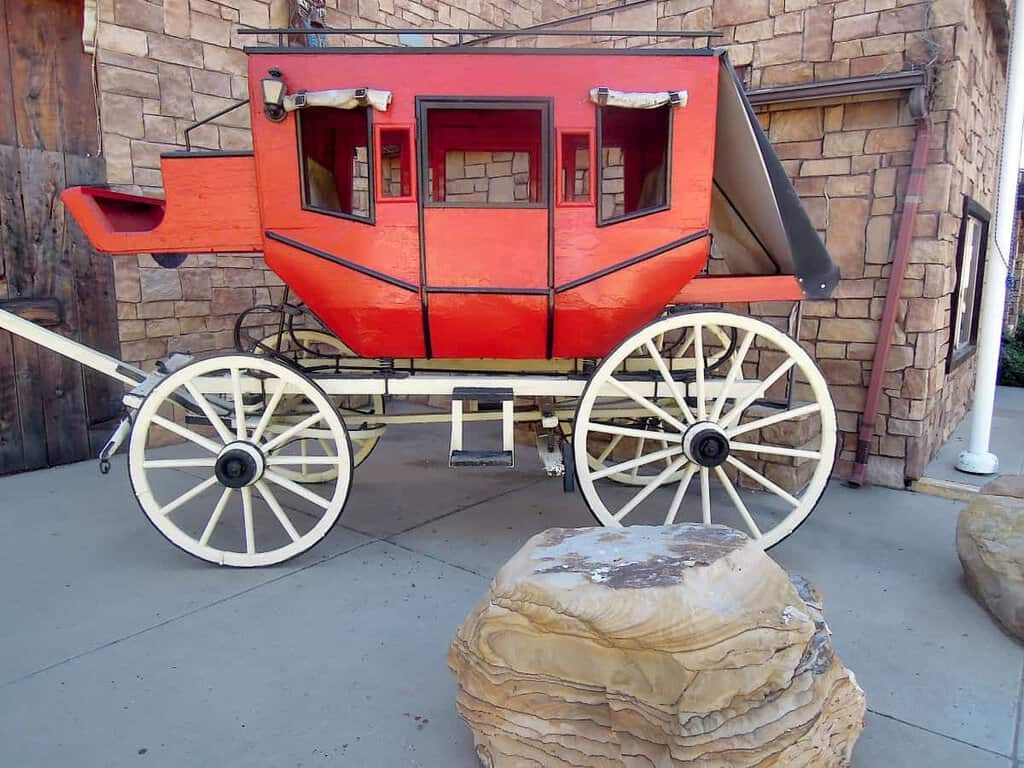
Get Accurate Trail Information at the Kane County Info Center
The Kane County Info Center caught our eye before we even stepped inside. Bright, colorful murals cover the exterior, practically begging you to stop and take a look. The artwork does more than add a splash of color—it reflects the history, culture, and character of the region.
Once inside, we found a staff member ready and eager to tell us more about Kane County. She wasn’t simply reciting facts. She genuinely enjoyed sharing her knowledge and pointing us toward nearby attractions and lesser-known places that might not show up on the typical tourist brochures.
Her local tips helped us shape our plans for the day and gave us a better idea of what was worth adding to our itinerary. Whether you’re making a quick stop or spending several days exploring Kanab and the surrounding area, it’s worth stepping inside before heading out.
Step Back in Time at the Little Hollywood Museum
If you’re curious about Kanab’s silver-screen past, the Little Hollywood Museum brings that history to life. We wandered among old movie sets, props, and memorabilia from classic Westerns, and it felt a little like stepping onto a backlot frozen in time. If you’re looking for some of the best things to do in Kanab, Utah, exploring its Hollywood history is a fun place to start.
The museum is small, so you won’t need a huge chunk of your day. Give yourself about 20 to 30 minutes to wander through the displays and read the short descriptions. That’s enough time to get a feel for Kanab’s long relationship with Hollywood without turning it into an all-day stop.
Walking through the old sets, we could almost picture the movie crews and Western stars who once descended on this corner of Southern Utah. There’s something fun about seeing those pieces of movie history surrounded by the same red-rock scenery that attracted filmmakers in the first place.
It’s an unusual combination of Hollywood nostalgia and desert grit, and that’s what makes the Little Hollywood Museum such a fun stop in Kanab. Even better, admission is free, so you can easily add it to your itinerary without breaking the travel budget.
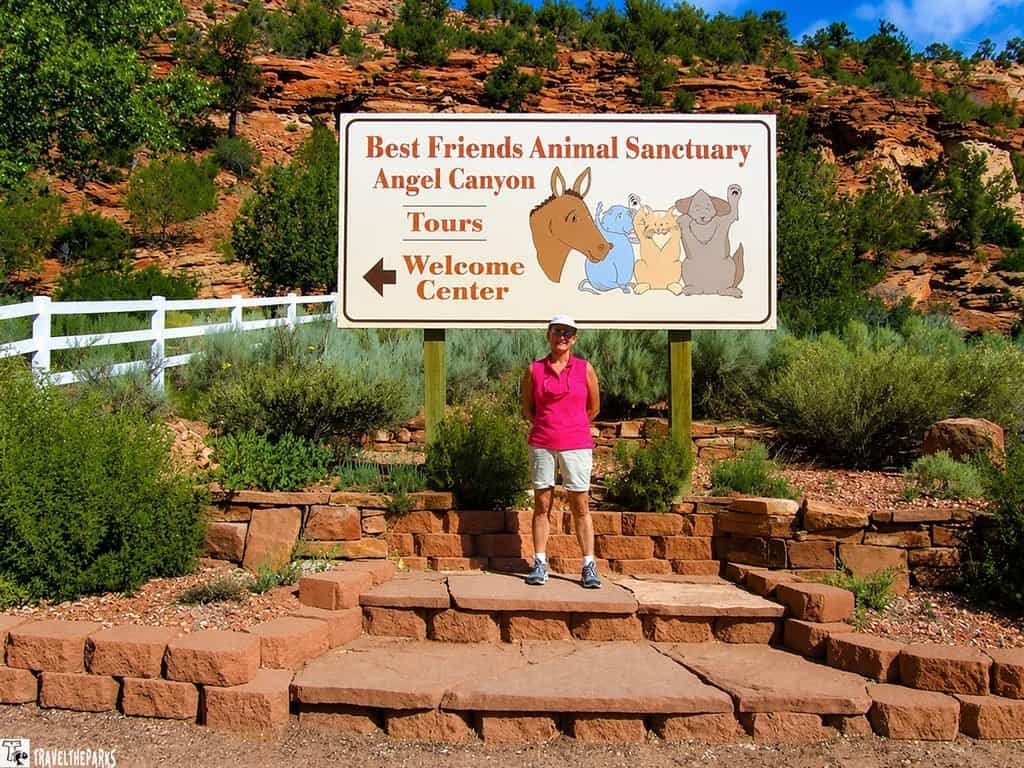
Best Things to Do in Kanab, Utah: Best Friends Animal Sanctuary
Just five miles south of Kanab off Highway 89, a sign points the way to one of the more unexpected things to do in Kanab, Utah. Best Friends Animal Sanctuary sits tucked into a breathtaking canyon surrounded by soaring sandstone cliffs, pockets of forest, a meandering creek, and cottonwood trees that add brilliant color against the red rock.
It feels less like a traditional animal shelter and more like an oasis tucked into the desert.
Founded in 1984, Best Friends is dedicated to providing homeless animals with the care, rehabilitation, and second chances they need to find loving homes. Some animals arrive needing medical care or behavioral support, while others simply need time, patience, and a safe place to heal. Those who aren’t adopted can remain at the sanctuary and continue to receive care.
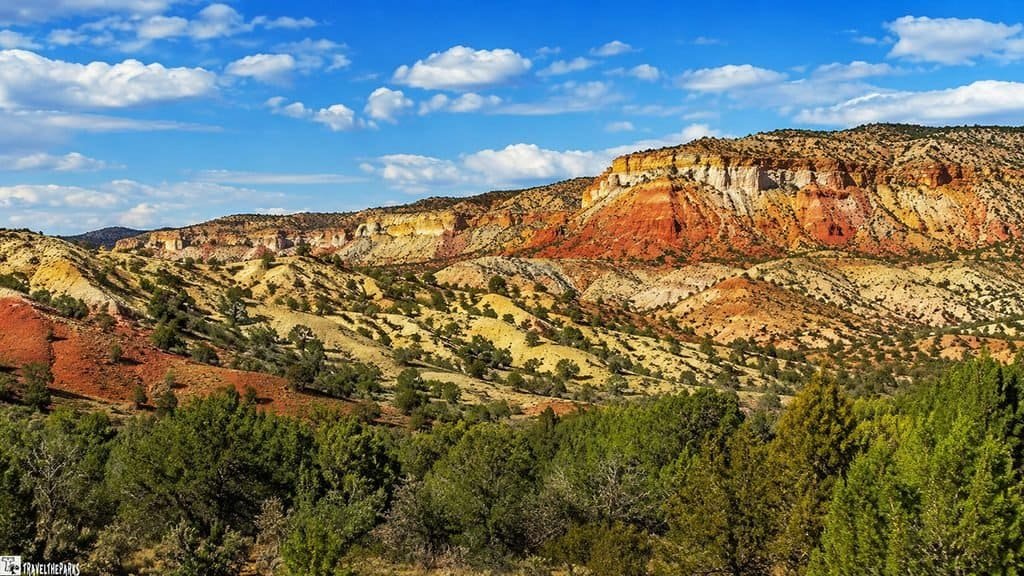
From Hollywood Backlot to Animal Sanctuary
Here’s a fun twist: this canyon wasn’t always home to four-legged residents. Before Best Friends arrived, the property was known as the Kanab Movie Ranch, where classic films and television shows were filmed against the dramatic Southern Utah landscape.
Movies including The Outlaw Josey Wales and The Apple Dumpling Gang, along with television favorites such as Gunsmoke and Daniel Boone, used the area as a backdrop. The movie ranch closed in 1985, and Best Friends eventually transformed the property into the sanctuary you see today.
That connection to Hollywood makes the setting even more interesting. One minute you’re exploring the landscape that once attracted Western filmmakers; the next, you’re learning about animals waiting for their own second chance.
And if you’ve ever watched the television series Dogtown, you’ll recognize the sanctuary. The series brought Best Friends’ work into homes across the country and helped introduce viewers to the animals and people behind the mission.
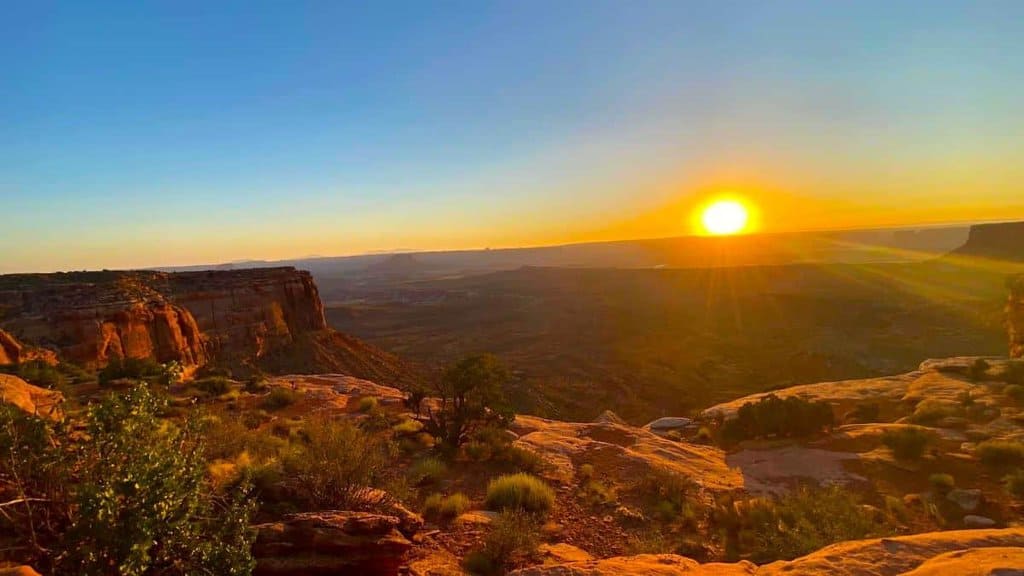
Our Visit to Best Friends
Pulling into the sanctuary, the red rocks hit you first. They’re absolutely show-stopping. The canyon seems to cradle the entire operation, creating a peaceful setting that feels worlds away from the busy roads and tourist attractions in town.
We stopped at the Welcome Center, which also has a small gift shop, and were greeted by staff who clearly cared deeply about the animals and the sanctuary’s mission. Their enthusiasm was contagious. They weren’t simply there to answer questions—they wanted visitors to understand what Best Friends does and why it matters.
If you have extra time in your Kanab itinerary, consider volunteering. Opportunities can include walking dogs, socializing cats, or helping with other animals and sanctuary activities. Volunteer requirements and available opportunities can vary, so check the current schedule before your visit.
We didn’t have enough time to commit to a full volunteer shift, but even a short visit gave us a better appreciation for the work happening here. Best Friends was one of those Kanab stops that stayed with us long after we left.
Explore the Best Friends Welcome Center
It’s an easy first stop when you’re mapping out the best things to do in Kanab, Utah, especially if you’re looking for local information before heading into the backcountry. The Welcome Center itself is worth a stop. It’s bright, spotless, and packed with a surprisingly good selection of gifts and souvenirs. We couldn’t resist picking up bandannas for both of our dogs—because they deserved a souvenir too, right?
Even better, purchases from the gift shop help support the sanctuary and its animals. It’s an easy way to take home a little reminder of your visit while giving back to the work happening here.
The Welcome Center also has clean, well-maintained restrooms, which is always a welcome find on a road trip. Depending on the day and season, you may also be able to grab lunch on-site. Check the current schedule before your visit if you’re hoping to eat here.
If you find yourself falling in love with the place, consider becoming a member. Membership can include perks such as discounts on select cabin and campground stays. Just keep in mind that the sanctuary’s accommodations can fill well in advance, so plan ahead if an overnight stay is part of your Kanab itinerary.
For hikers, several scenic trails wind through the canyon, and you can pick up maps and information at the Welcome Center. But honestly, one of our favorite moments happened just outside the building.
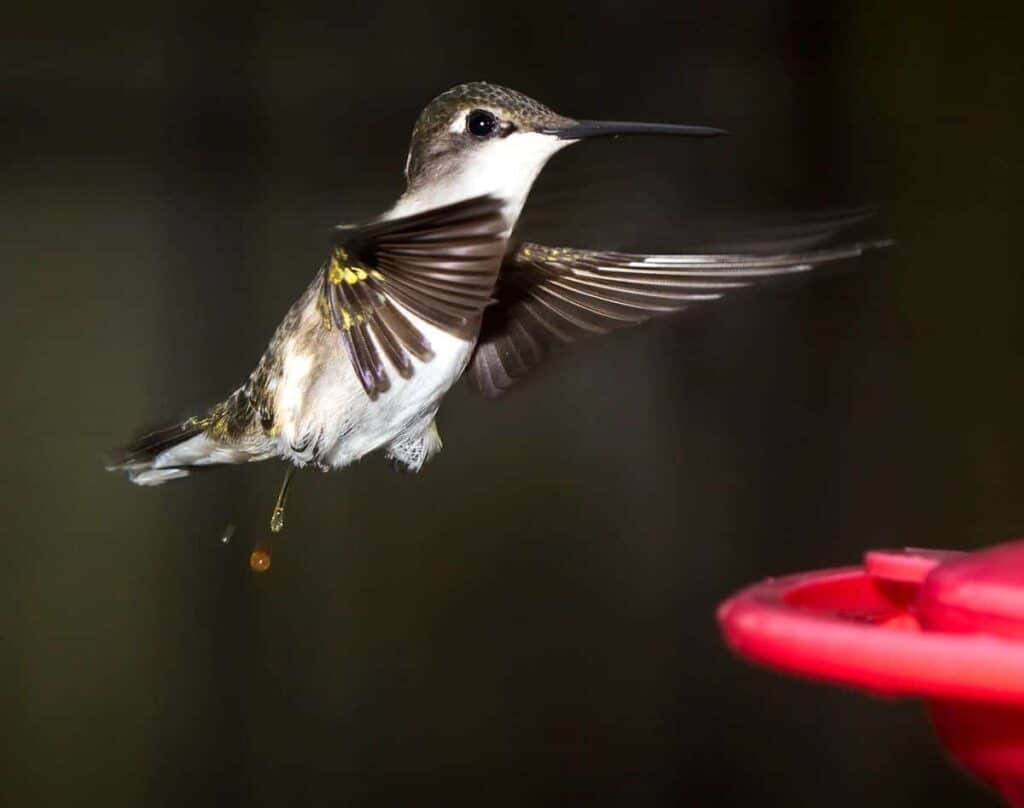
We stumbled onto a peaceful koi pond tucked into a charming wishing garden filled with native flowers. We sat there for a few minutes and simply soaked it all in. And the hummingbirds? They were everywhere, zipping between the feeders like tiny aerial acrobats.
It was completely unplanned, but those are often the moments we remember most from a road trip.
Take Time for a Dog Town Tour
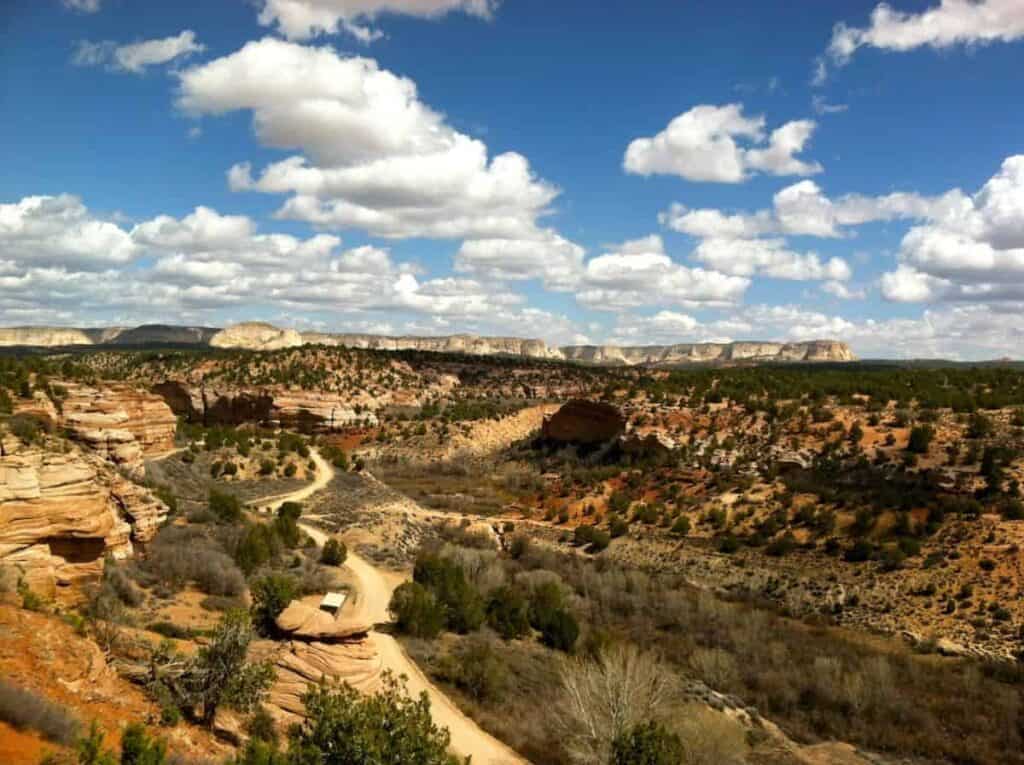
If you’re a dog lover like us, don’t miss the opportunity to explore Dog Town. We could have happily spent the entire day hanging out with the pups, but even a shorter visit gives you a glimpse into the work happening behind the scenes.
Best Friends offers guided sanctuary tours that begin at the Welcome Center and provide an inside look at the animals, their stories, and the people who care for them. The tours and schedules can change, so check the current offerings when planning your visit.
If you’ve watched the Dogtown television series, seeing the sanctuary in person adds another layer to the experience. But even if you’ve never seen the show, the tour gives you a much better understanding of what makes Best Friends such a special part of the Kanab community.
For us, this wasn’t simply another stop on the itinerary. It was one of those places that reminded us why slowing down and making room for unexpected experiences can make a trip even better.
Things to Do Near Kanab Utah: Vermilion Cliffs
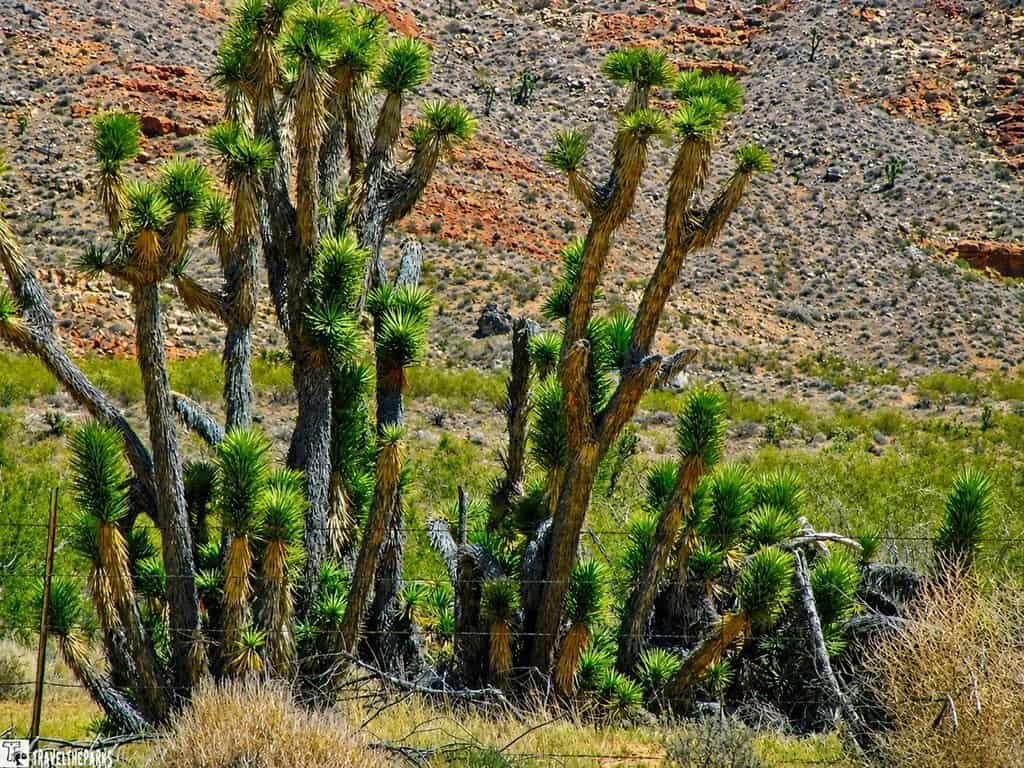
From Kanab, we pointed the car east on US-89 toward Page, Arizona, and before long, we were traveling through the spectacular landscape surrounding Vermilion Cliffs National Monument. Covering nearly 294,000 acres, this vast protected area stretches across northern Arizona and preserves some of the most dramatic scenery in the Southwest.
If you’re looking for things to do near Kanab Utah, Vermilion Cliffs National Monument should be high on your list. The monument encompasses the colorful Vermilion Cliffs, the Paria Plateau, Coyote Buttes, and portions of the spectacular Paria Canyon-Vermilion Cliffs Wilderness. With towering sandstone formations, winding canyons, and layers of Navajo Sandstone painted in shades of red, orange, pink, and cream, it’s easy to see why this corner of the Grand Circle attracts hikers, photographers, and adventurers.
Experience the Wild Side of Kanab: Coyote Buttes
If you’ve spent any time researching the area around Kanab, you’ve probably heard of Coyote Buttes. This remote section of Vermilion Cliffs National Monument is home to some of the Southwest’s most coveted landscapes, including the famous Wave.
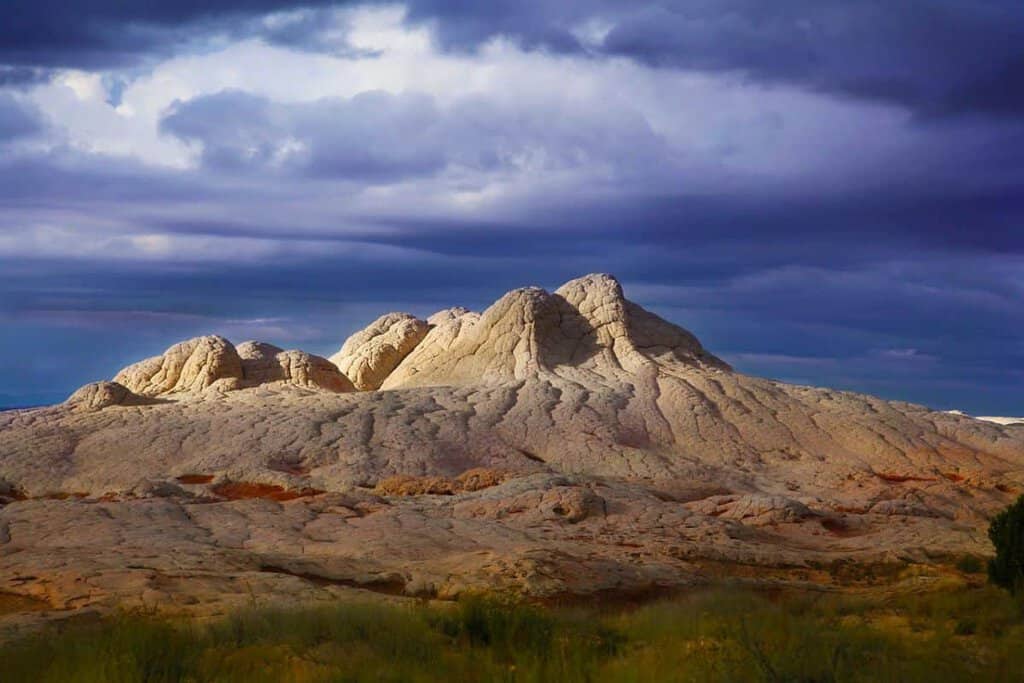
And just when we thought we’d seen every possible variation of red-rock scenery, this landscape humbled us all over again. The sweeping sandstone formations seem to fold, ripple, and twist across the landscape, creating patterns and colors that look almost too perfect to be natural.
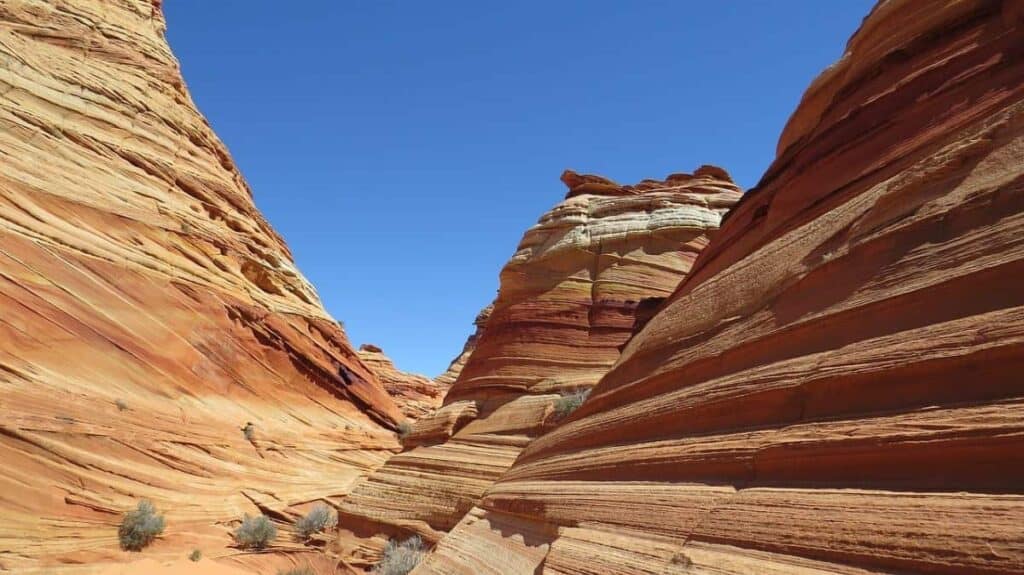
The Navajo Sandstone is the star of the show. Millions of years of erosion have carved the rock into waves, ridges, cliffs, and other unusual formations, with layers ranging from deep vermilion to soft cream and pink. It’s the kind of scenery that makes you stop, stare, and reach for the camera yet again.
There’s an important catch, though. Coyote Buttes is not a casual roadside attraction. Access to The Wave and other areas of Coyote Buttes is managed through a permit system, and the routes involve hiking over rugged desert terrain. Conditions can also change quickly, particularly during extreme heat or storms.
Other famous destinations in this region, including Buckskin Gulch and Paria Canyon, offer their own unforgettable adventures, but they require careful planning and preparation as well.
If you’re prepared for the backcountry experience, the reward is some of the most spectacular scenery anywhere along the Grand Circle. And even if you don’t have a permit for The Wave, the broader Vermilion Cliffs region offers plenty of opportunities to experience the remarkable landscape from more accessible viewpoints and roads.
Craving More Adventure? Try The Wave
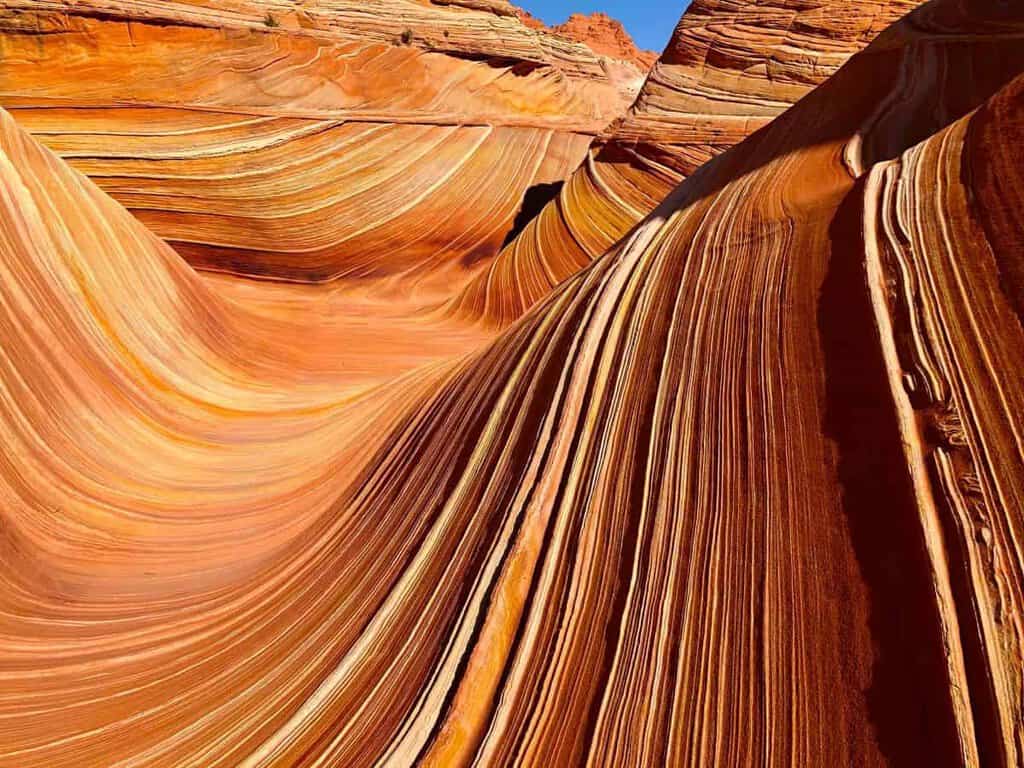
If you’ve got the time—and a little luck on your side—The Wave is an unforgettable addition to a Kanab itinerary. This swirling sandstone formation is legendary for good reason. Its flowing bands of red, orange, pink, and cream rock create a landscape that looks almost sculpted by hand. For adventurous travelers, The Wave ranks among the most coveted of the best things to do in Kanab, Utah—if you can score a permit.
There’s just one catch: you need a permit to hike to The Wave, and competition for permits can be fierce. The Bureau of Land Management manages access to protect this fragile desert environment, so you’ll want to check the current permit process and plan well ahead of your visit.
Let’s be real—the hike isn’t for the faint of heart. You’ll need plenty of water, protection from the sun, and the ability to navigate rugged desert terrain with little shade. Summer heat can make conditions particularly challenging.
Unfortunately, we didn’t carve out enough time to tackle The Wave on this trip. Sometimes you simply can’t fit everything into one Grand Circle adventure. But after seeing photos and hearing about the experience, you can bet this one is firmly on our bucket list for next time.
Venture Into Kanab’s Belly of the Dragon
Looking for a quick, offbeat detour near Kanab? Belly of the Dragon is one of those unusual stops that doesn’t require an entire day to experience. This is one of those unusual Kanab Utah attractions that’s easy to add to a day of exploring.
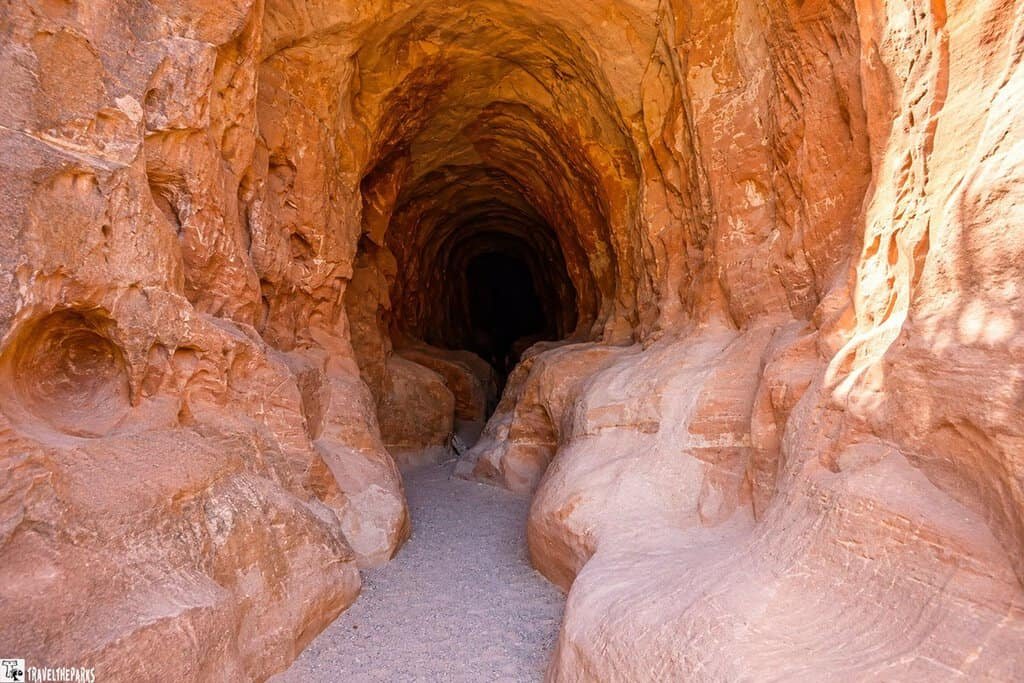
Located off US-89 north of Kanab, the short trail leads into a tunnel carved through the sandstone. The tunnel was constructed as a drainage passage beneath the highway, but years of erosion have created the ribbed, curving walls that give it its memorable name.
The hike itself is short, although conditions can be uneven and muddy depending on recent weather. Once you step inside the tunnel, the light changes and the temperature can feel noticeably cooler—a welcome break from the desert heat.
At the far end, you’ll find additional rock to explore, but we chose not to scramble up the rock face. There was plenty to enjoy without adding an extra challenge.
Leave No Trace
One thing we always practice on our hikes is Leave No Trace. Unfortunately, graffiti has taken a toll on Belly of the Dragon, marring what would otherwise be a fascinating example of how human construction and natural erosion have shaped the landscape.
Please resist the temptation to add your name or leave your mark. Take only photographs, leave the rocks and surroundings as you found them, and help keep these unusual places beautiful for the next traveler.
Visit Moqui Cave Museum and Sand Caves
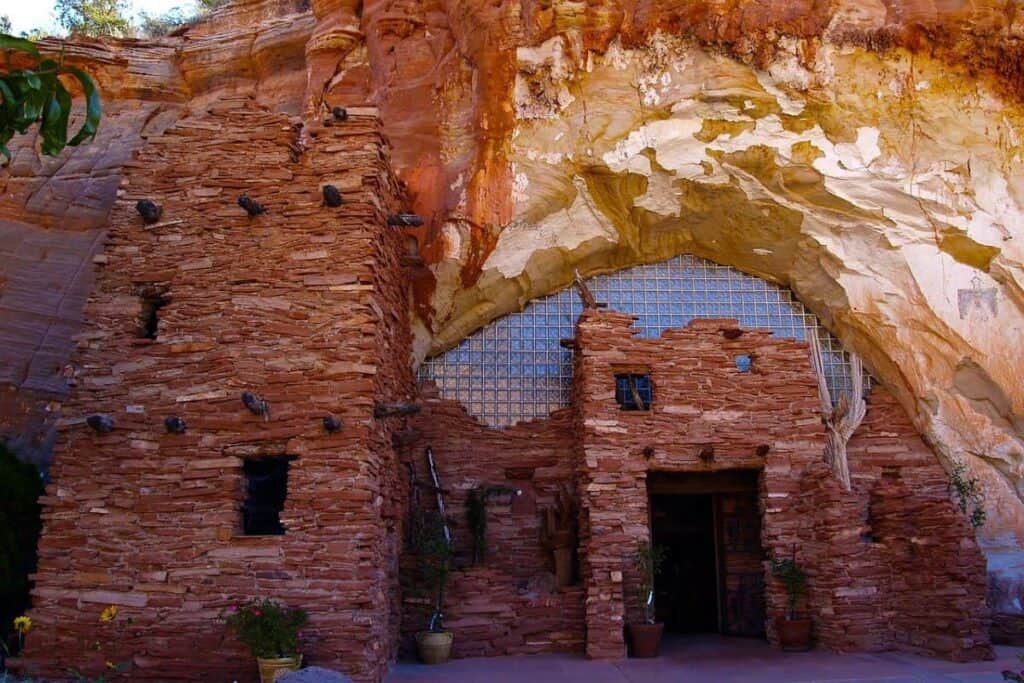
Moqui Cave is another one of the best things to do in Kanab, Utah if you enjoy quirky roadside attractions with a story to tell. Tucked into the sandstone cliffs along US-89, this privately owned museum occupies a natural cave that has been part of the area’s history for generations. And honestly? The unusual setting alone makes it worth a stop.
There’s a small admission fee, which we gladly paid before being greeted by the owner. He launched right into the cave’s colorful history, and we were hooked from the first sentence.
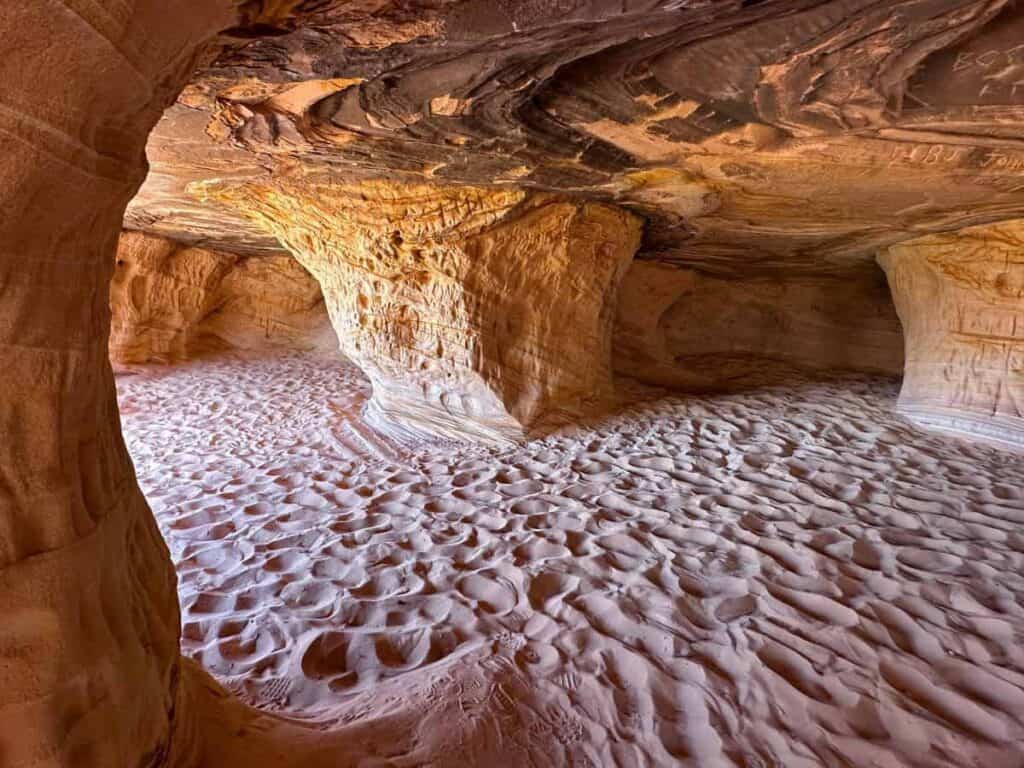
The Chamberlin family began developing the cave in the early 1950s, transforming the natural space into a unique attraction. Over the years, it has served several purposes, including a saloon and dance hall. The cave’s natural acoustics made it an especially interesting setting for music and gatherings. Standing inside, it wasn’t hard to imagine the sounds of another era echoing off the sandstone walls.
Kanab’s Connection and the Movies
The cave also has a connection to Kanab’s colorful Western history. During the years when Hollywood productions were pouring into Southern Utah, movie stars and filmmakers reportedly made their way here. The museum ties those stories together with the broader history of Kanab and the area’s early settlers.
After the guided portion, we wandered through the museum on our own. I’ll admit, the collection is a little chaotic—but in the best possible treasure-hunt kind of way. We found dinosaur tracks, fluorescent minerals, Native American artifacts, fossils, and an assortment of memorabilia tucked into corners throughout the cave.
It has an old-school roadside-attraction feel that you don’t encounter very often anymore. We could almost imagine what it must have been like decades ago, when a stop here was part museum, part curiosity shop, and part Western adventure.
Quirky? Absolutely. Polished? Not necessarily. But that’s part of the charm—and it’s what makes Moqui Cave such a memorable stop along the road between Kanab and the Grand Staircase-Escalante region.
Tackle the Sand Cave Scramble Hike
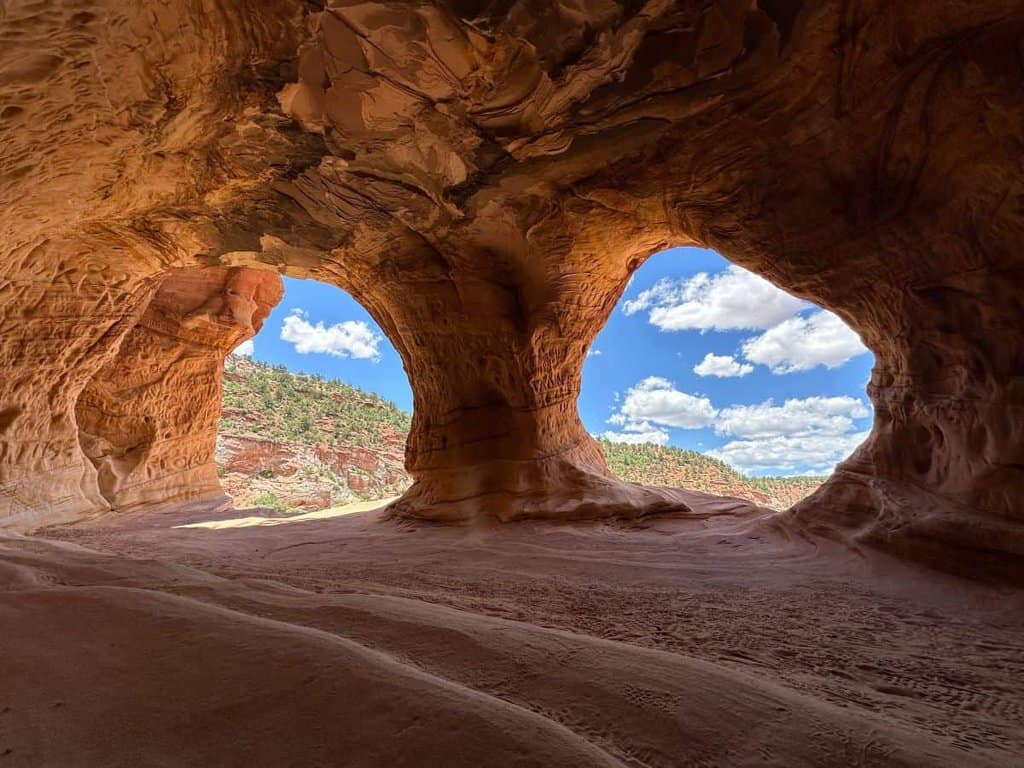
This one almost slipped completely under our radar. The Moqui Sand Caves are one of those unexpected places to visit in Kanab Utah that we might have missed without our Airbnb host’s recommendation. His tip? Drive about 0.4 miles farther down the road from Moqui Cave Museum.
Best tip of the day.
If you don’t mind a little slick-rock scrambling, this short hike is a seriously fun adventure. The well-worn trail is easy to follow for the first quarter-mile or so, leading toward the caves. Then the terrain changes, and you’ll need to scramble up the sandstone to reach them.
Here’s the interesting part: these aren’t natural caves. Miners carved the chambers into the sandstone in the 1970s while extracting sand used in glassmaking. Several rooms remain, each with its own shape and character, making it fun to poke around and see what you discover.
A word of caution: wear shoes with good traction. Hiking boots or sturdy trail shoes will give you much better footing on the slick rock. We learned another lesson along the way, too. If you’re looking for an easier route up, stay toward the left. We headed right first and definitely made the climb harder than it needed to be!
Catch the Sand Caves at Sunset
If you have some flexibility in your schedule, consider timing your visit for late afternoon. We arrived about an hour before sunset and had time to explore before the light began changing.
As golden-hour sunlight reached the sandstone walls, the colors seemed to deepen and glow. We simply sat and waited for the sunset to unfold, and it turned into one of those unexpectedly memorable moments that make a road trip special.
Our tip: Give yourself plenty of time to explore, find a comfortable spot, and let the evening light do its thing. The combination of red sandstone, open desert, and a quiet sunset makes the Sand Caves a memorable little detour from Kanab.
Discover The Mystery of Old Paria
Old Paria sits within the rugged landscape of Grand Staircase-Escalante National Monument, and getting there is part of the experience. From downtown Kanab, we headed east on US-89 for about 31 miles until a large “Paria Townsite” sign caught our attention, along with a smaller historical marker. Old Paria is one of the more unusual things to do near Kanab Utah, especially for travelers interested in history and Western movie locations.
Just beyond the signs, we found the turnoff and a parking area marked by a large rock monument. There was plenty of room to park, along with restrooms and a picnic area—a welcome place to regroup before leaving the pavement behind.
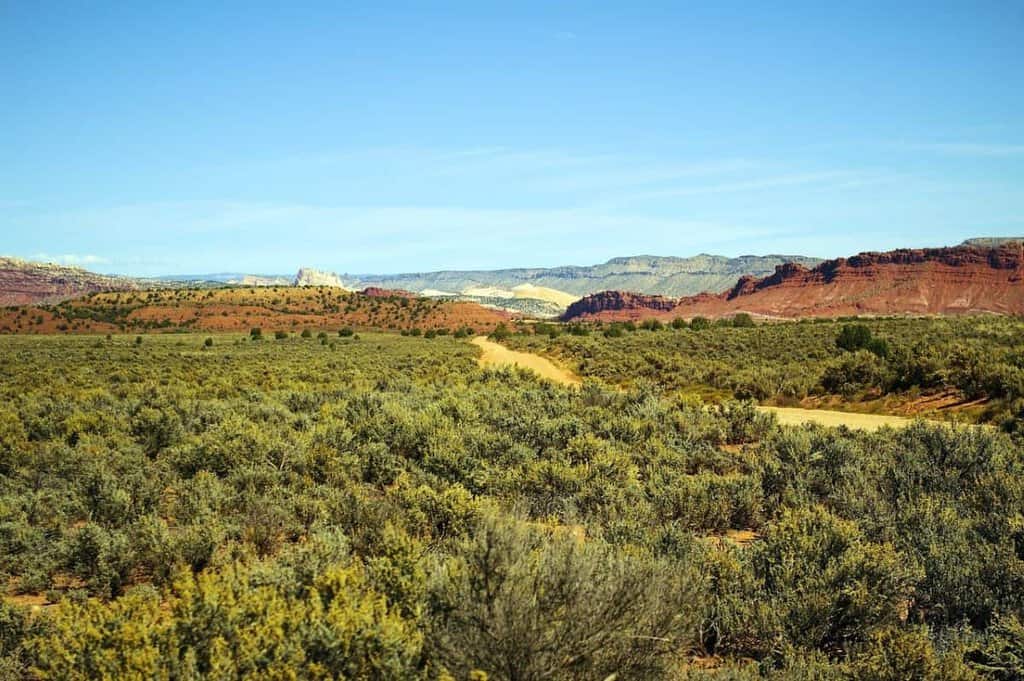
From there, we followed the unpaved road for about five miles toward the old Paria movie-set area. The movie set itself was destroyed by fire in 2006, but the drive was still worth making. Around every bend, the landscape seemed to reveal another layer of Southern Utah’s colorful geology.
About a mile beyond the movie-set parking area, the road continues toward the remains of the original Paria townsite. Today, little remains except scattered foundations and the Old Paria Cemetery, but the surrounding landscape tells plenty of the story.
Keep in mind that the road is unpaved and can become difficult or impassable after heavy rain or when the Paria River rises. Conditions can change quickly, so check the weather and road conditions before making the drive.
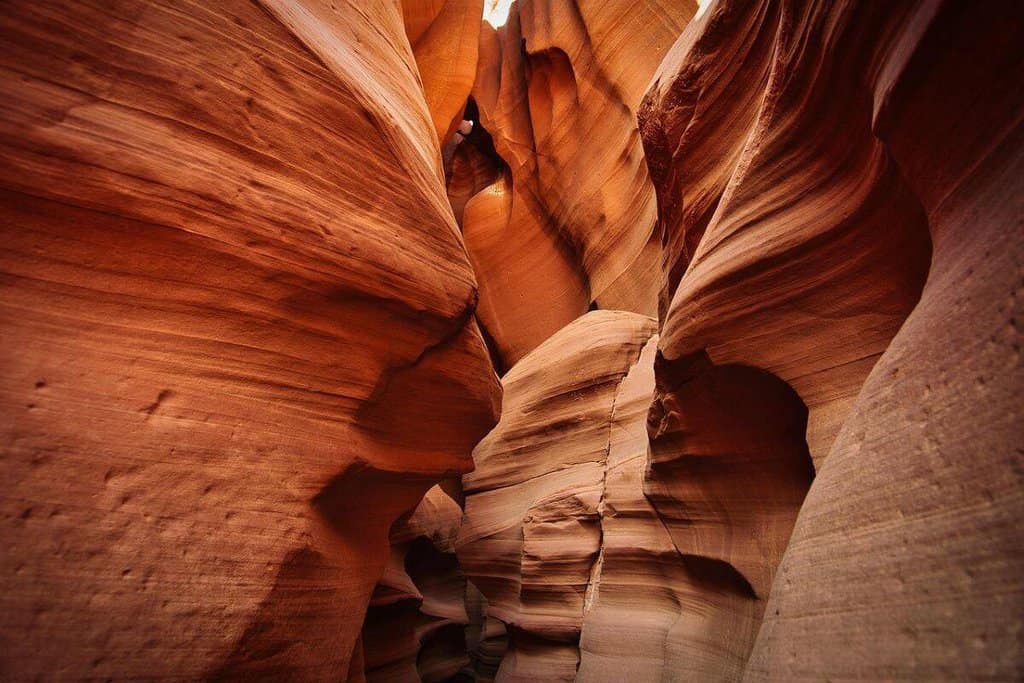
We made a relatively quick stop, mostly to take in the scenery and photograph the spectacular stratified cliffs. Their layers of red, orange, pink, and cream seemed to glow in the afternoon light.
A History Lesson: Step Back in Time
Paria’s story began in the 1860s, when Mormon settlers established a community along the Paria River. The town struggled with the harsh environment almost from the beginning.
Flooding was a constant problem. The river repeatedly overflowed its banks, damaging homes, farmland, and other buildings. Over time, families began leaving the settlement in search of more reliable places to live.
The community eventually dwindled, leaving behind little more than the traces you can still see today. Standing among the remaining foundations and cemetery, it’s easy to wonder what life must have been like for the families who tried to make a home in this remote corner of Utah.

Paria Becomes a Hollywood Movie Town
Then Hollywood arrived.
The dramatic cliffs and wide-open landscape made Paria an irresistible backdrop for Western filmmakers. Movies were filmed in and around the area for decades, helping transform this remote settlement into one of Kane County’s recognizable movie locations.
A separate Old West movie set was constructed near the original townsite, creating a replica of the historic community. Over time, the movie set became so familiar that visitors sometimes confused it with the actual town of Paria.
The set eventually fell into disuse and was later destroyed by fire in 2006. Today, the movie-town era survives mostly through photographs, memories, and the stories surrounding the films made here.
But honestly, you don’t need a movie set to appreciate Paria.
There’s something about standing at the end of that dirt road with those color-streaked cliffs rising around you that makes the place feel timeless. There isn’t much left of the town itself, but the landscape—and the stories embedded in it—are more than enough to make the trip worthwhile.
Explore the Sevier River Valley
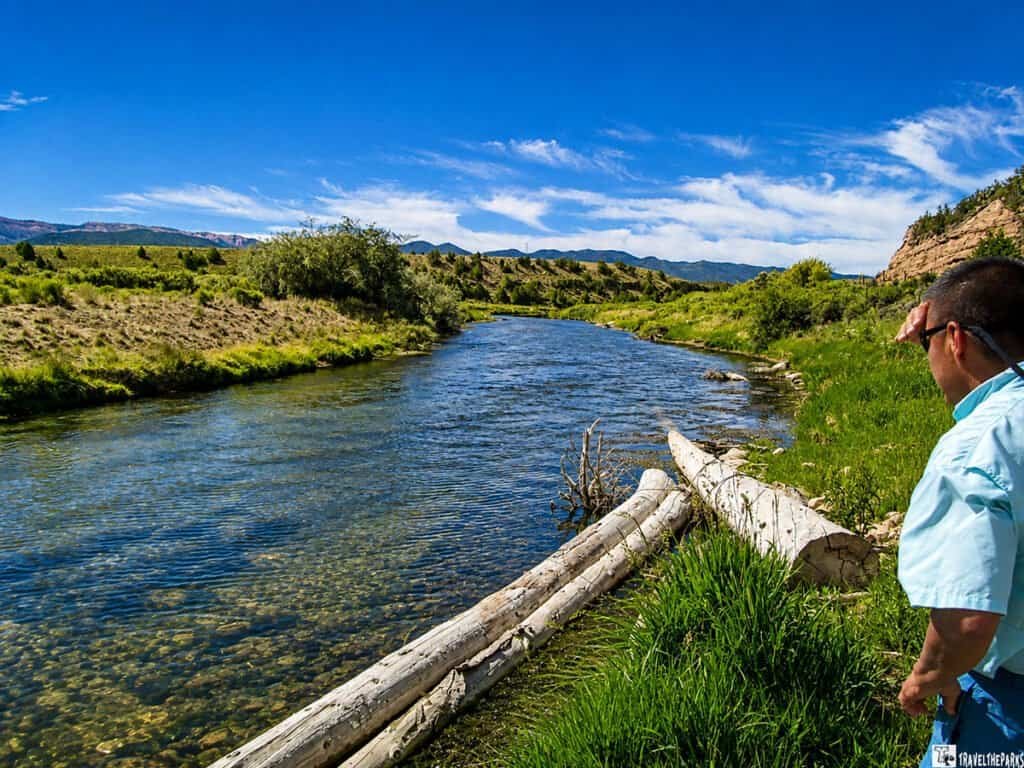
At the Mt. Carmel Junction, we turned north onto US-89 and entered the Sevier River Valley. The highway winds through a long, open valley framed by mountains on either side—the kind of landscape that makes you feel small in the best possible way.
Small historic communities dot the valley, each with its own quiet story. This is Mormon pioneer country, where settlers worked to build farms, ranches, and communities across a landscape that didn’t give up its resources easily.
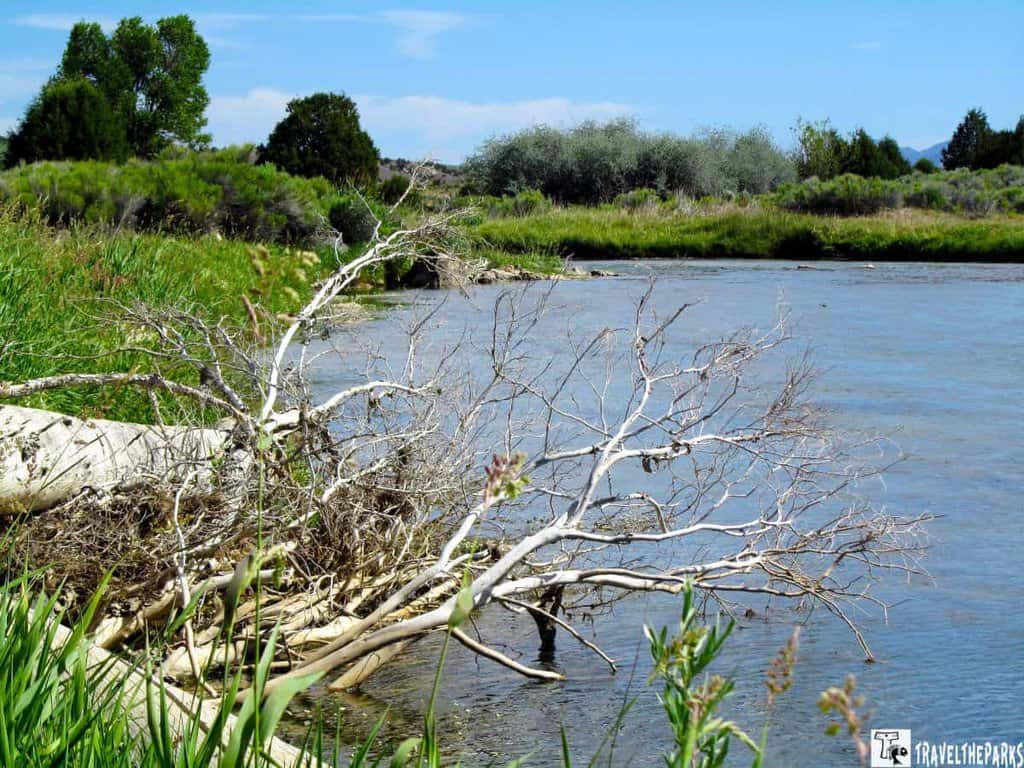
As we continued north, the scenery gradually changed from the dramatic red-rock country around Kanab and Zion into broader agricultural valleys and mountain views. Near Hatch, the Sevier River winds through the landscape while cattle graze across wide pastures. The river is also known for its trout fishing, making this a worthwhile stretch of road for anglers looking to cast a line along their journey.
Watch for Wildlife Along the Way
It was close.
We pulled over with our hearts still racing and watched as he continued running along the riverbank, completely unfazed by his near miss. Since we were already stopped, we took a few minutes to simply enjoy the scene—the quiet valley, the wide-open landscape, and the reminder that we were traveling through someone else’s backyard.
That encounter also reinforced something we learned throughout this trip: slow down and keep your eyes open. The most memorable moments aren’t always found at the end of a trail or behind a national park entrance sign. Sometimes they happen right beside the road when you least expect them.
Things to Do Near Kanab Utah: Coral Pink Sand Dunes
Tucked between Mount Carmel and Kanab lies a small gem that completely caught us off guard—Coral Pink Sand Dunes State Park. Pink sand dunes? That alone was enough to get us off the highway. Just outside Panguitch, we had one of those road-trip moments you simply can’t plan for. A large mule deer buck suddenly bounded across the highway right in front of us.
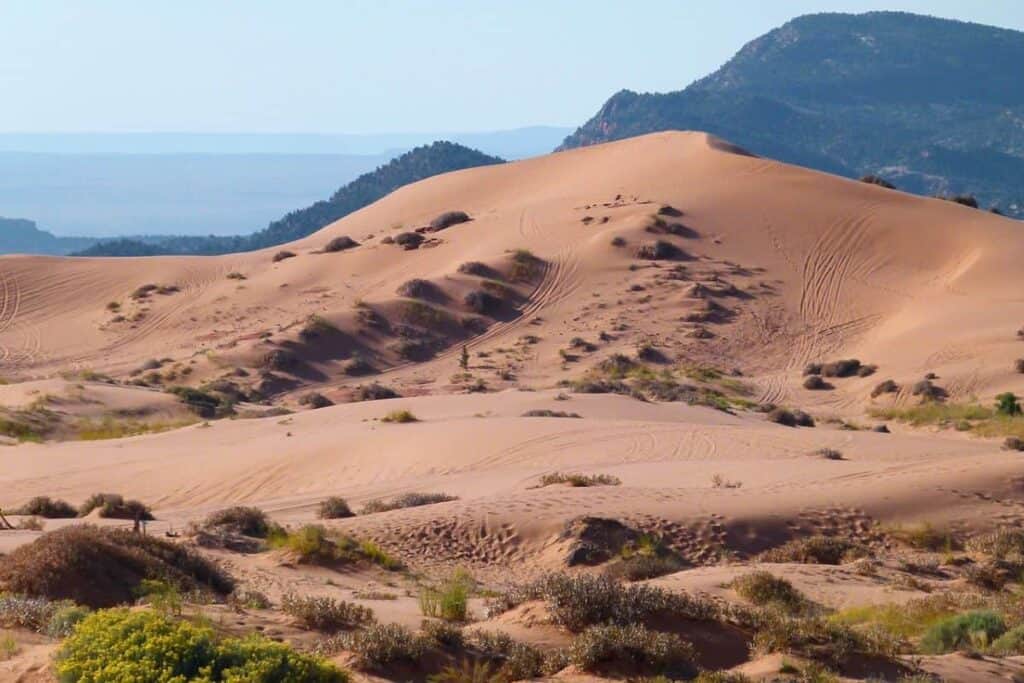
If you’re looking for the best things to do in Kanab, Utah that take you beyond the red-rock cliffs, Coral Pink Sand Dunes State Park offers something completely different. Located just off US-89, the park opens onto a striking landscape of coral-colored dunes stretching toward the horizon. We started at the overlook, where we could take in the full sweep of the dunes, before heading out onto the sand toward the distant line of ponderosa pines.

Walking the Coral Pink Sand Dunes
Pro tip: Come prepared. Sunscreen, a hat, polarized sunglasses, and plenty of water are essential out here. And if you’re bringing a camera, consider protecting it from the sand. The combination of wind and fine grains has a way of finding its way into just about everything.
Walking on the dunes is also more of a workout than you might expect. Think deep snow—every step forward feels like you’re sliding backward as your feet sink into the soft sand. The powdery grains worked their way into our shoes, socks, and just about everywhere else. We were still finding sand later!
But honestly? We had a blast. We spent a beautiful afternoon wandering across the rolling dunes, taking in the unusual colors and constantly changing shapes of the landscape.
Our only complaint was the steady whine of ATVs crossing the dunes. It’s hard to completely lose yourself in the desert quiet when engines are buzzing nearby. Still, the dunes themselves are such an unusual sight that we thought they were well worth the detour.
If you’re building a Kanab itinerary, don’t overlook this one. It’s an easy addition to a day of exploring the area’s red-rock country, and the landscape feels completely different from the cliffs and canyons you’ll encounter elsewhere around Kanab.
Final Thoughts: Why Kanab Deserves More Than a Stopover
We came to Kanab thinking it would be a convenient place to spend a night or two between the bigger attractions of our Grand Circle adventure. Instead, it became one of the places we kept talking about long after the trip was over. After experiencing so many of the best things to do in Kanab, Utah, we realized this little cowboy town deserved much more than a quick overnight.
Maybe that’s what makes Kanab so memorable. It’s surrounded by some of the most spectacular landscapes we’ve ever seen, yet you don’t have to chase the biggest or most famous attraction to enjoy it. We found history, hidden trails, quirky museums, an animal sanctuary that stole our hearts, and coral-colored dunes that felt like another planet.
Kanab doesn’t try too hard to impress you. It just quietly sits at the crossroads of some incredible Southern Utah and Northern Arizona adventures, waiting for you to slow down long enough to notice what’s here.
So here’s our advice: don’t just pass through Kanab. Park the car, stay a few days, and give yourself time to explore beyond the obvious stops. You might be surprised by how quickly this little cowboy town works its way into your list of favorite Grand Circle destinations.
The red rocks will do their part—you just have to be willing to look.
Have You Been to Kanab?
Have you discovered a favorite stop around Kanab that we missed? Was it The Wave, Best Friends Animal Sanctuary, the Sand Caves, Coral Pink Sand Dunes, or one of those unexpected roadside discoveries?
We’d genuinely love to hear about it. Drop your favorite Kanab stops and trail tips in the comments—you might just help another traveler discover a hidden gem we haven’t found yet.